
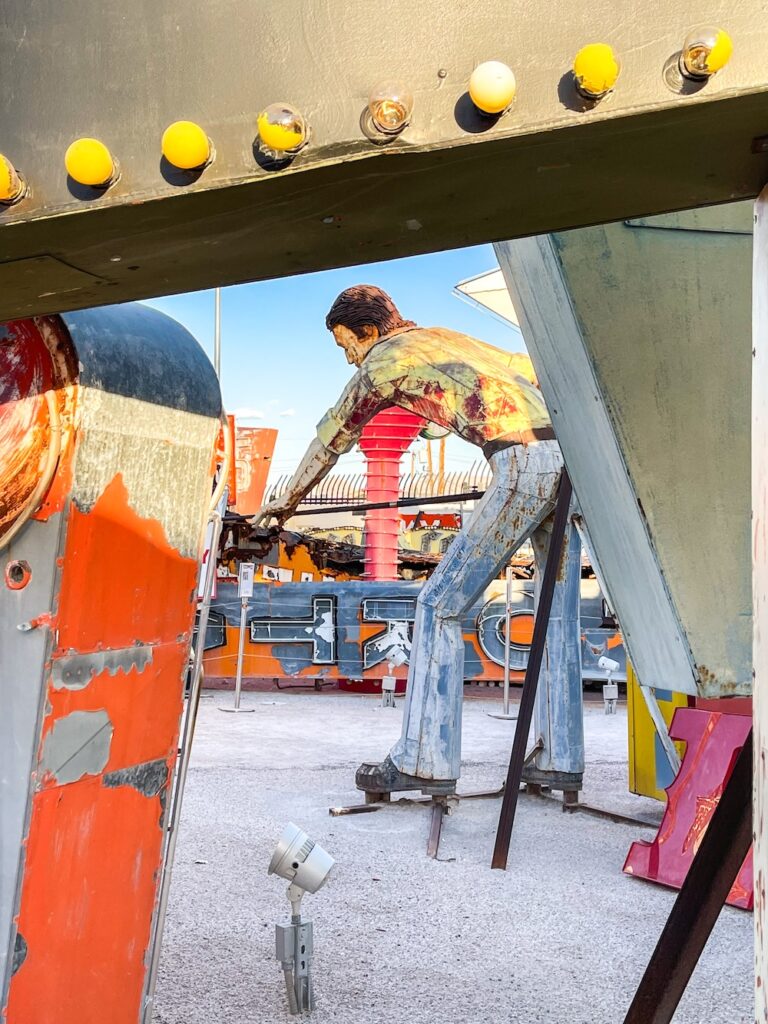
If you love vintage Las Vegas, retro photography, old school casinos, or quirky roadside Americana, the Neon Museum is one of the most memorable stops in Las Vegas. Often called the “Neon Boneyard,” this outdoor museum preserves some of the city’s most iconic signs from old casinos, motels, and businesses that helped shape Las Vegas history.
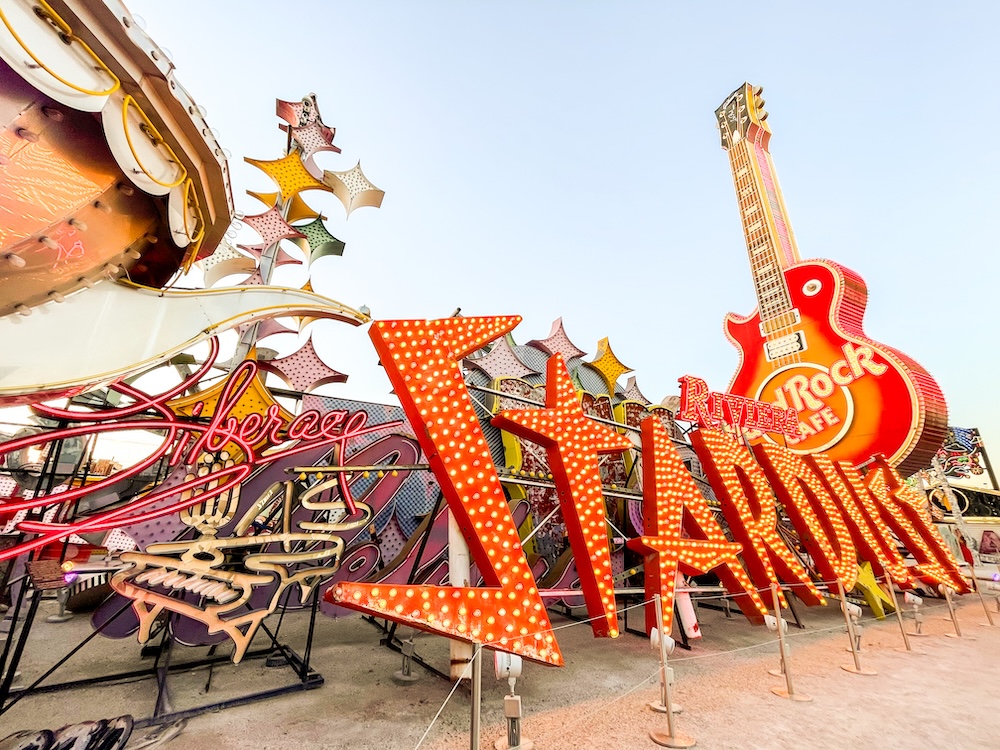
Whether you are visiting for the first time or returning to see the collection at night, the Neon Museum offers a completely different side of Las Vegas away from the mega resorts and flashing modern billboards of the Strip.
Shop My Travel Essentials!

History of the Neon Museum
The Neon Museum was founded in 1996 as a nonprofit organization dedicated to preserving Las Vegas’s historic neon signs. As older casinos and businesses closed, many of their signs were destroyed or abandoned. Local preservationists realized these pieces of art and history deserved to be saved.
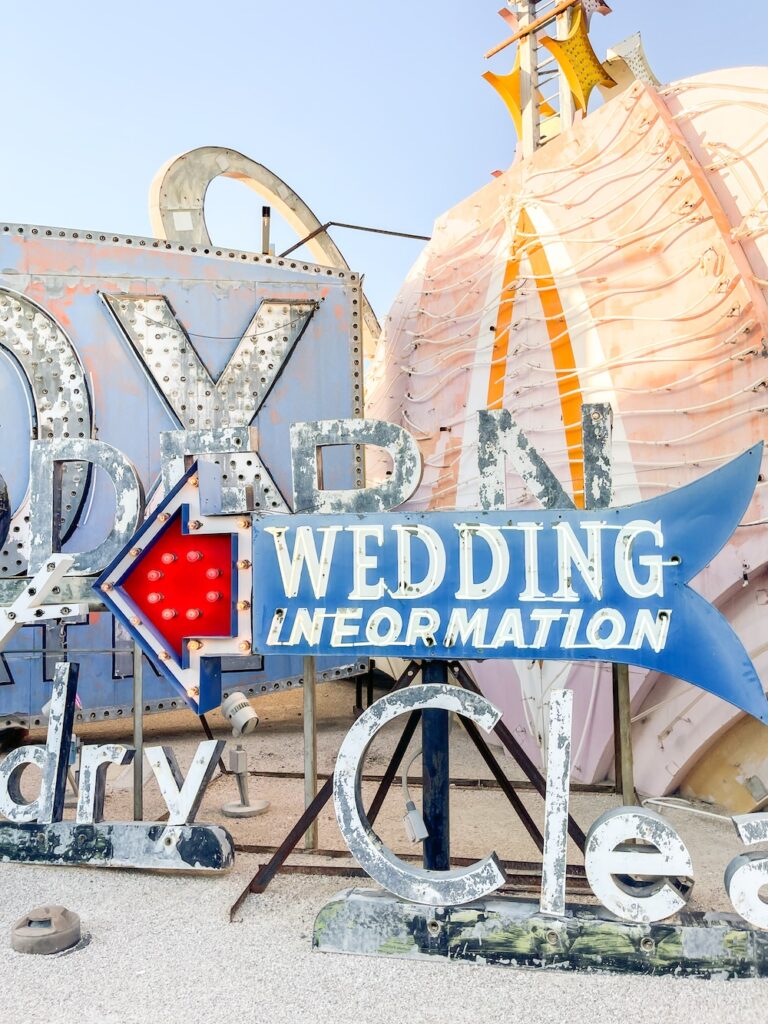
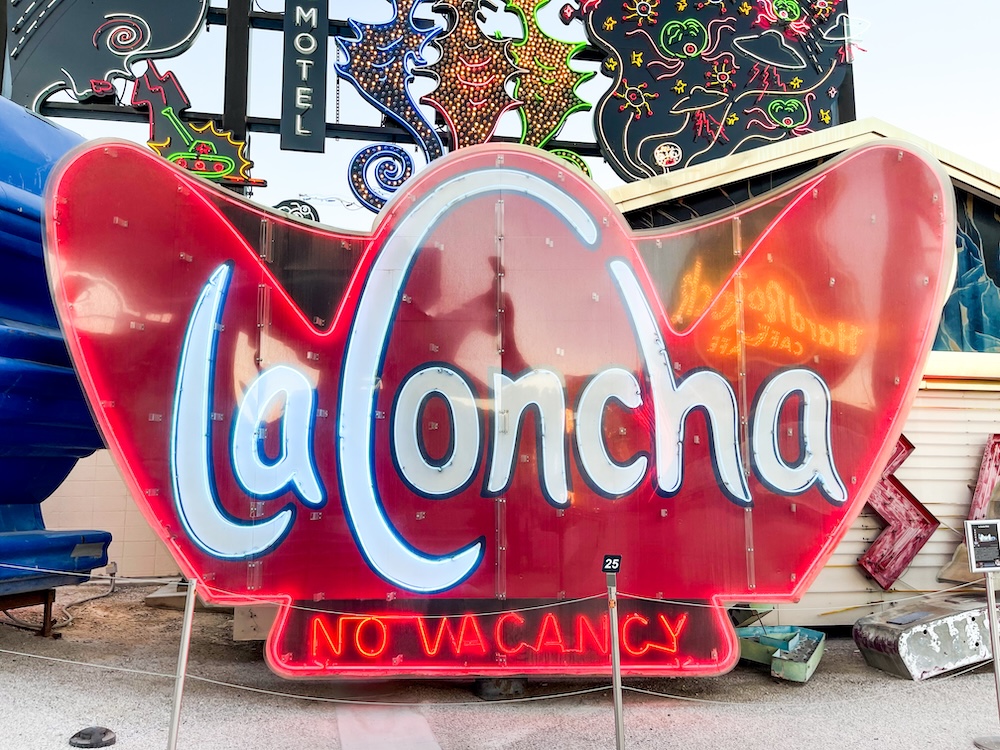
The museum’s current visitor experience took a major step forward in 2012 with the opening of the Neon Boneyard Park and the restored La Concha Motel visitor center. For the first time, visitors could easily walk among dozens of historic signs, learn about their stories through guided tours, and experience a carefully curated look at the city’s colorful past. The 2012 opening established the Neon Museum as an essential stop for anyone interested in Las Vegas history, architecture, and vintage neon art.
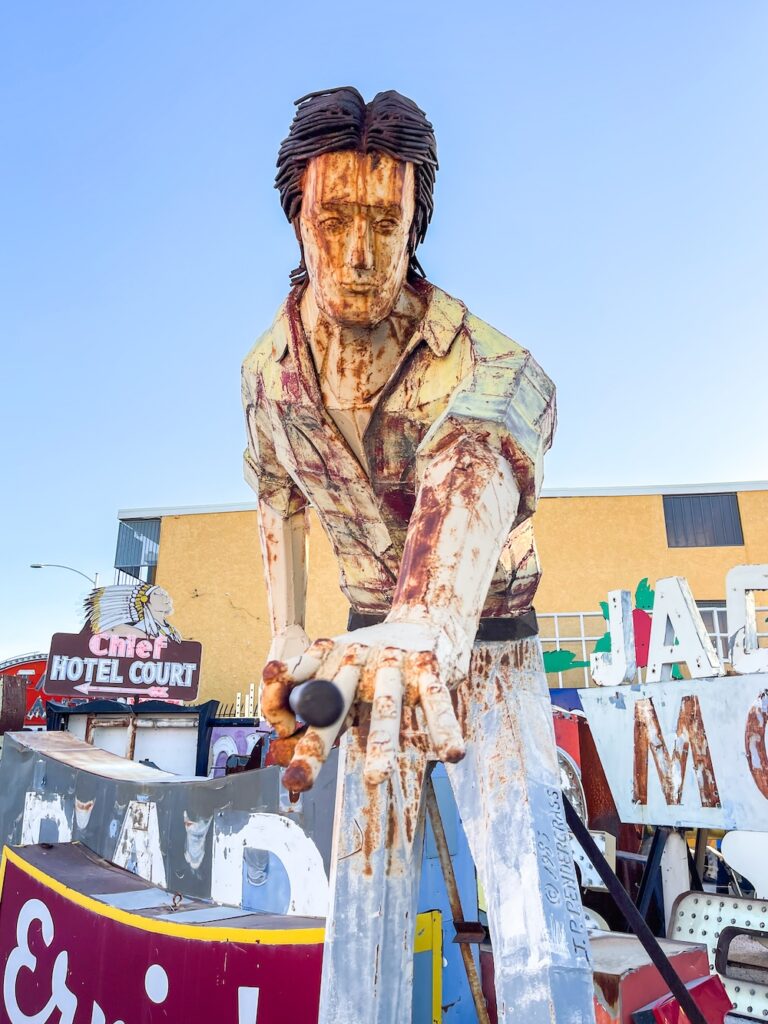
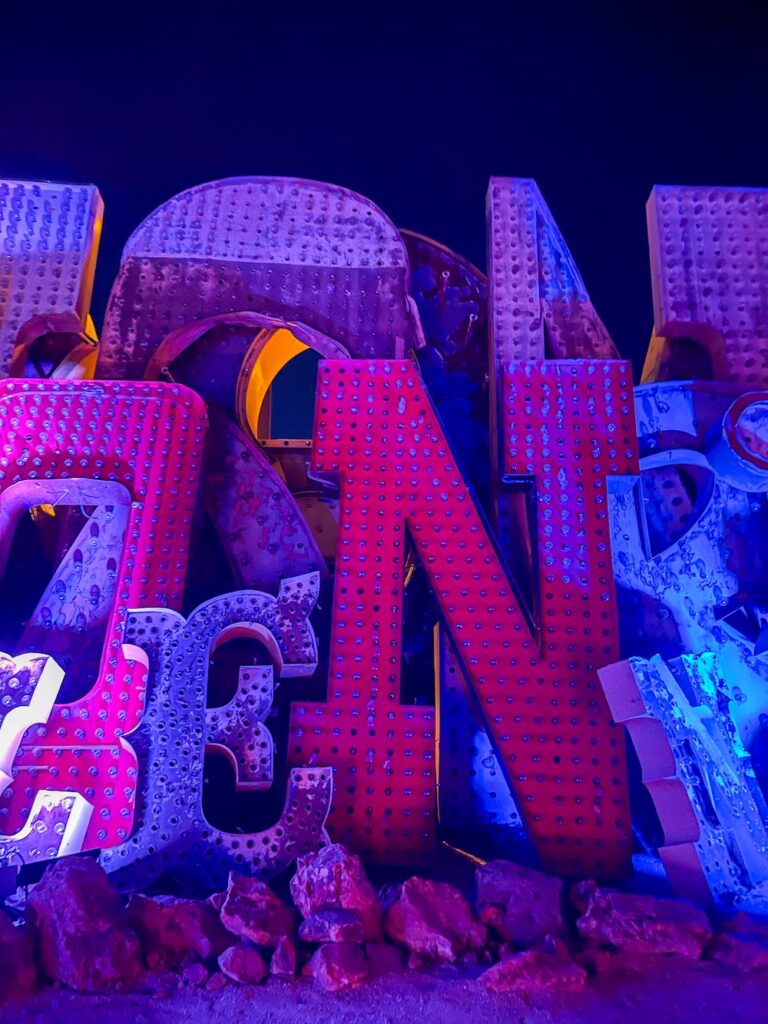
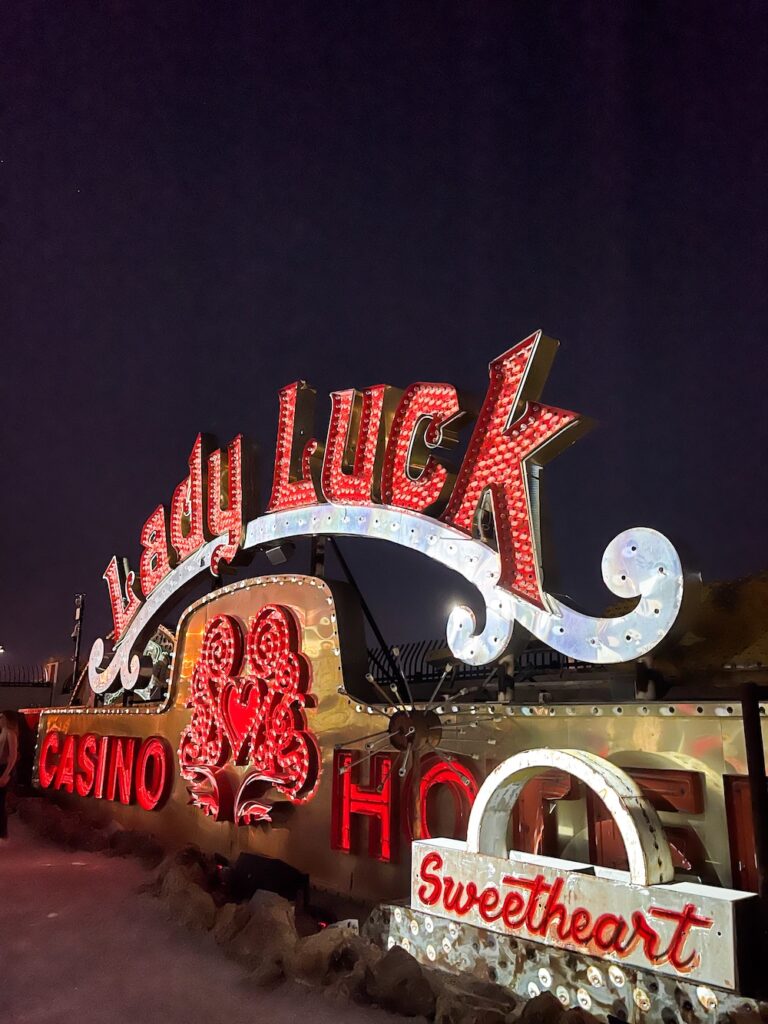
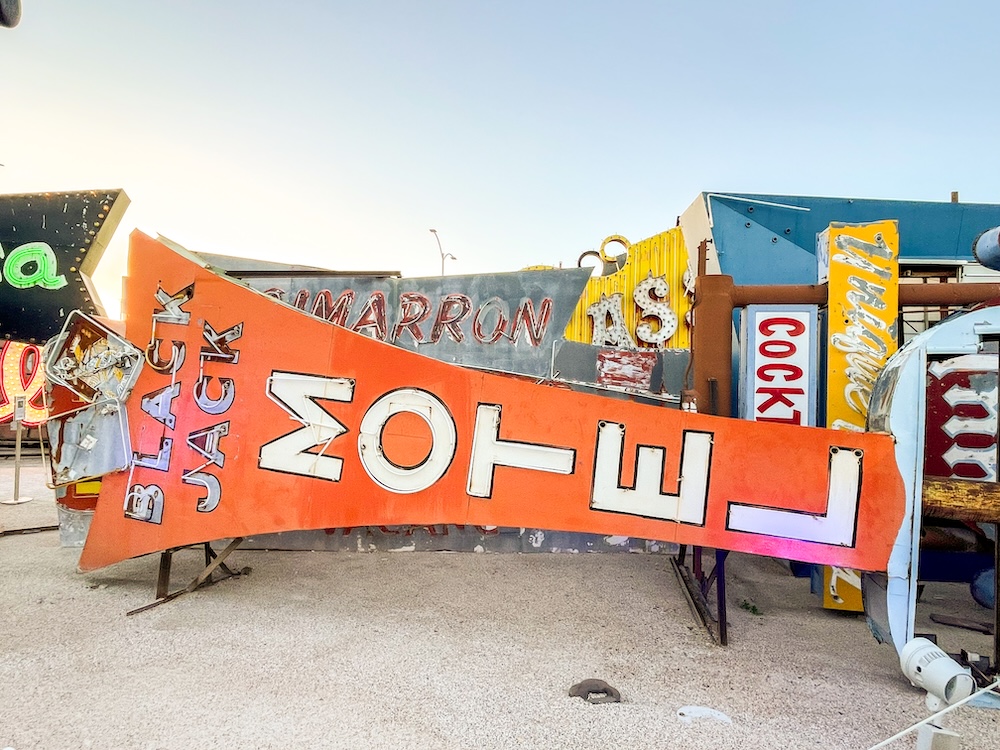
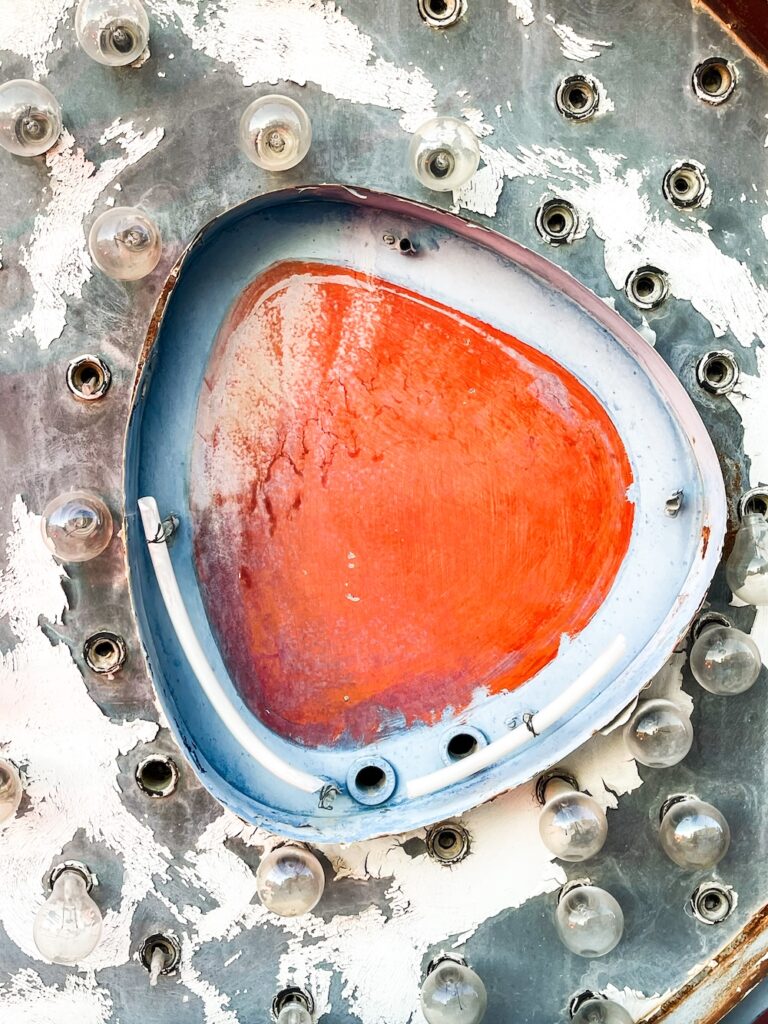
Today, the museum houses more than 250 signs, making it one of the largest collections of vintage neon in the world. Many of the signs come from legendary casinos and hotels that once defined Las Vegas during the Rat Pack era and the city’s mid century boom years.
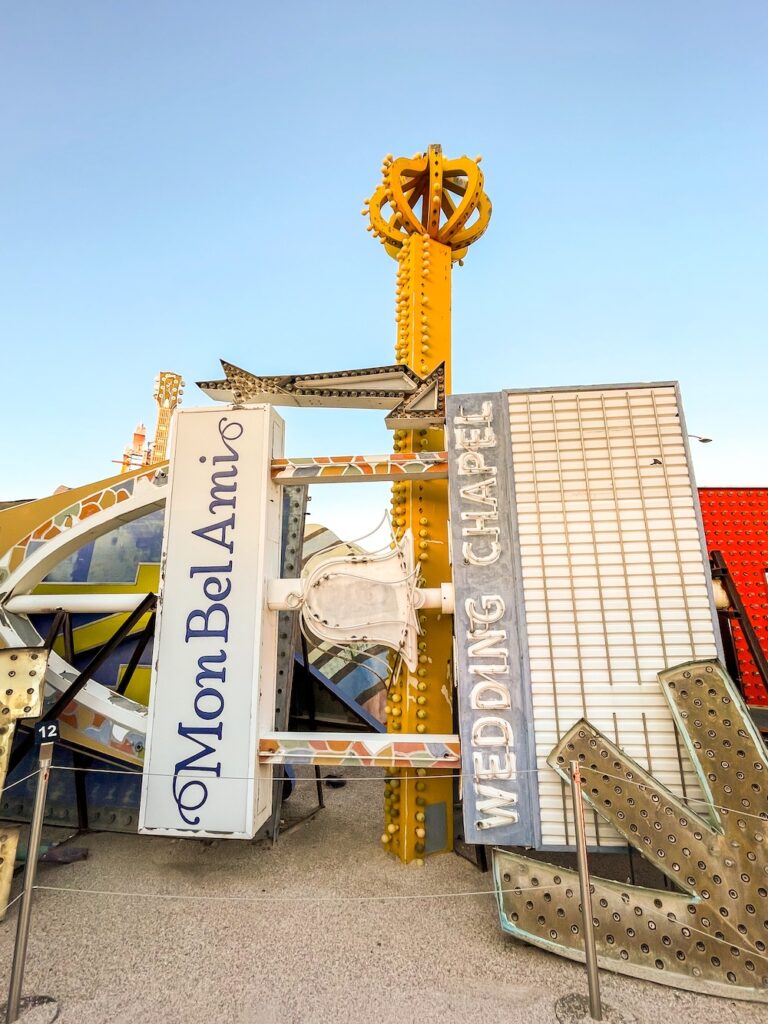
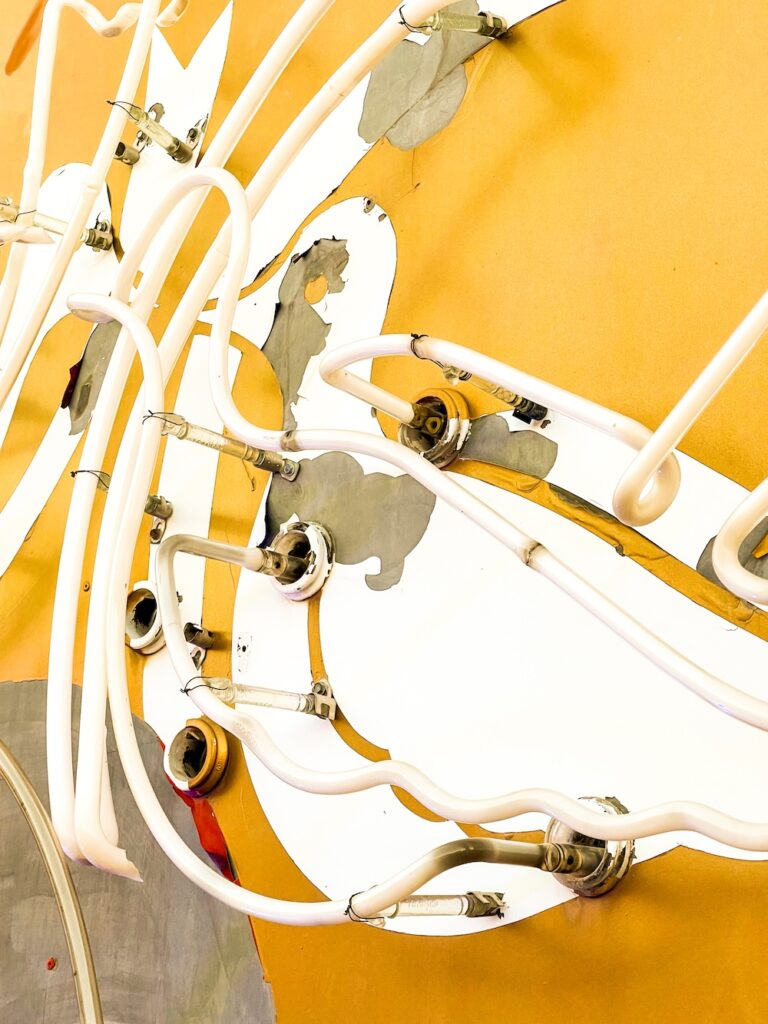
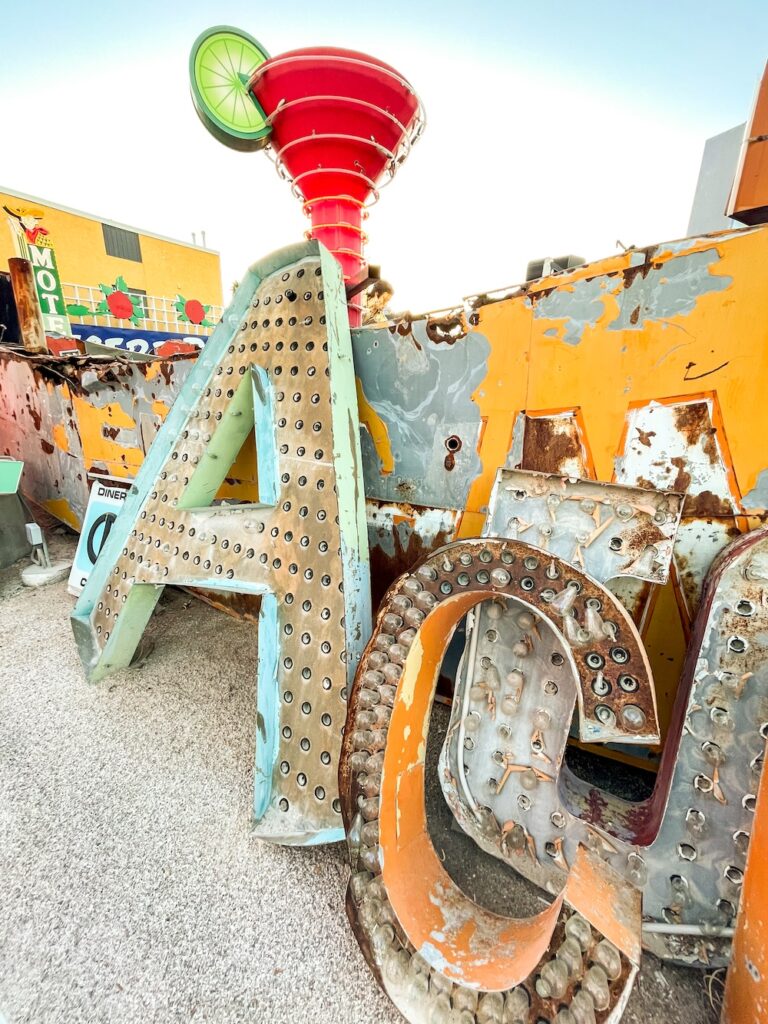
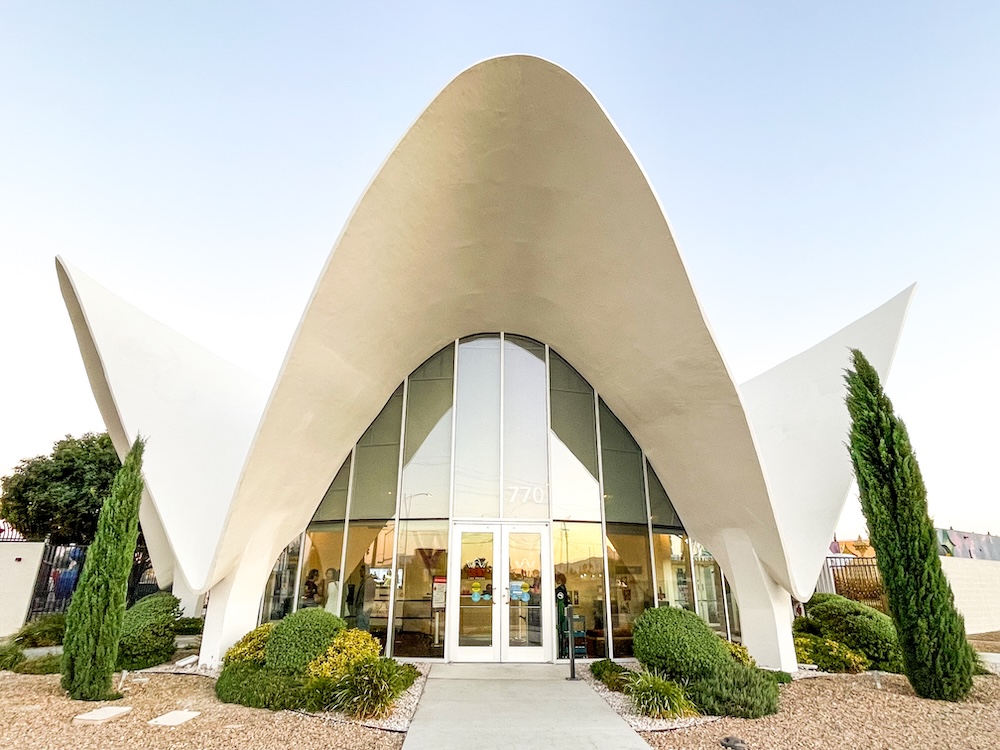
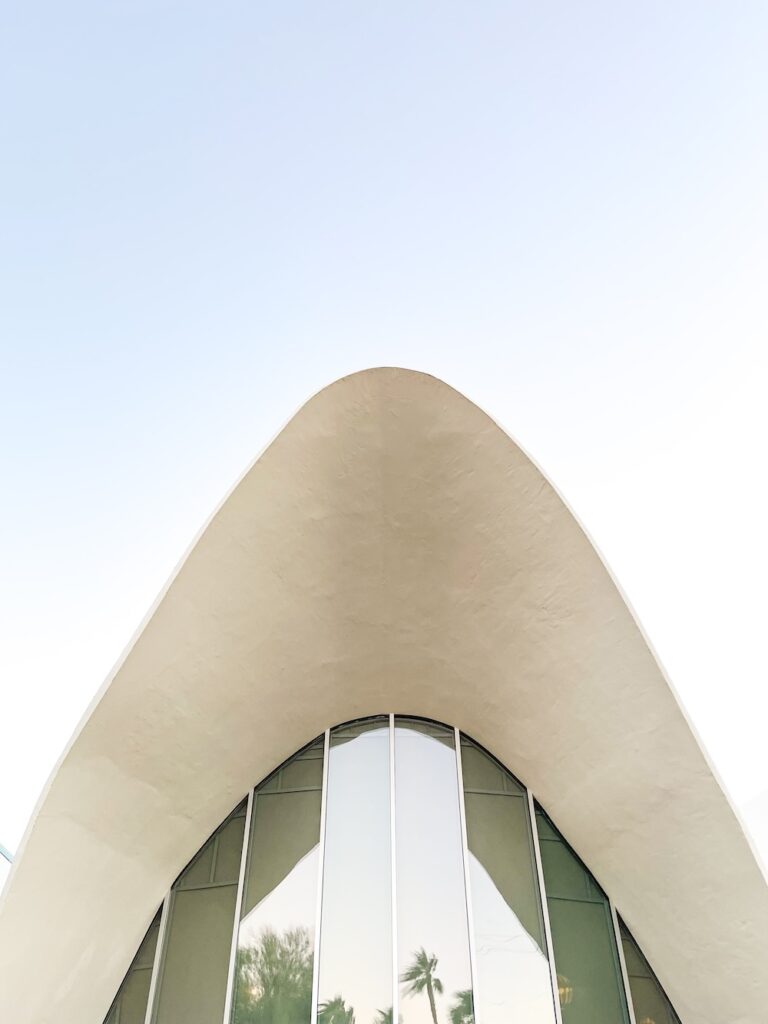
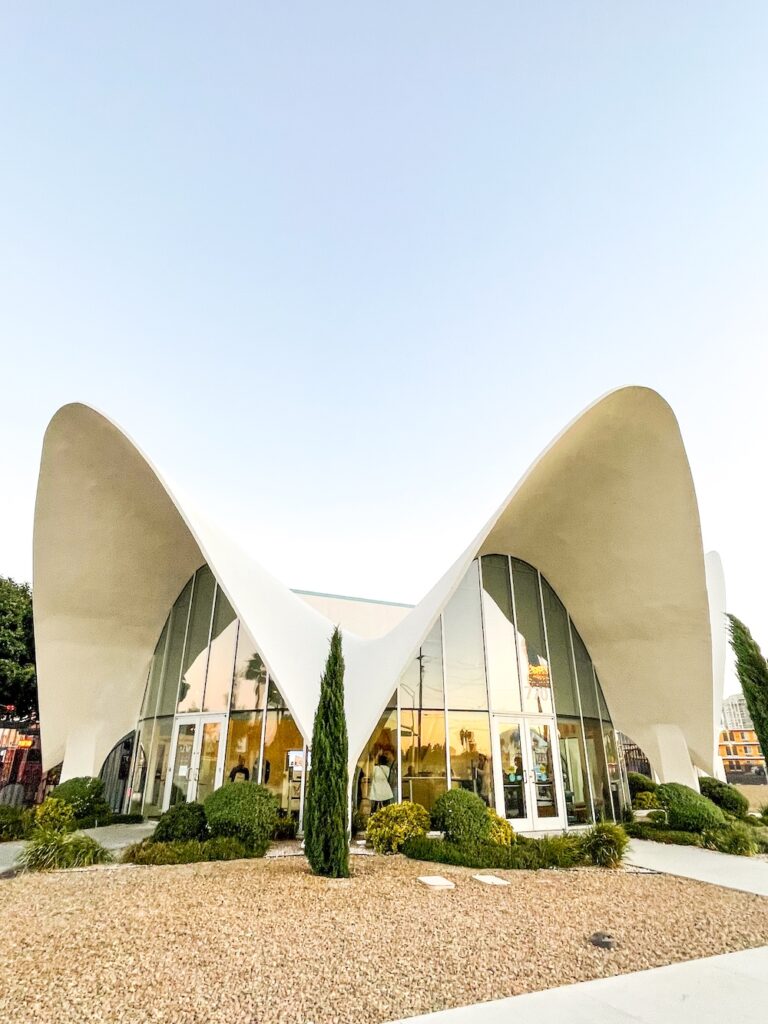
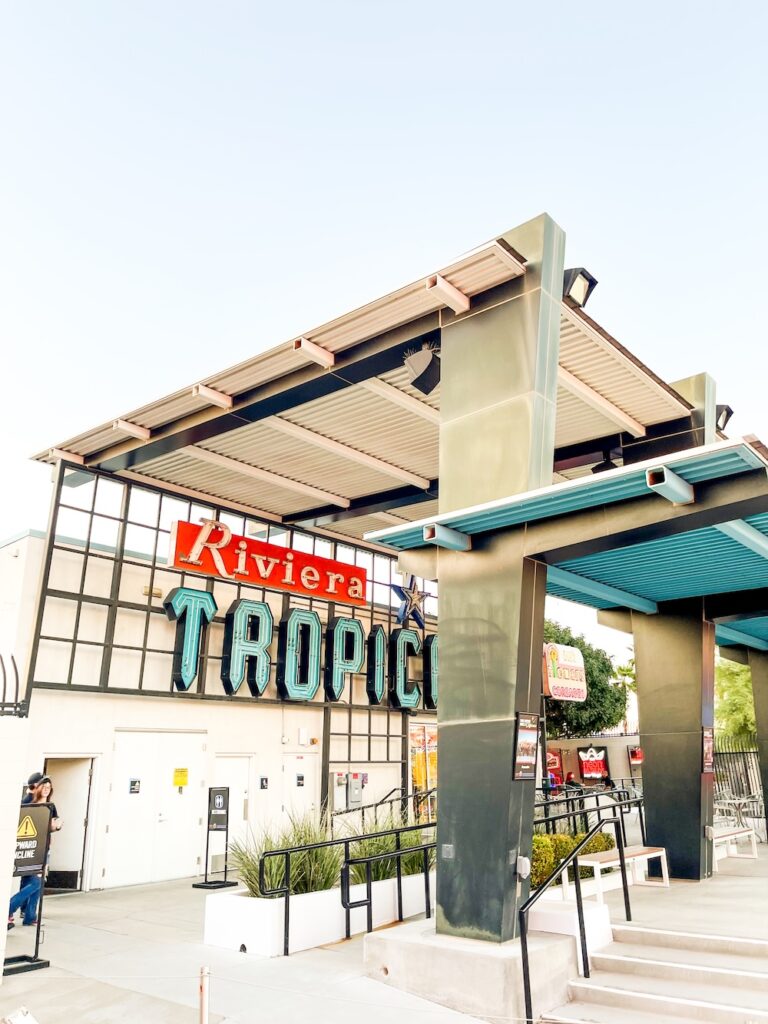
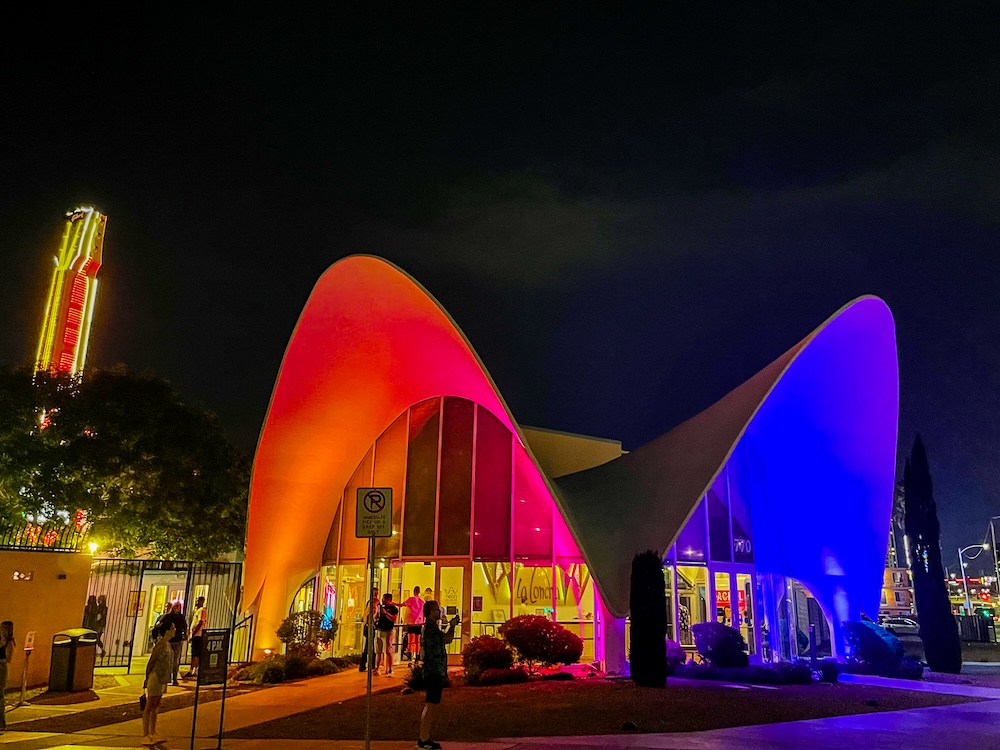
The main exhibition space, known as the Neon Boneyard, is located near downtown Las Vegas on Las Vegas Boulevard. The museum also restored the beautiful La Concha Motel lobby, which now serves as the visitor center. Designed by famed architect Paul Revere Williams, the sweeping shell shaped building is considered an important example of Googie architecture.
How to Visit the Neon Museum
The Neon Museum is easy to visit whether you are staying on the Strip or downtown. It is located just north of Fremont Street in downtown Las Vegas.
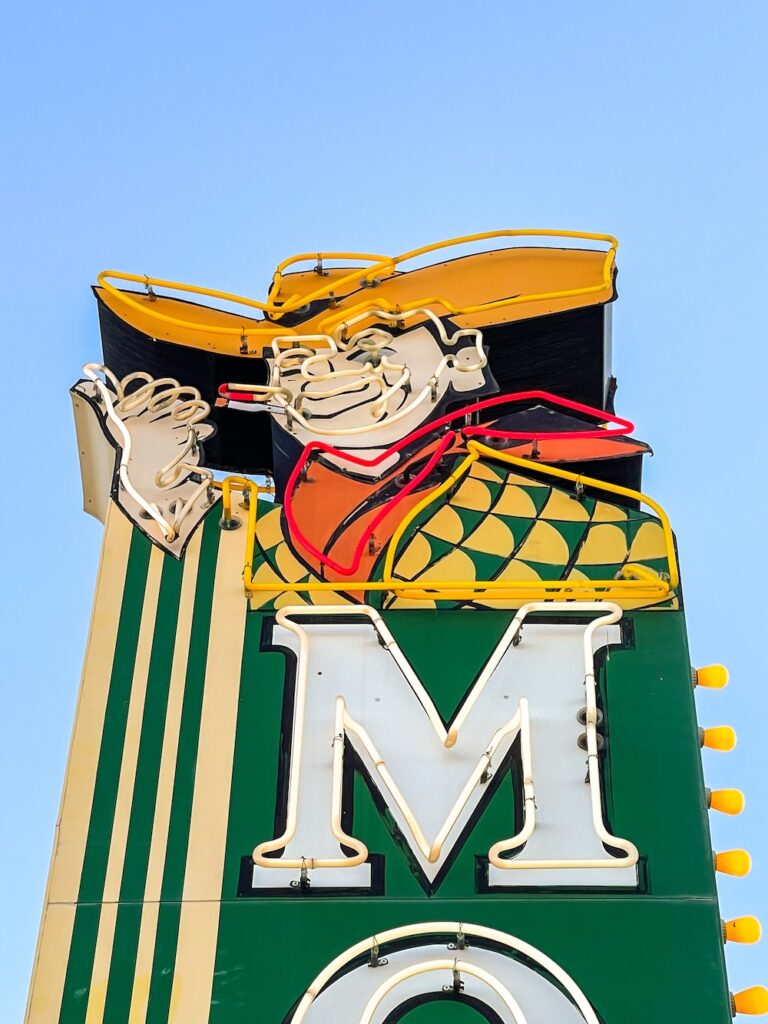
Because tours and timed entry slots often sell out, especially at sunset and after dark, it is best to reserve tickets in advance through the museum’s official website.
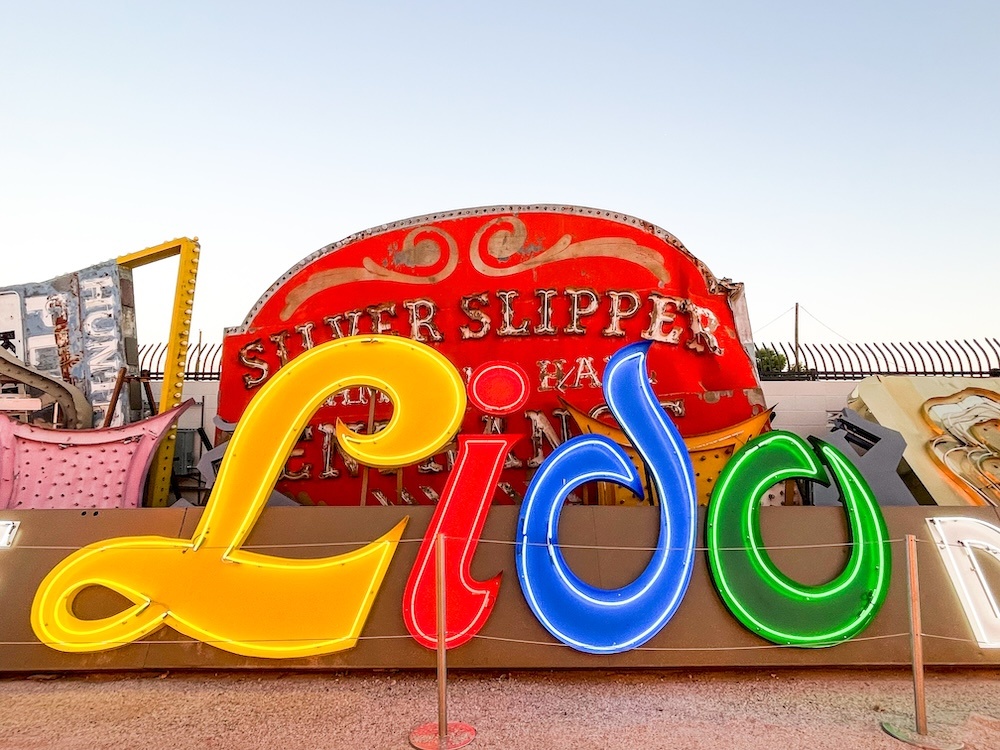
Visitors can explore the Neon Boneyard through guided tours or self guided experiences depending on the time and ticket type. Daytime visits are great for photography and seeing details up close, while nighttime visits bring many restored signs glowing back to life.
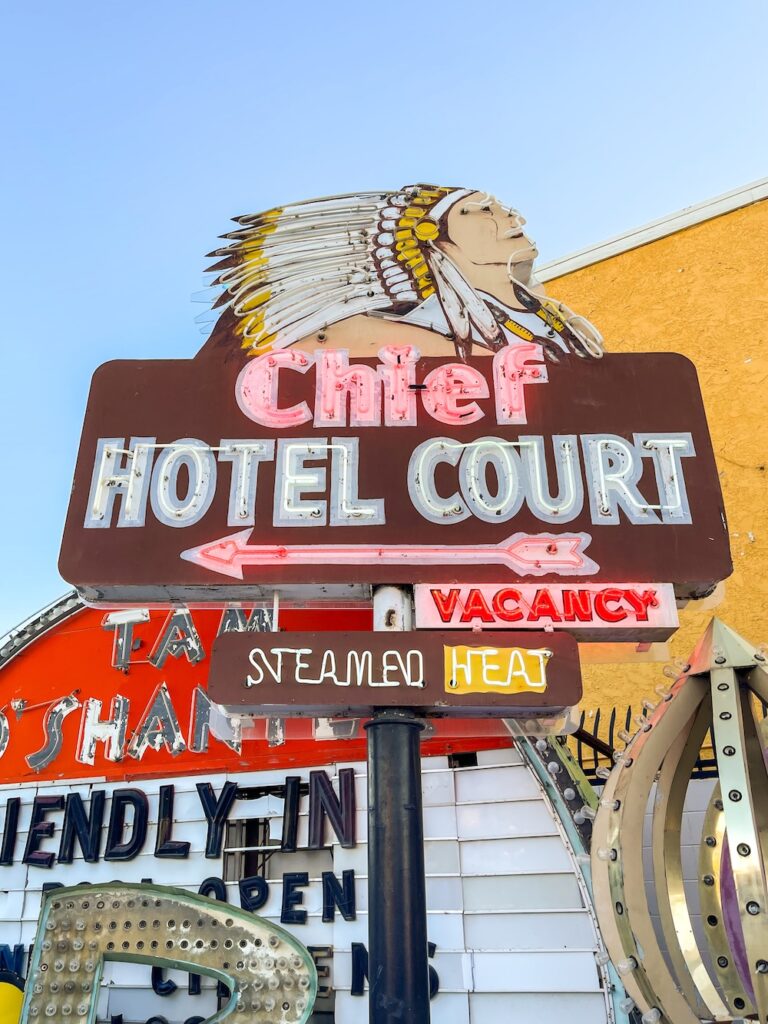
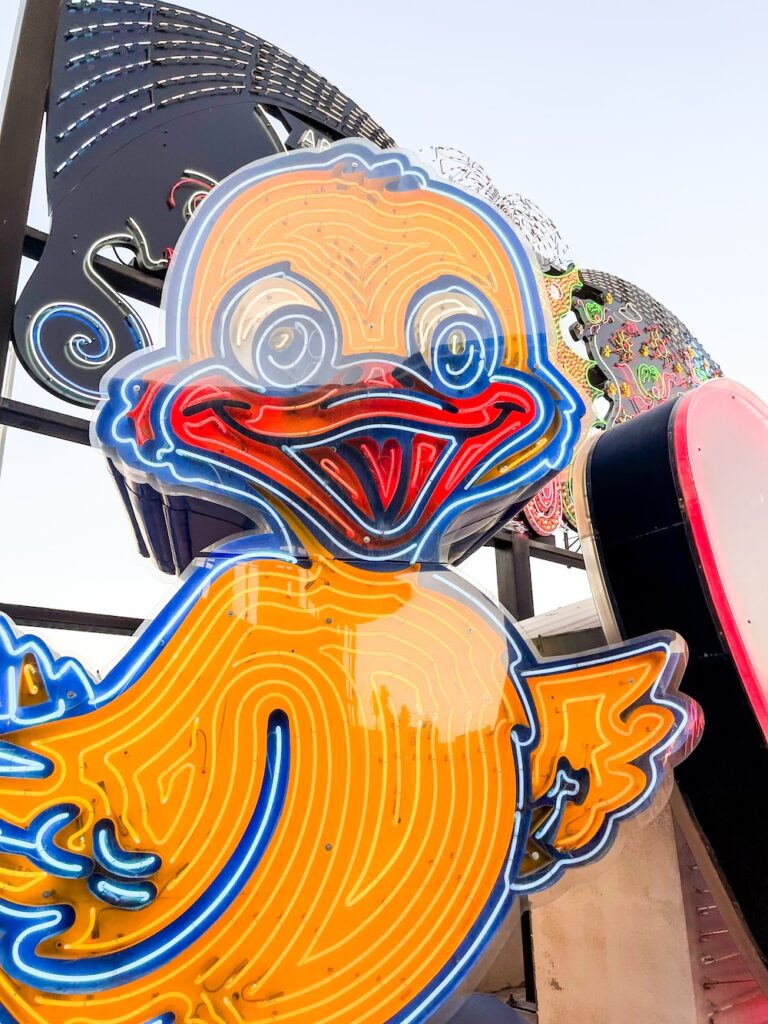
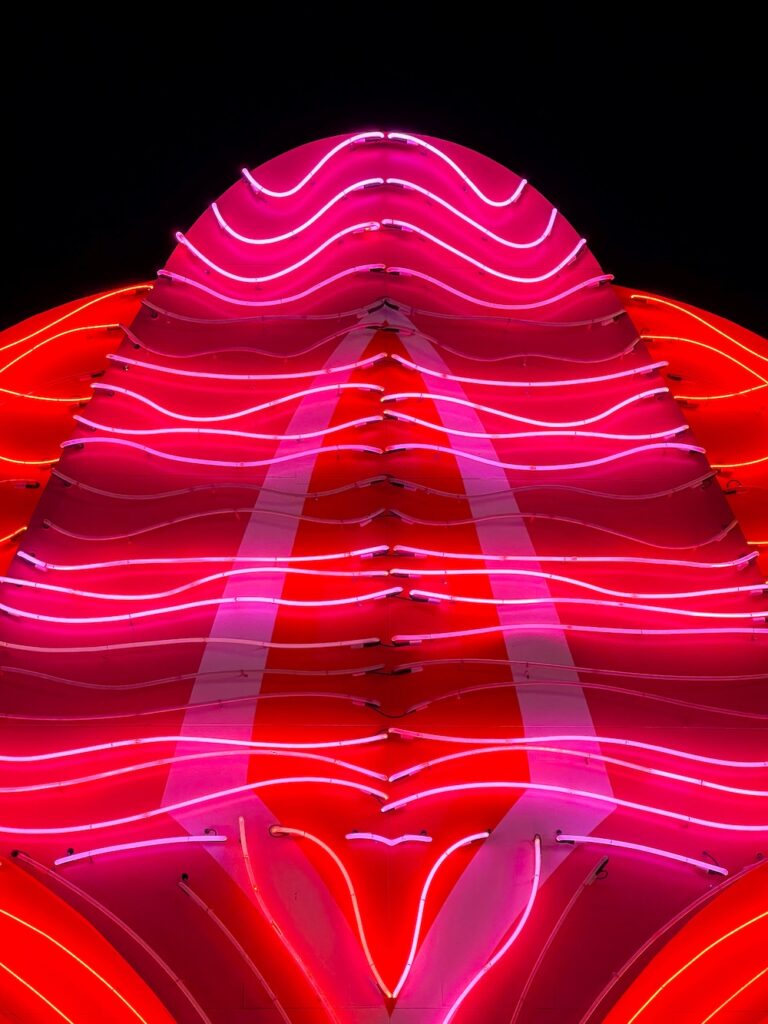
Comfortable shoes are highly recommended since the museum is entirely outdoors and involves walking on gravel and paved pathways. Las Vegas temperatures can be extremely hot during the summer, so evening visits are often more comfortable from late spring through early fall.
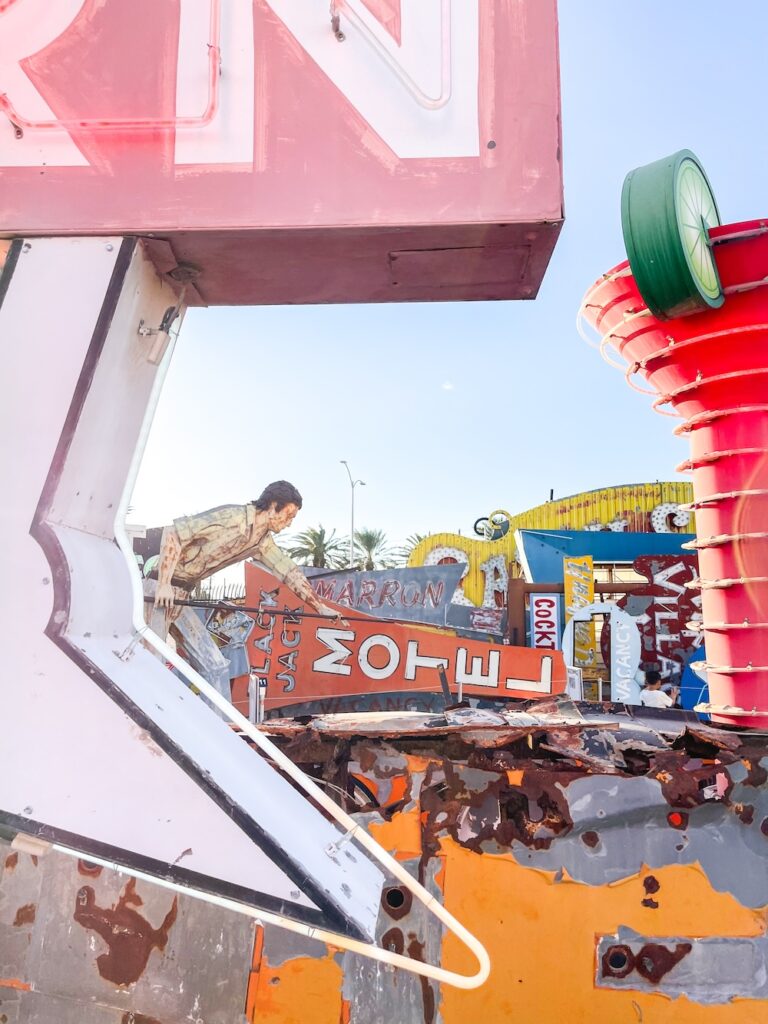
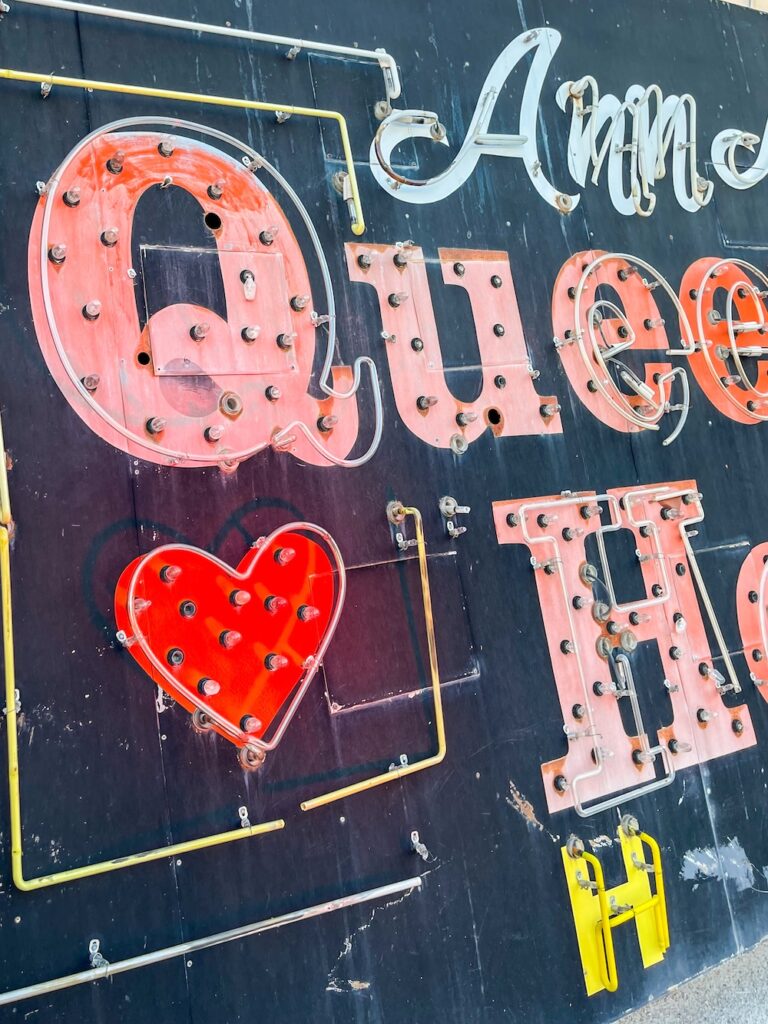
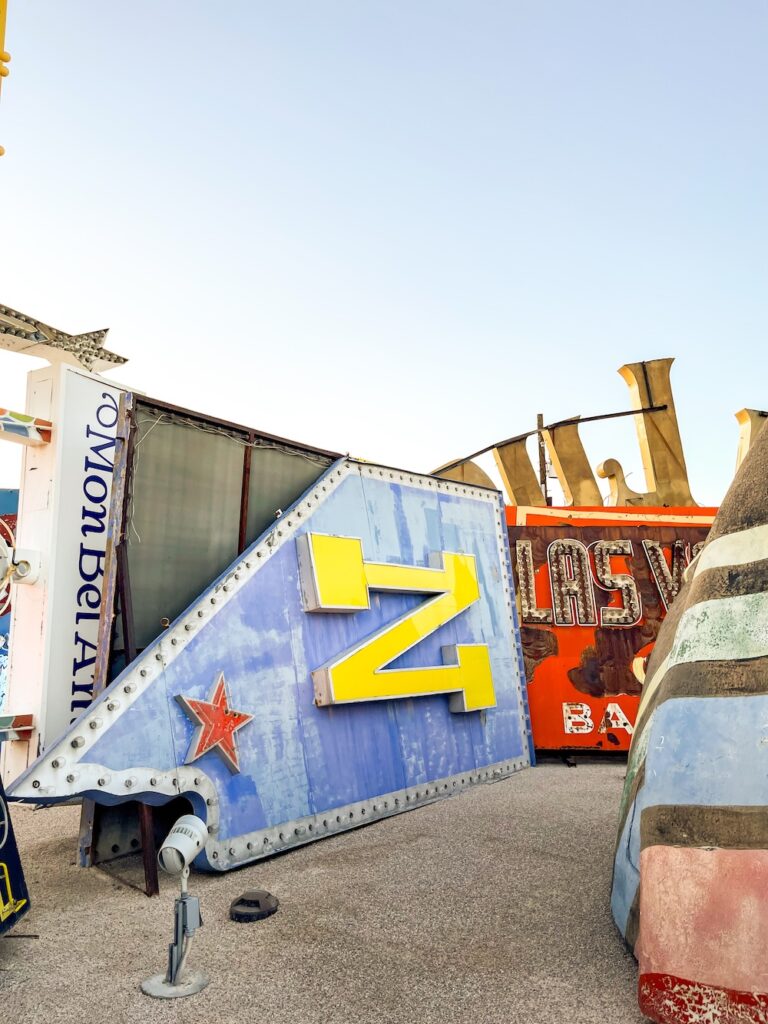
If you are hoping to take photos, golden hour just after sunset is one of the best times to visit. The warm desert light mixed with the colorful neon creates an incredible backdrop. But note the Neon Museum’s photography and camera restrictions.
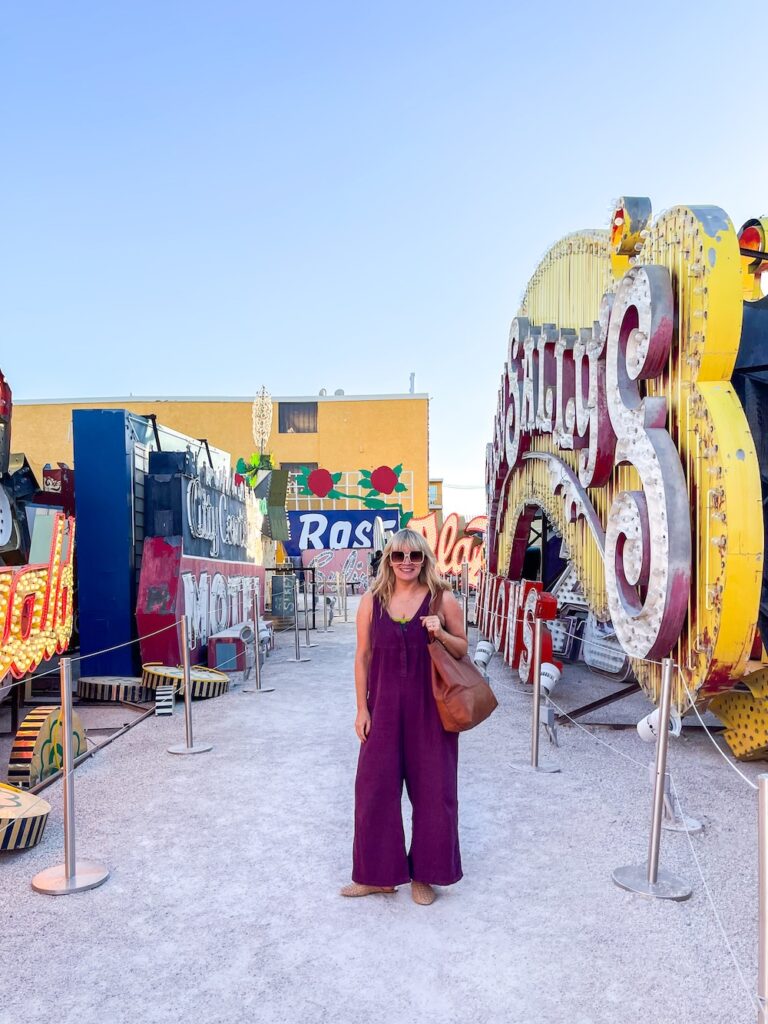
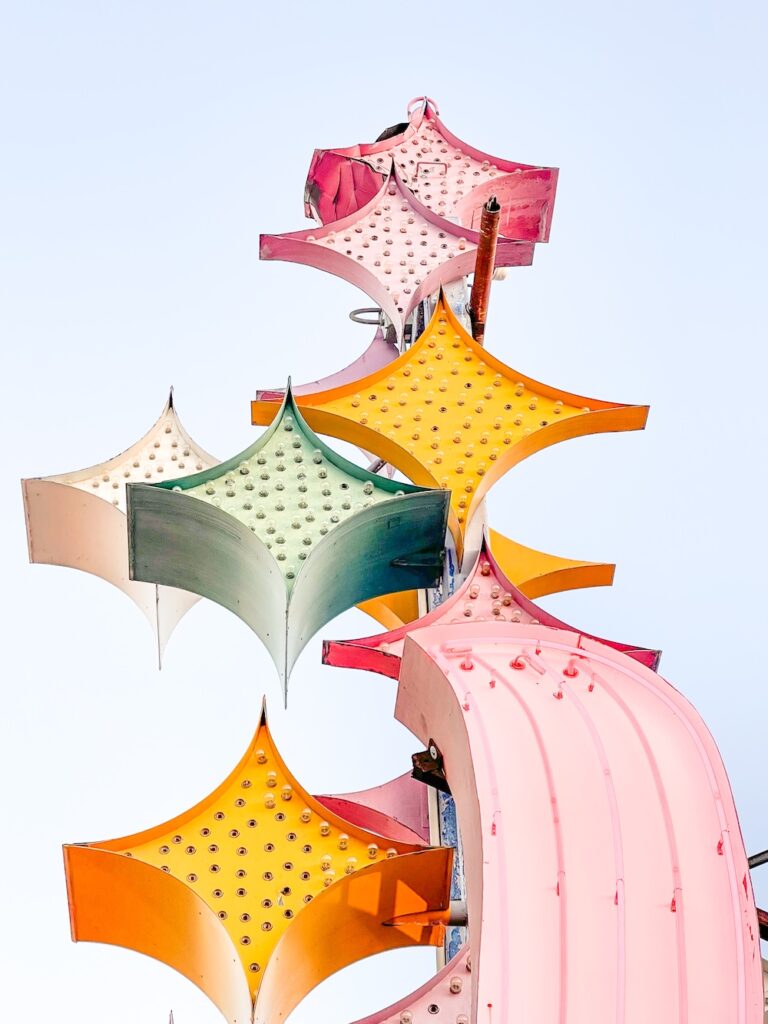
I like to visit about 30-45 minutes before sunset and do a couple loops around the boneyard. And then a couple after the sun sets an and the lights come on and really put on a show! I always see something different each lap around the neon signs – either because the light hits differently or a group of people have moved.
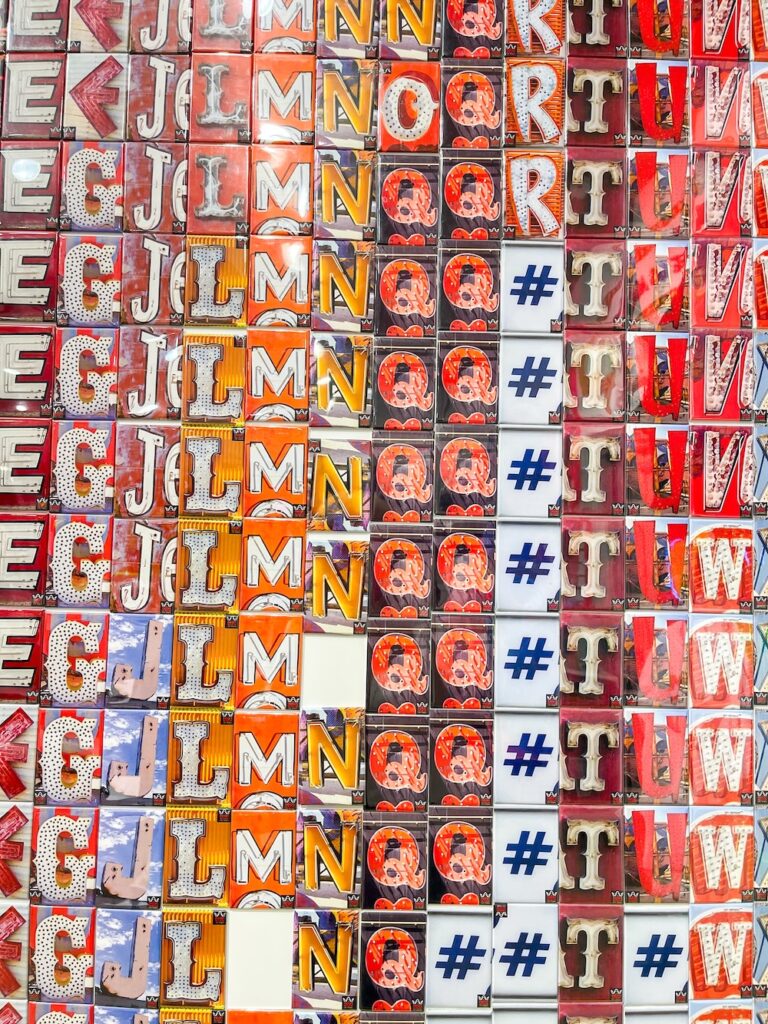
And, be sure to visit the gift shop!
Notable Signs to Look For
One of the best parts of visiting the Neon Museum is spotting signs from famous casinos and landmarks that no longer exist. Some of the most notable signs include:
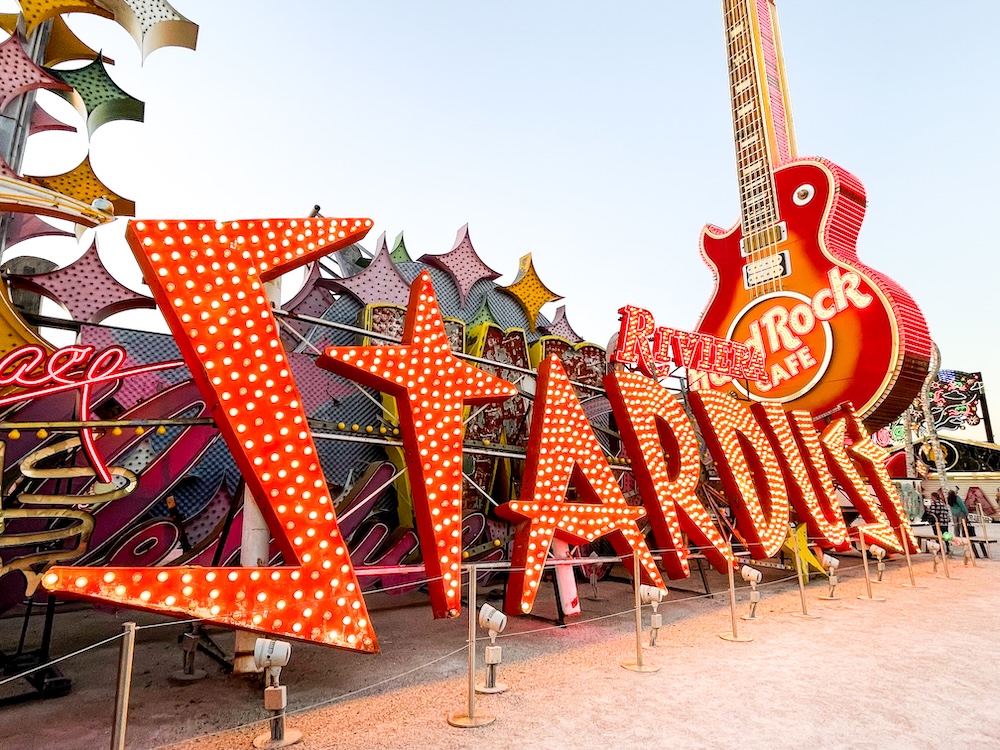
The Stardust
The Stardust sign is one of the museum’s most recognizable pieces. The casino originally opened in 1958 and became famous for its massive electric signage and space age design.
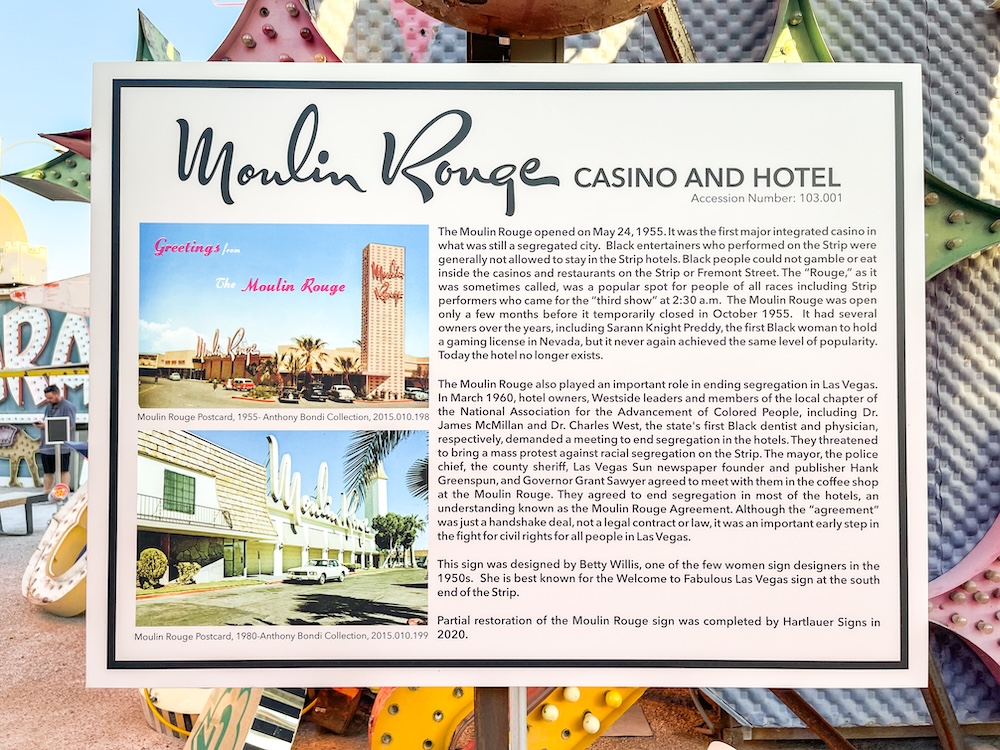
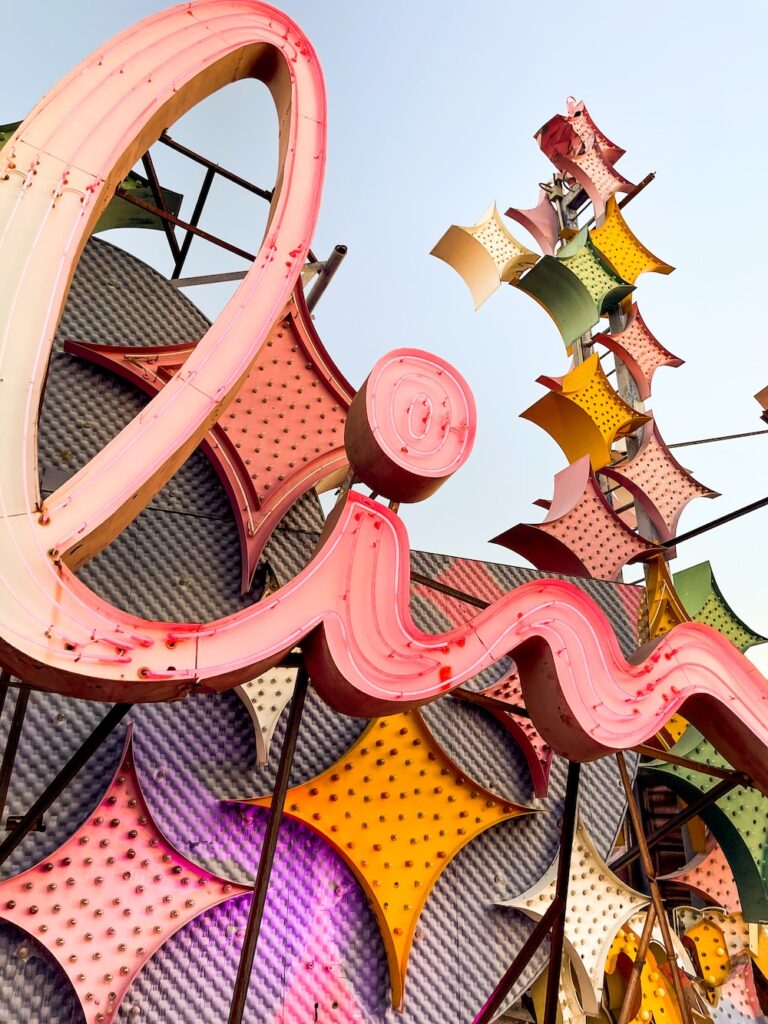
Moulin Rouge
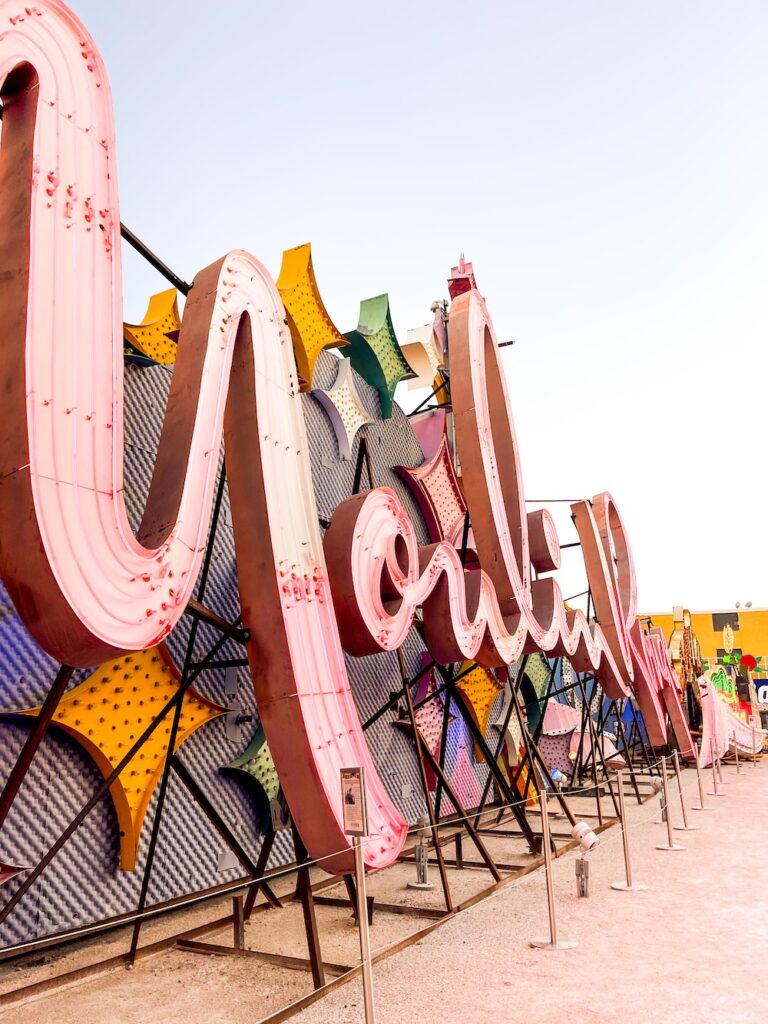
The Moulin Rouge sign represents an important part of Las Vegas history. The hotel was the first racially integrated casino in Las Vegas and became a symbol of progress during segregation.
Hard Rock Cafe Guitar
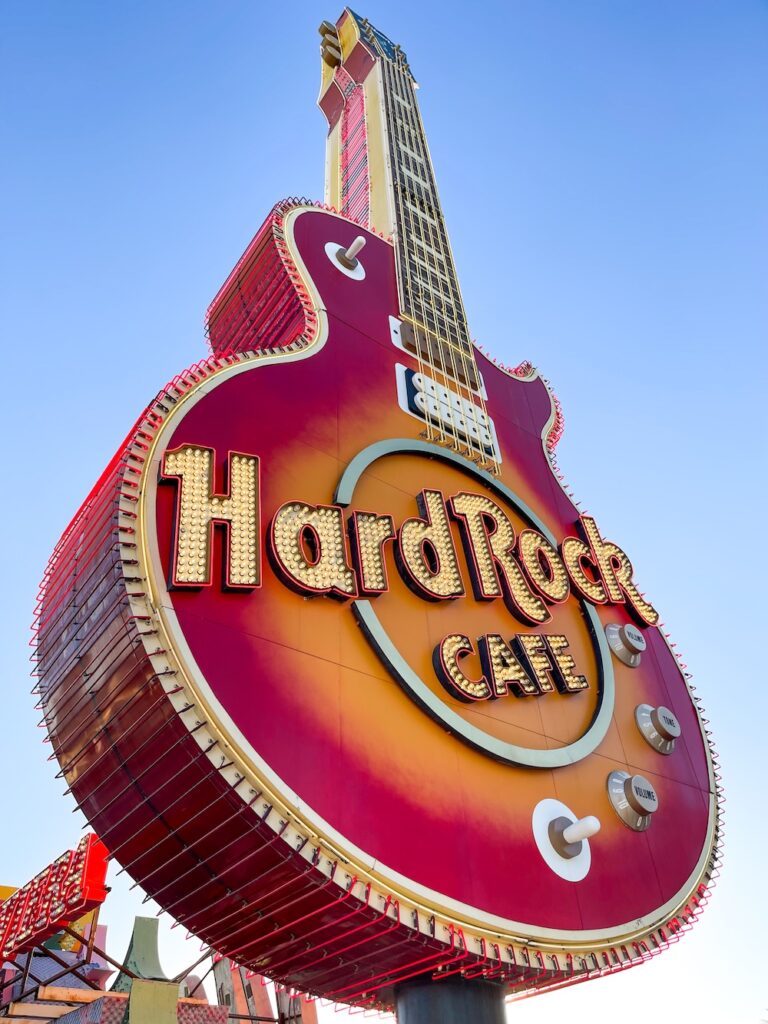
The giant Hard Rock Cafe guitar sign is impossible to miss and adds a more modern layer to the museum’s collection.
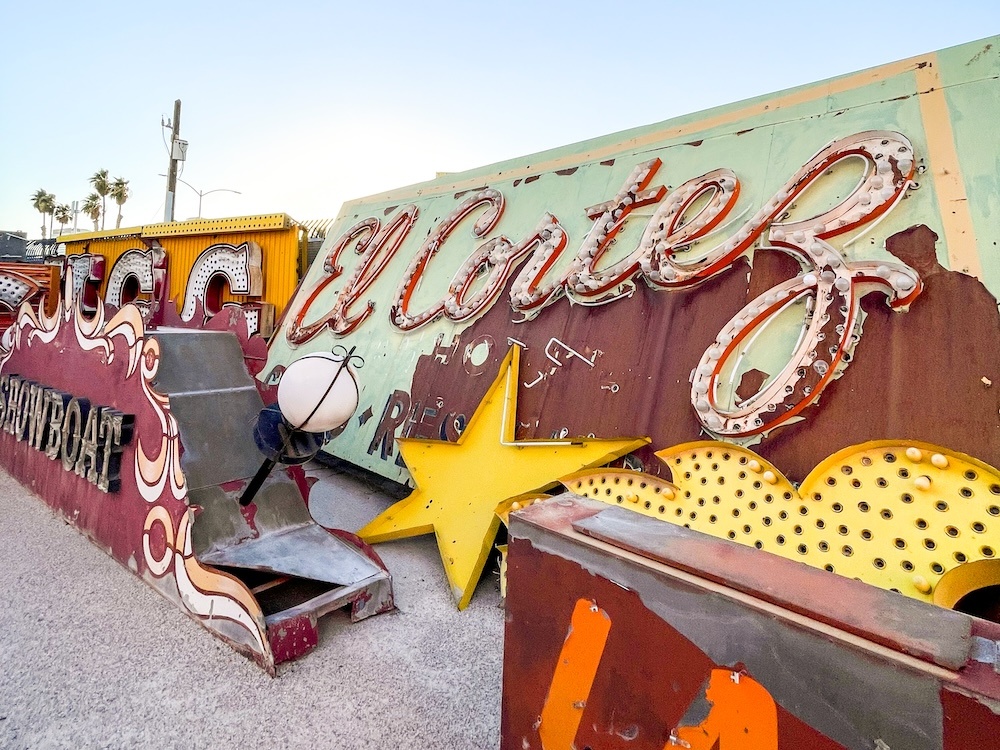
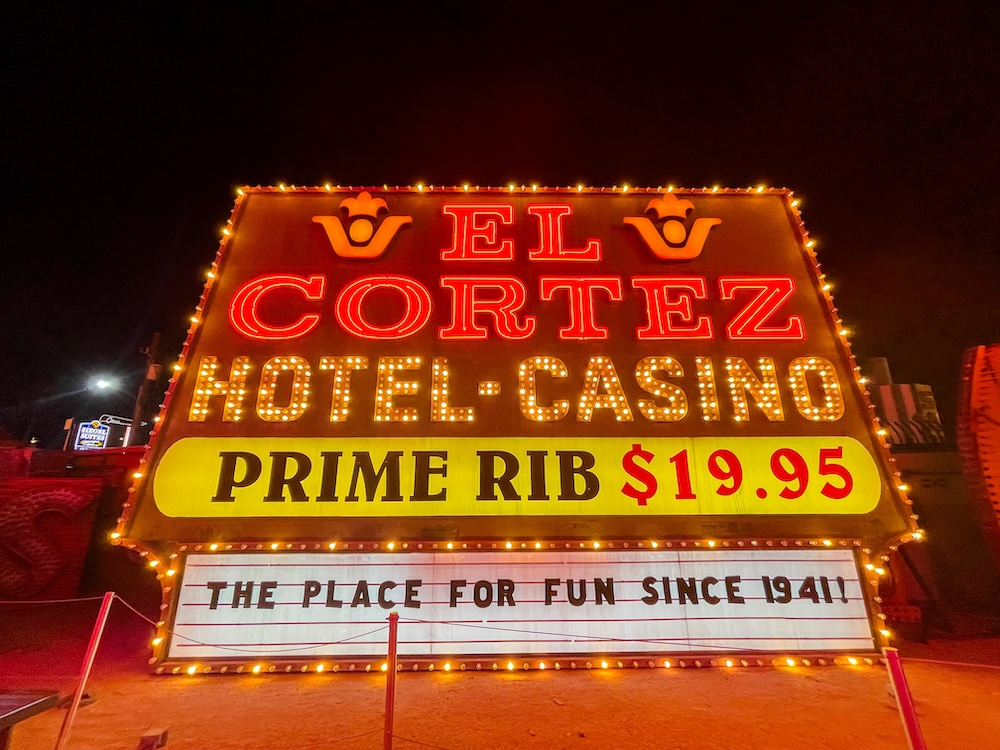
El Cortez
While the El Cortez still exists and is possibly even thriving, many of it’s older signs have ended up in the Neon Boneyard.
The Yucca
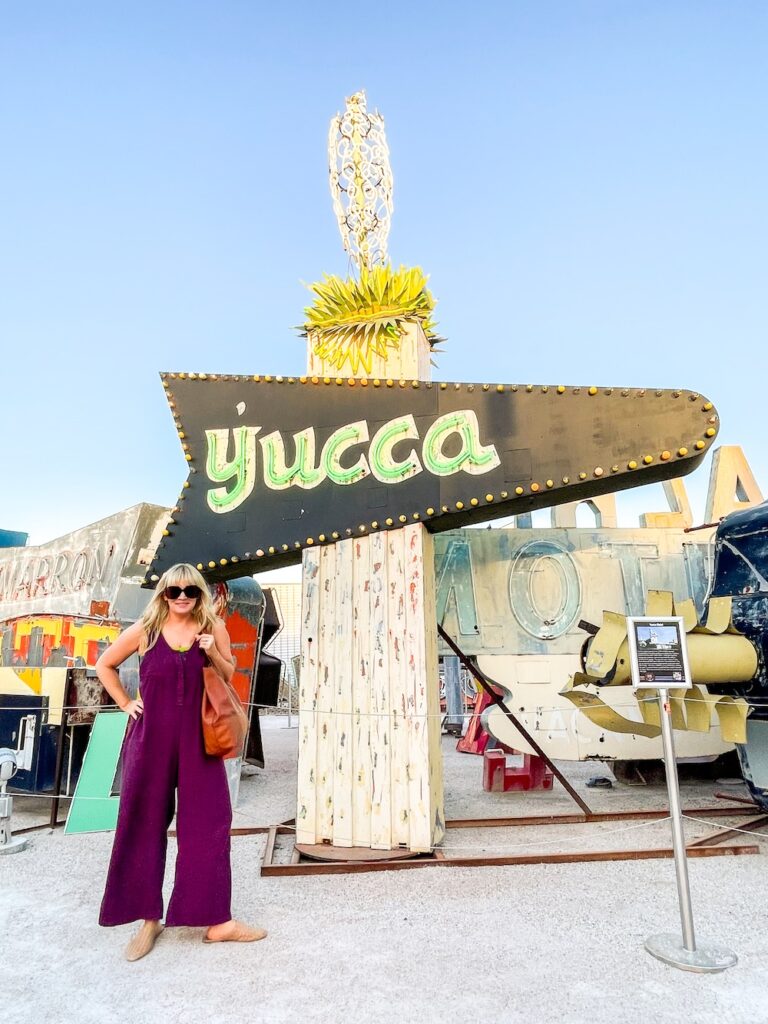
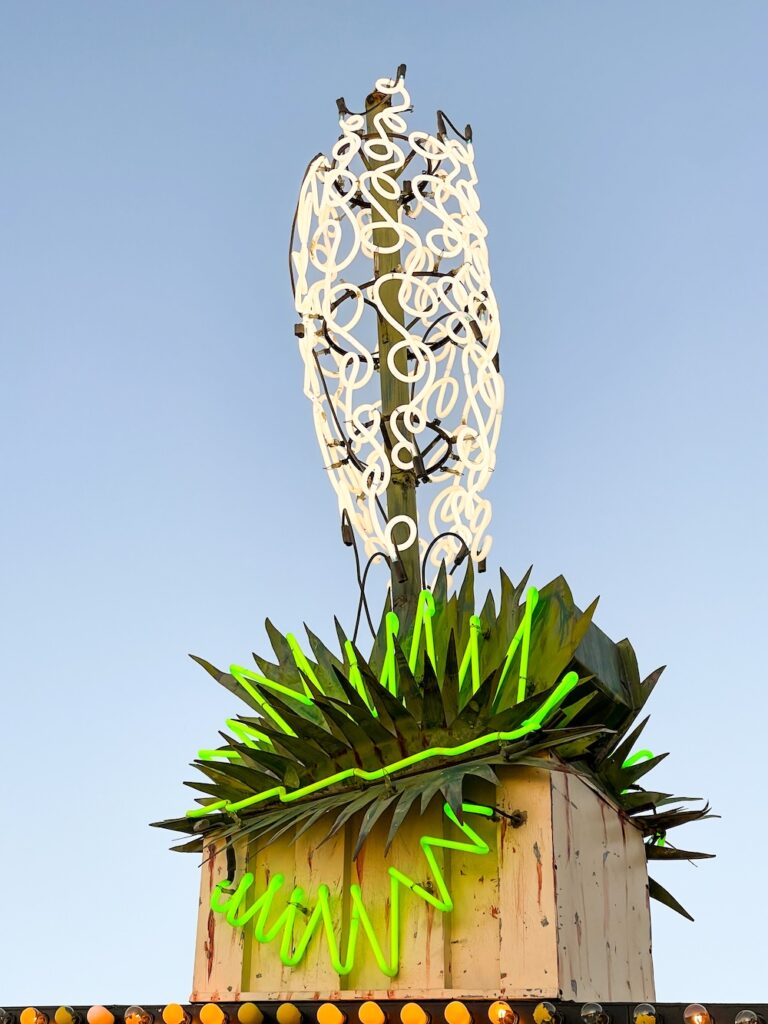
One of the most eye catching signs in the Neon Museum collection comes from the Yucca Motel, a classic mid century roadside motel that once welcomed travelers to Las Vegas. Its colorful neon sign, featuring a stylized yucca plant and bold retro lettering, captures the optimistic spirit of the city’s early tourism era when independent motels lined the highways leading into town. Today, the restored sign serves as a reminder of a time before giant casino resorts dominated the Las Vegas skyline.
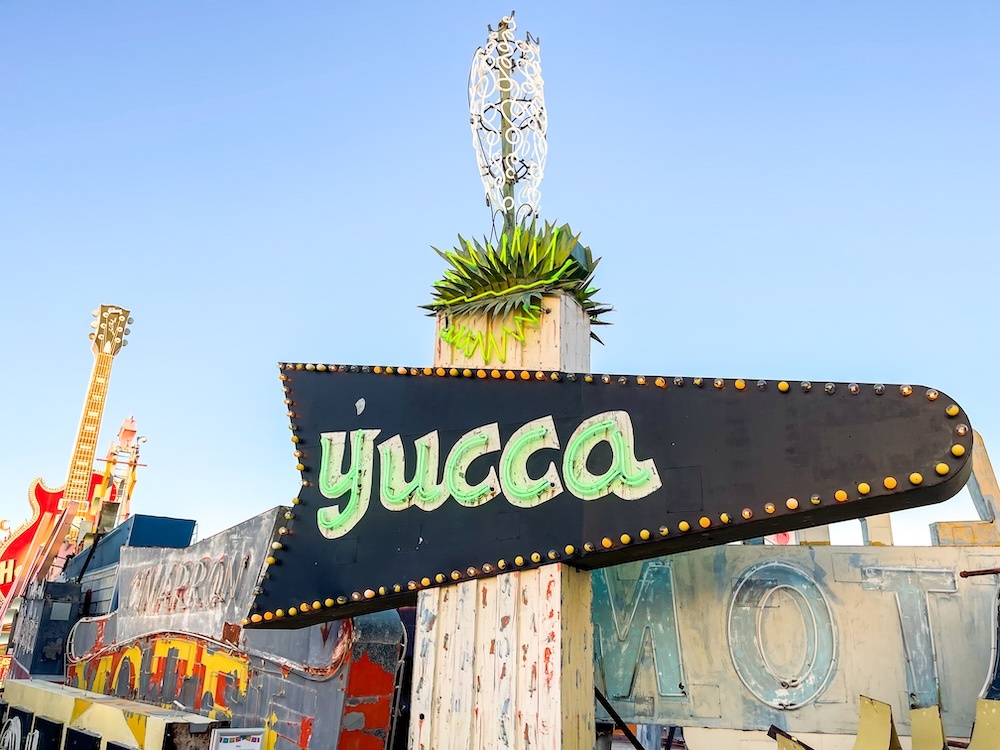
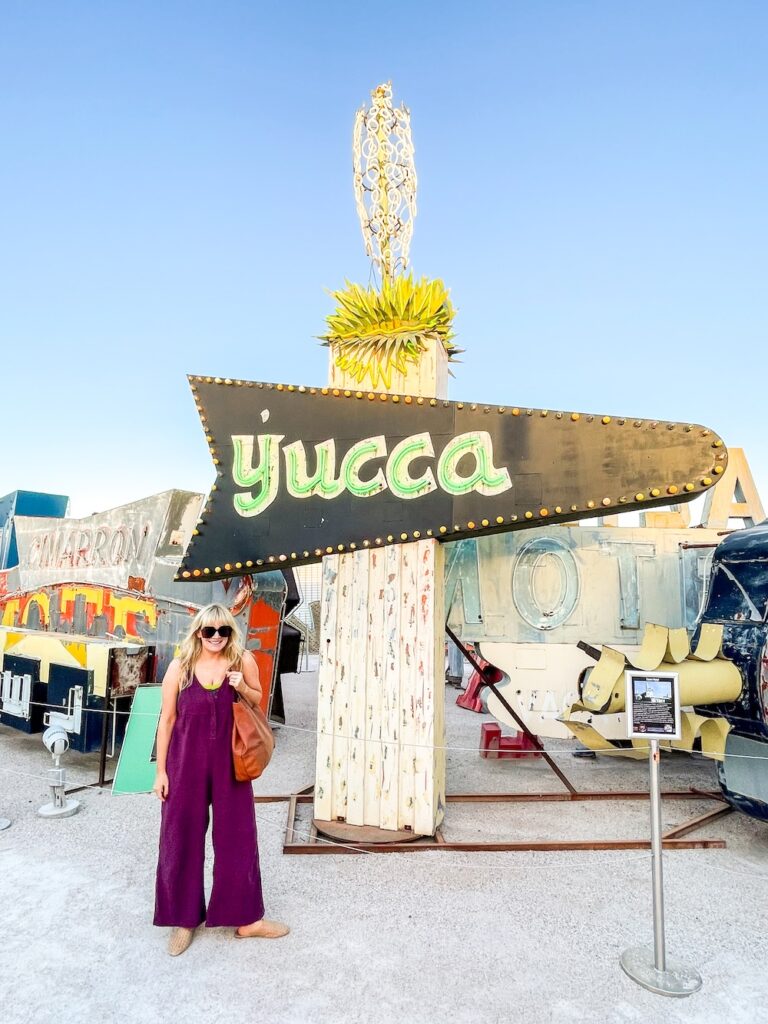
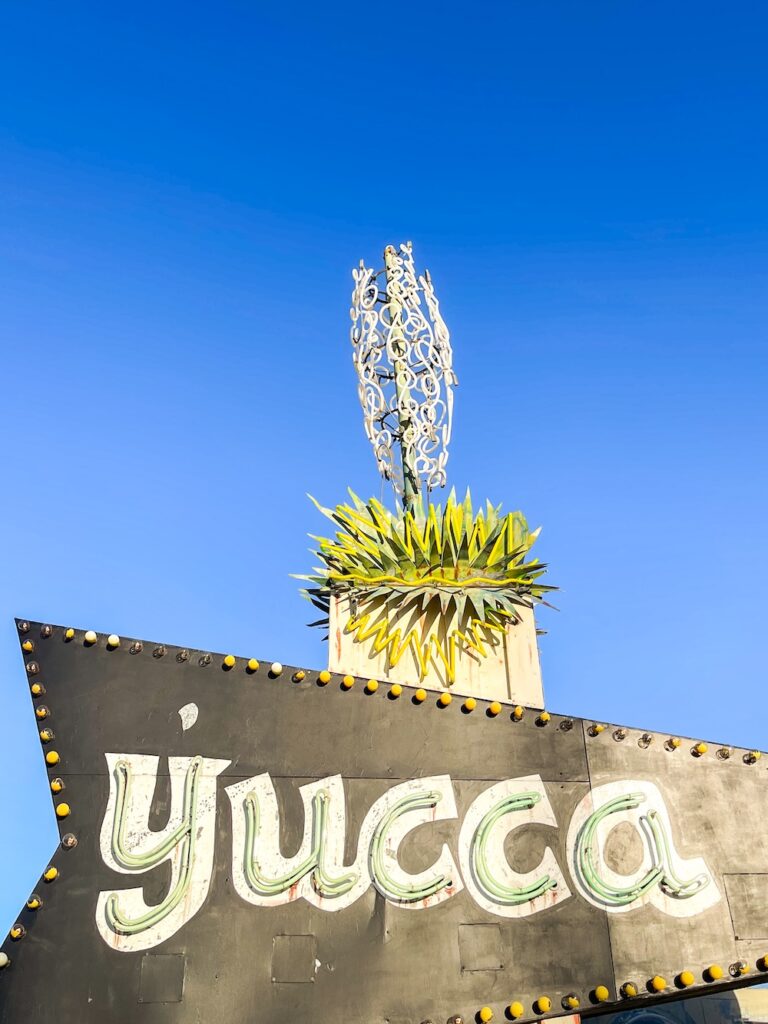
Goddamn! Look at that beautiful glasswork! The curves of the flower and the “spikes” of the plant! Gorgeous! Possibly my favorite neon sign!
La Concha Motel Lobby
Even though it is technically a building rather than a sign, the restored La Concha lobby is one of the museum’s most photographed features thanks to its dramatic curved roofline and retro futuristic design.
The Brilliant! Jackpot Show
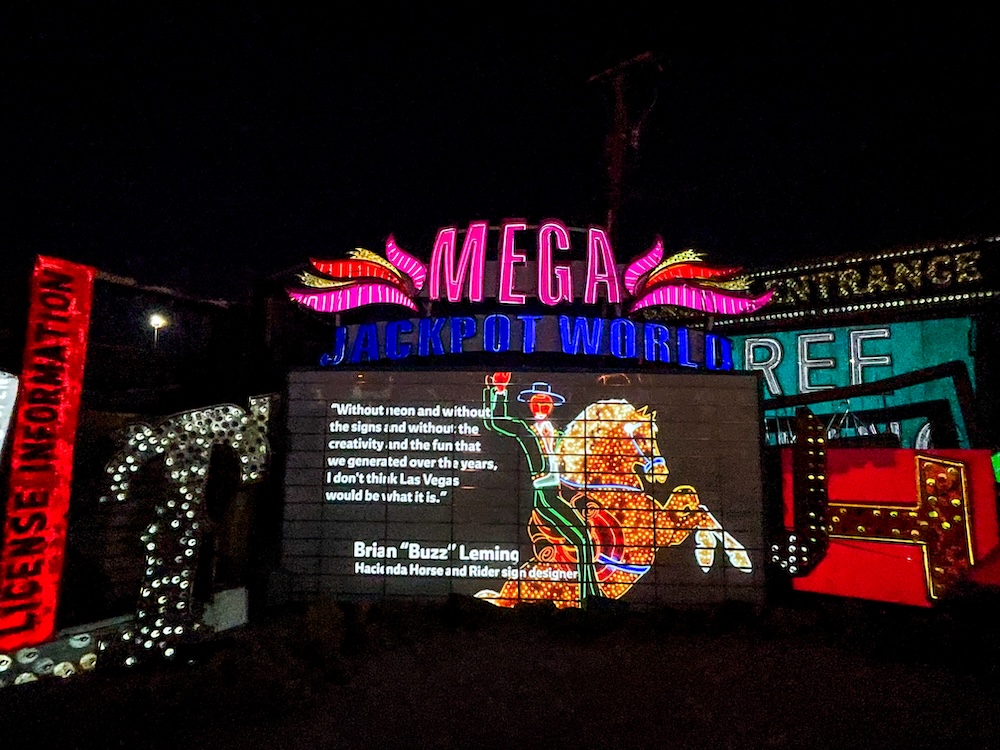
One of the museum’s most unique experiences is “Brilliant! Jackpot,” an immersive audiovisual show that uses projection mapping to bring old signs back to life.
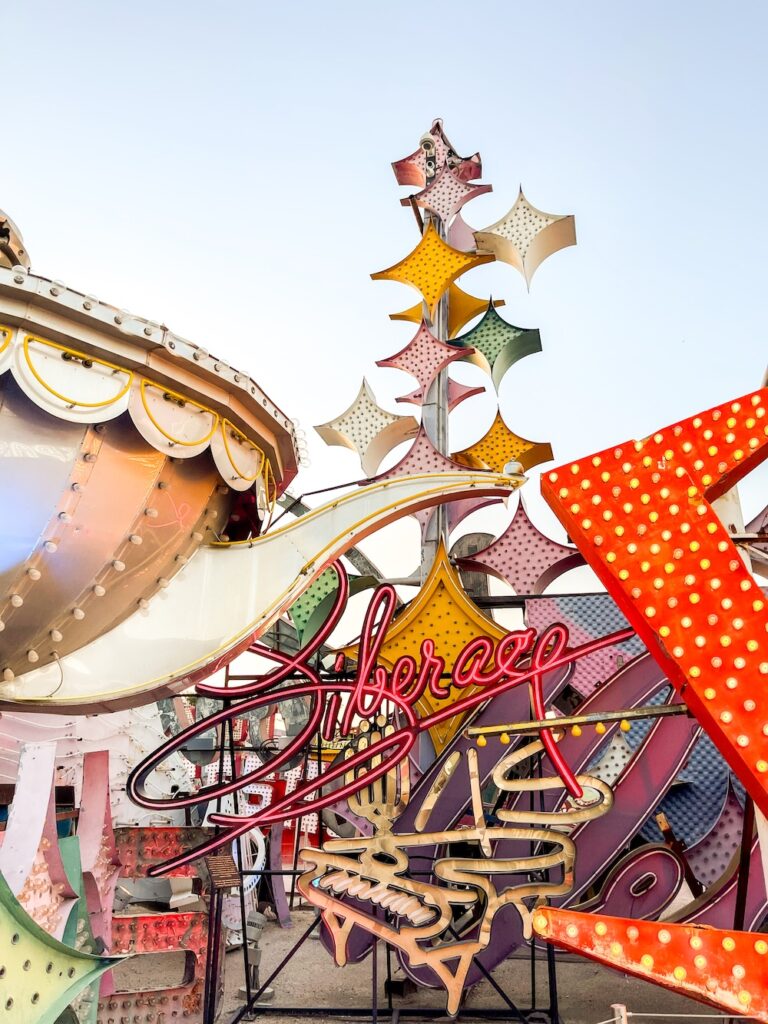
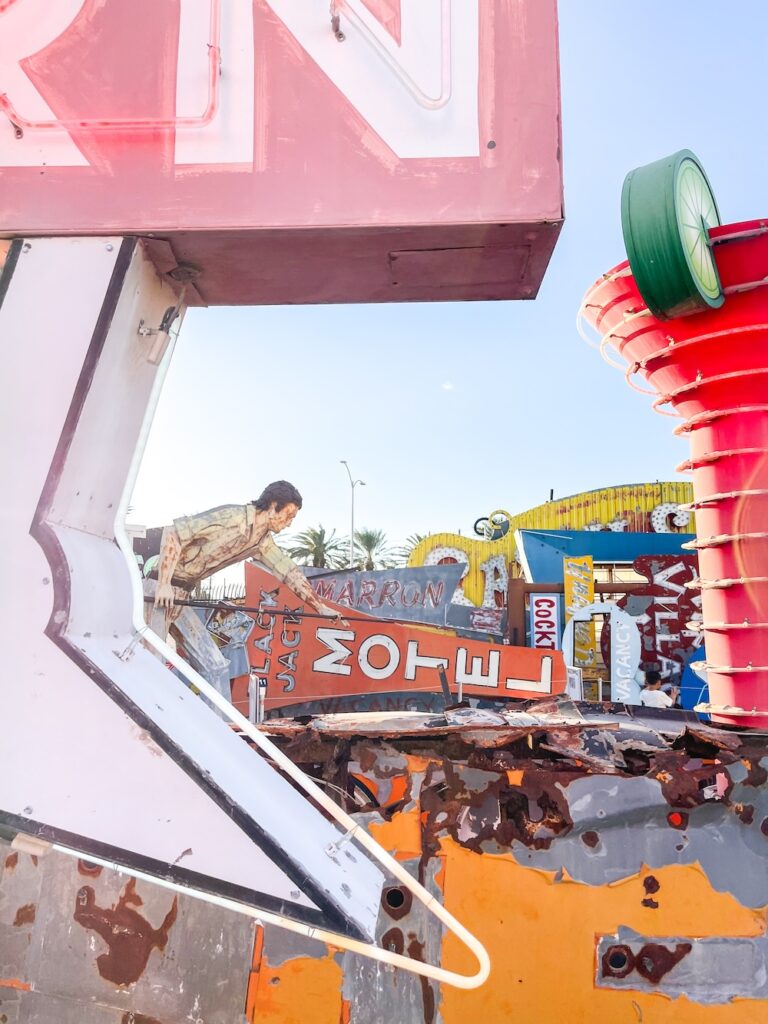
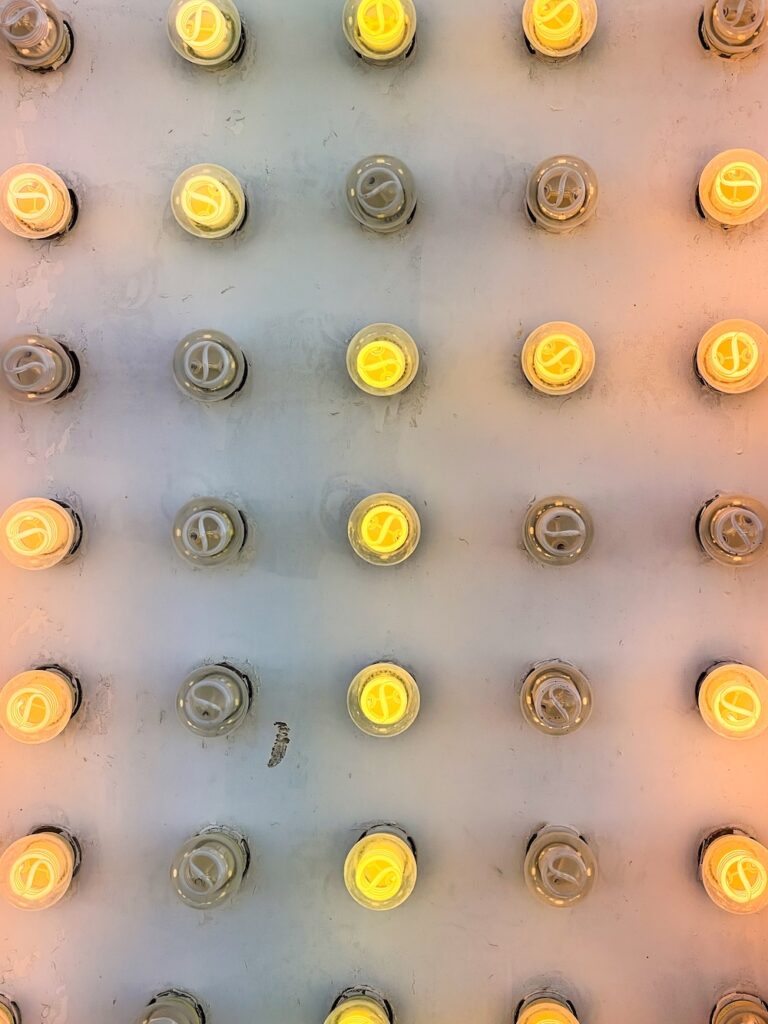
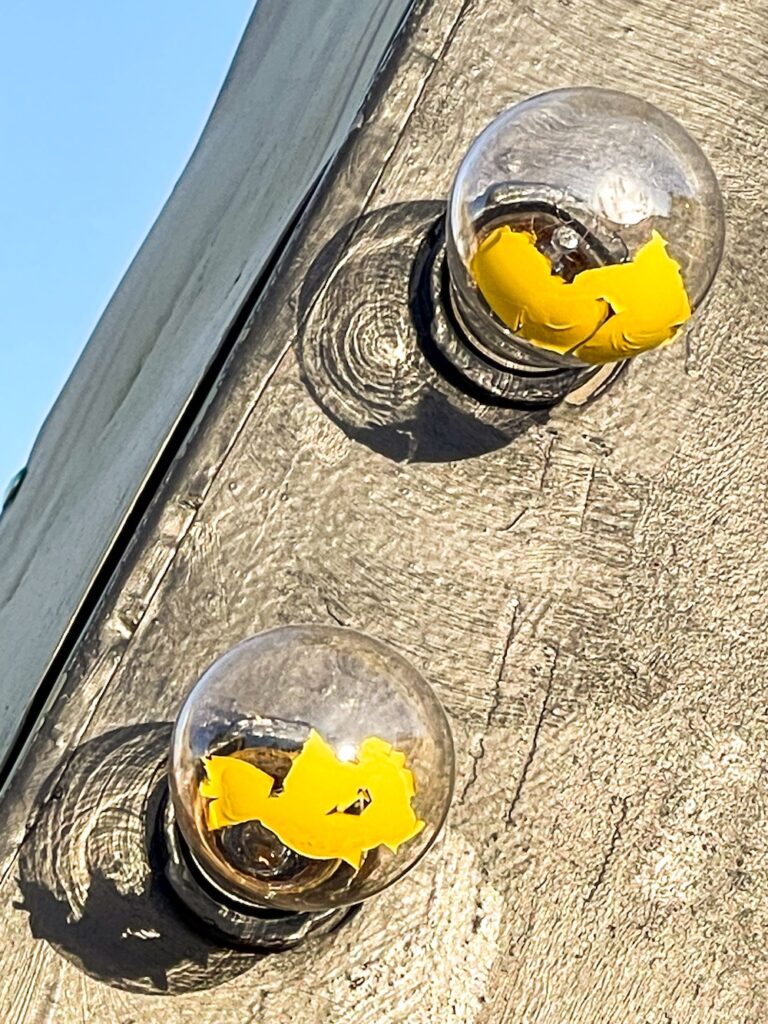
This sign does NOT light up. It is not electrified, it does not work:
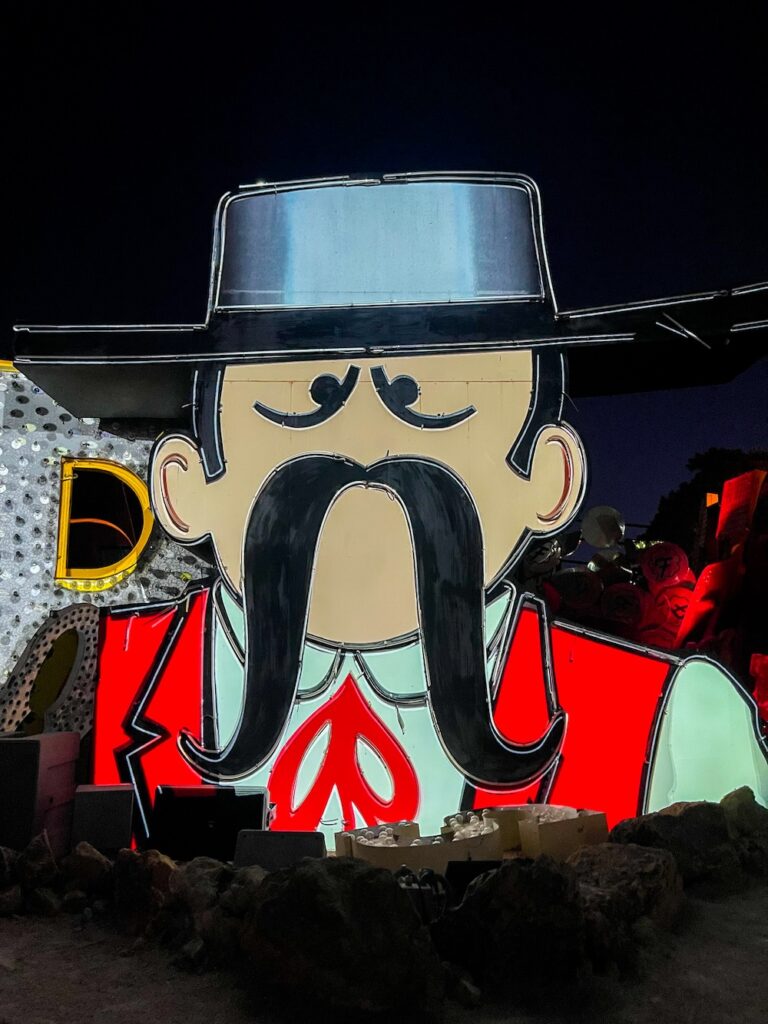
Rather than physically restoring every sign with expensive neon tubing, the museum projects animated lighting and music across the signs to recreate how they once looked in their prime. The result feels part art installation, part history lesson, and part vintage Vegas spectacle.
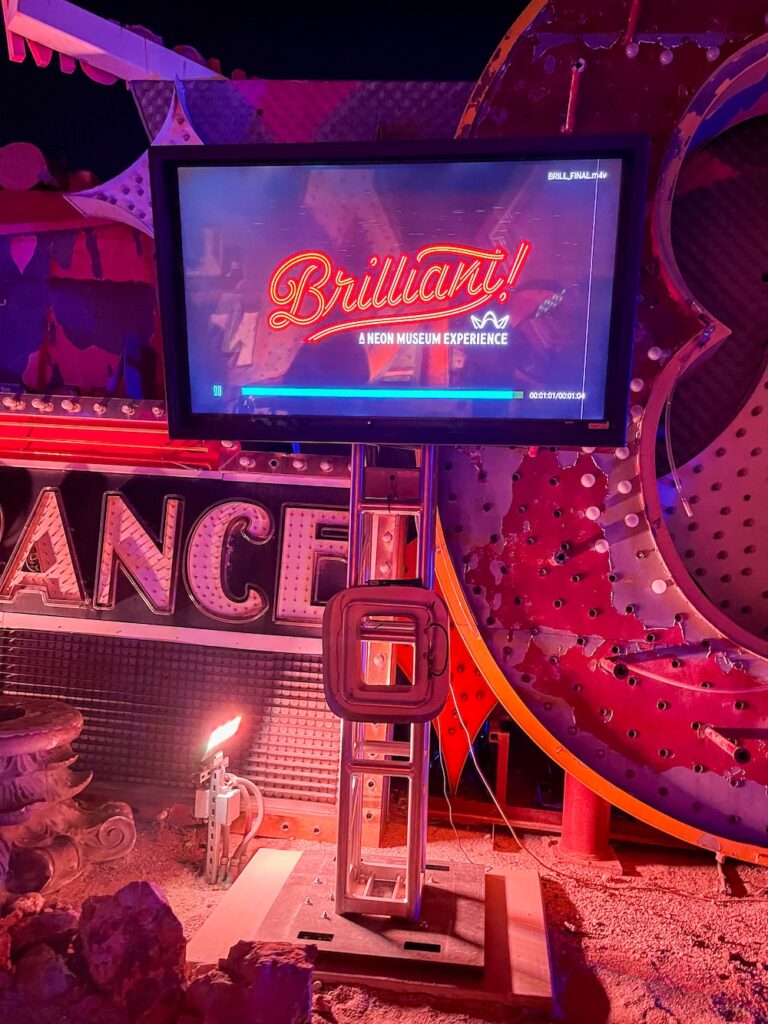
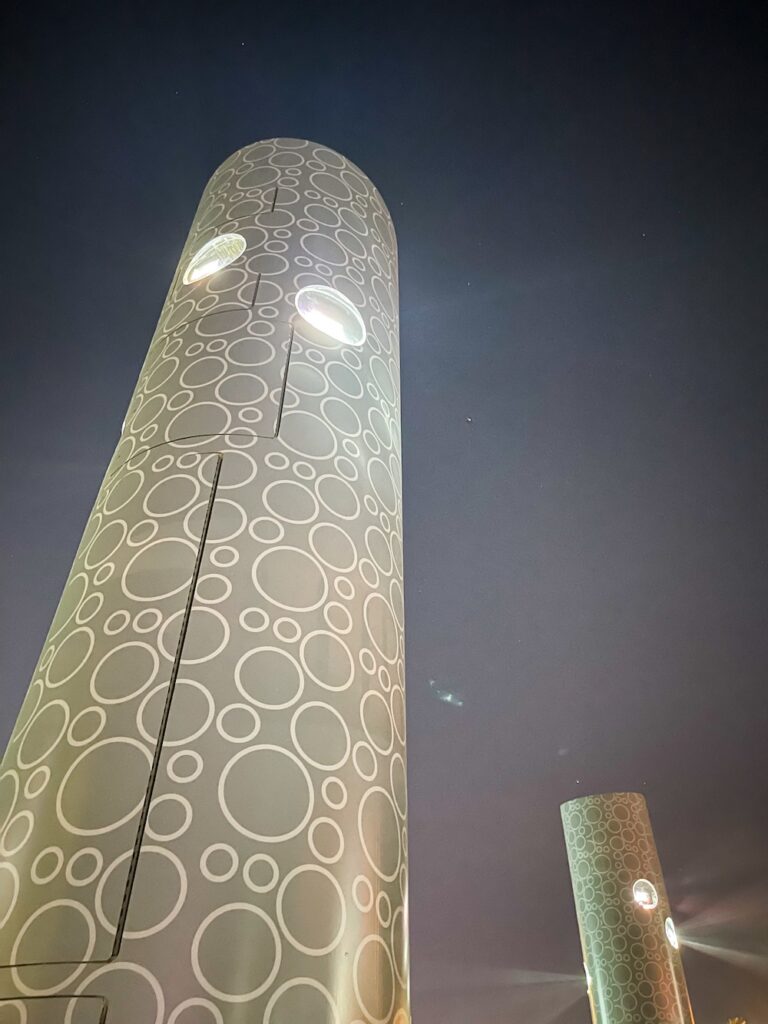
The show combines archival footage, music, lighting effects, and storytelling to celebrate the evolution of Las Vegas signage and entertainment culture. Even signs that no longer physically light up appear to glow again through digital projection technology.
If you only plan to visit once, adding Brilliant! to your experience is absolutely worth it.
What to Do Nearby
The Neon Museum is conveniently located near many of downtown Las Vegas’s best attractions.
Fremont Street Experience
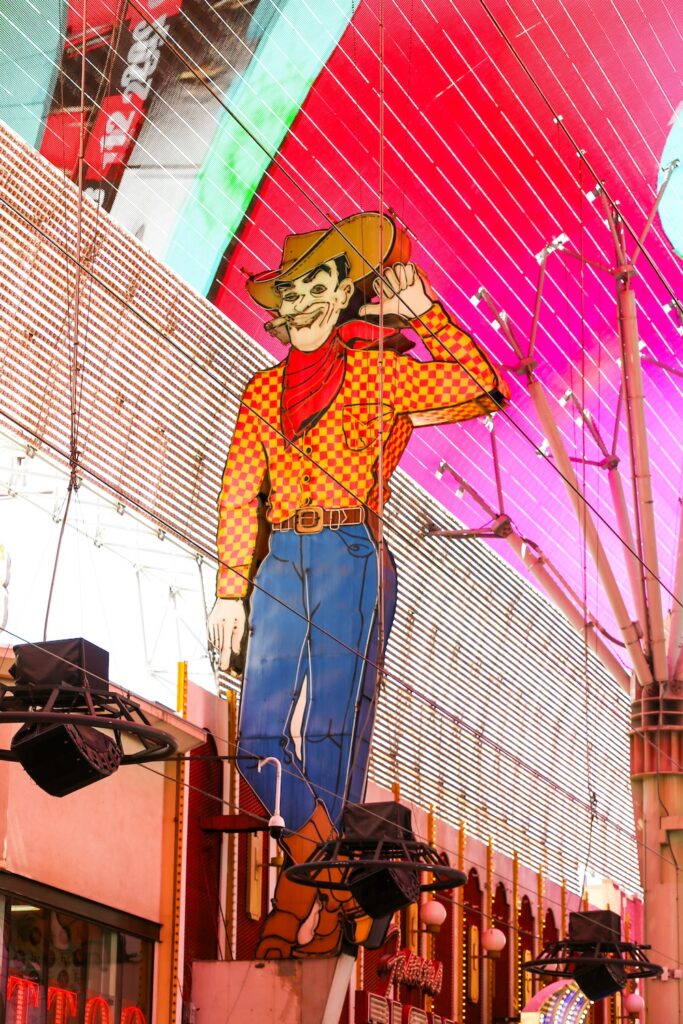
Just a few minutes away, Fremont Street offers live music, casinos, giant LED canopy shows, ziplining, and classic vintage Vegas energy. It is especially fun to visit the Neon Museum at sunset and then head to Fremont Street afterward for dinner and nightlife.
Read More: Ultimate Guide to Visiting Downtown Las Vegas (Coming Soon!)
Grab a Drink with Vegas Vicky
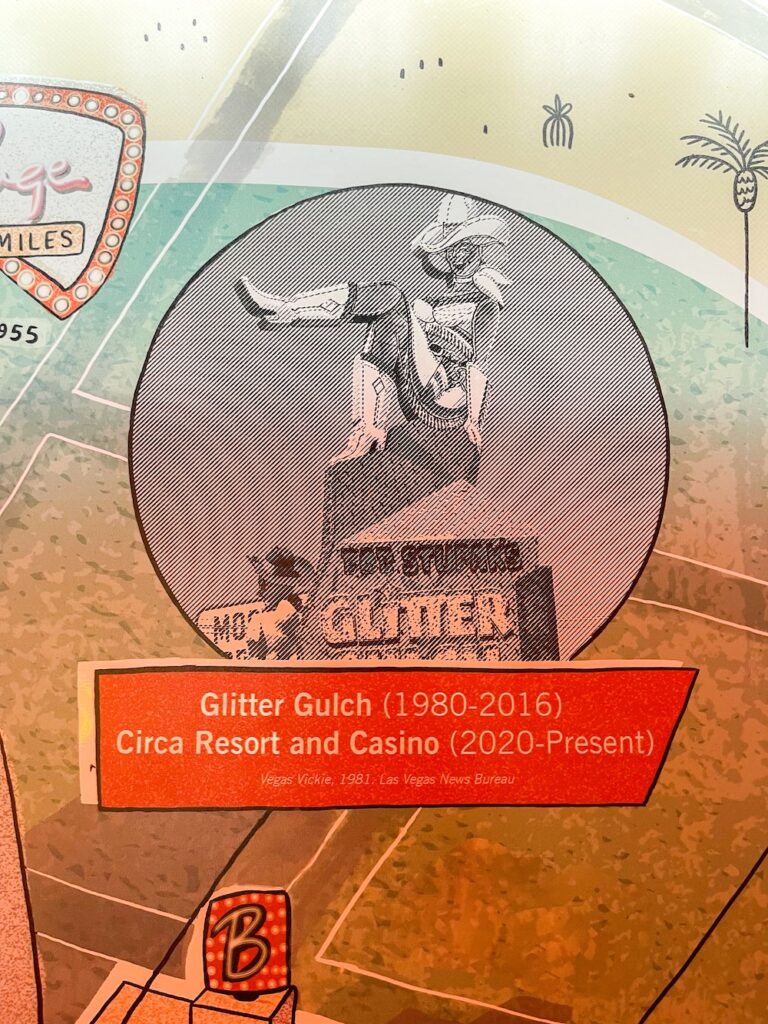
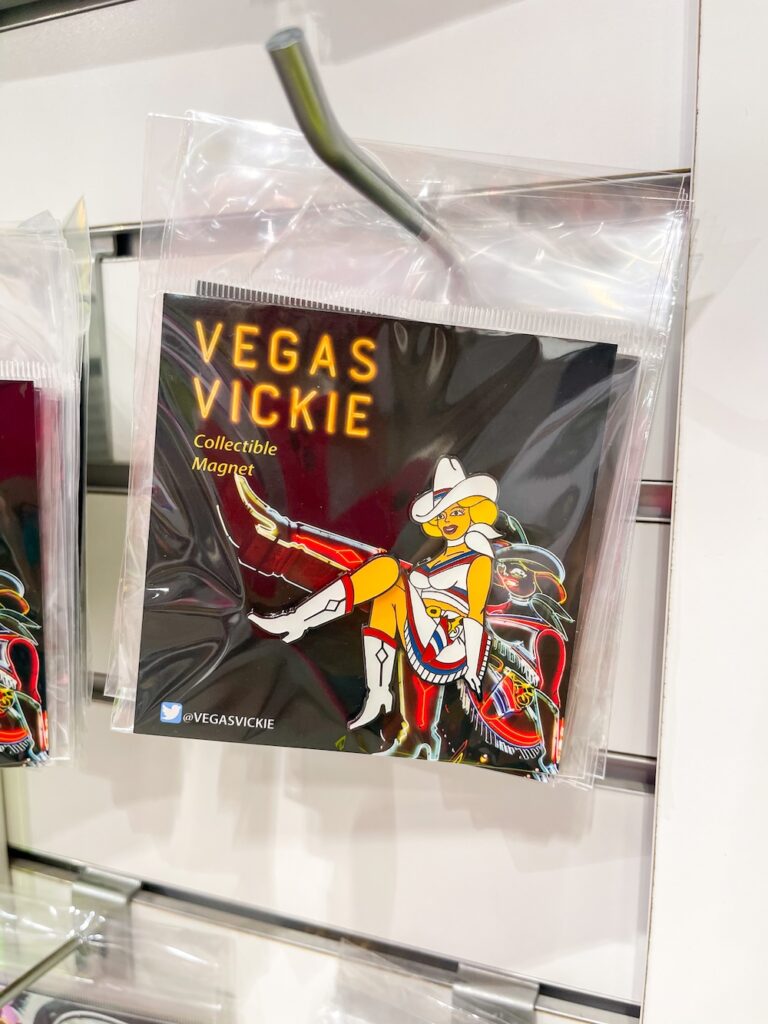
After visiting the Neon Museum, make time to stop by the nearby Circa Resort & Casino to see the famous Vegas Vickie sign. Originally installed in 1980 outside the Glitter Gulch casino on Fremont Street, the neon cowgirl became one of downtown Las Vegas’s most beloved landmarks. Designed as a female counterpart to the iconic Vegas Vic cowboy, Vickie was known for her kicking leg, blinking eyes, and playful personality. When Glitter Gulch closed in 2016, preservationists worked to save the sign, and after a careful restoration, Vegas Vickie found a new home inside Circa’s lobby bar when the resort opened in 2020. Today, visitors can sip a cocktail and admire this beautifully restored piece of Las Vegas history up close, making it a perfect companion stop to the Neon Museum’s collection of vintage signs.
Read More: Review of the Circa Hotel in Las Vegas, Nevada (Coming Soon!)
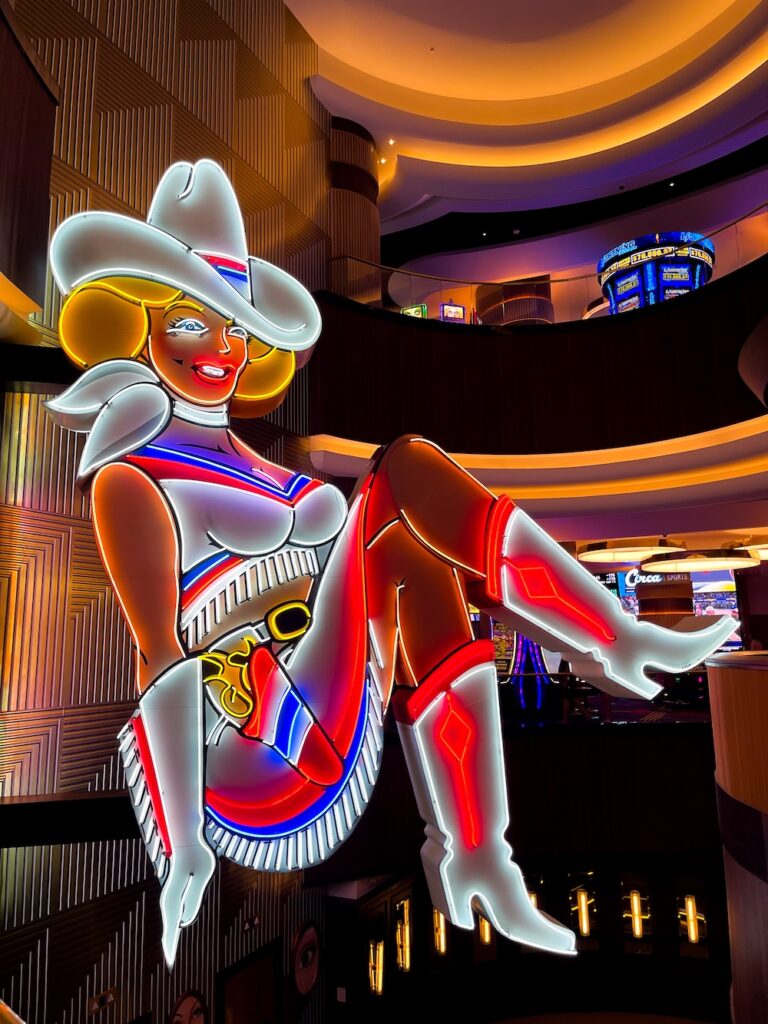
She no longer kicks, but you can purchase the kicking magnet at the Neon Museum gift shop!
Downtown Container Park
Built from repurposed shipping containers, Downtown Container Park features shops, restaurants, bars, and a giant fire breathing praying mantis sculpture at the entrance.
Mob Museum
The Mob Museum explores the history of organized crime, law enforcement, and Las Vegas’s ties to the mob era. Interactive exhibits make it one of the city’s most engaging museums.
Read More: The Best Nerdy Things to Do in Las Vegas
Atomic Liquors
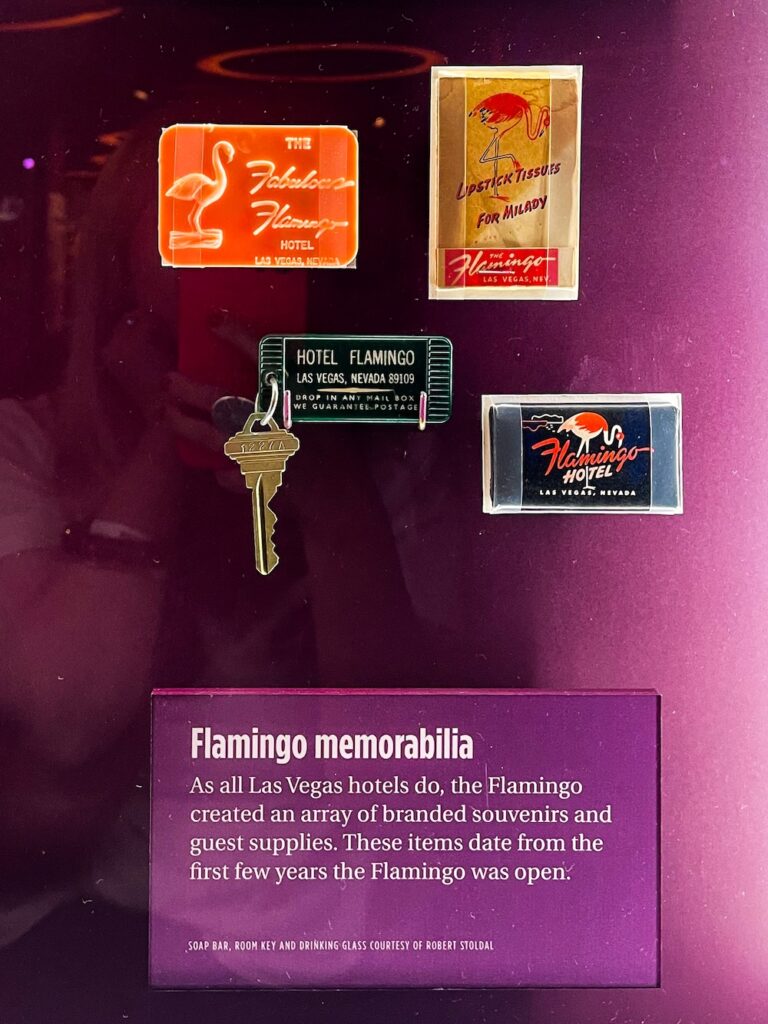
Known as the oldest freestanding bar in Las Vegas, Atomic Liquors is a fun stop for cocktails and local history. The bar originally became famous during the atomic testing era when people gathered on the roof to watch mushroom clouds in the distance.
Arts District
The Las Vegas Arts District is filled with vintage shops, breweries, coffeehouses, street art, and independent restaurants. It is a great place to explore if you want a break from casino crowds.
Final Thoughts
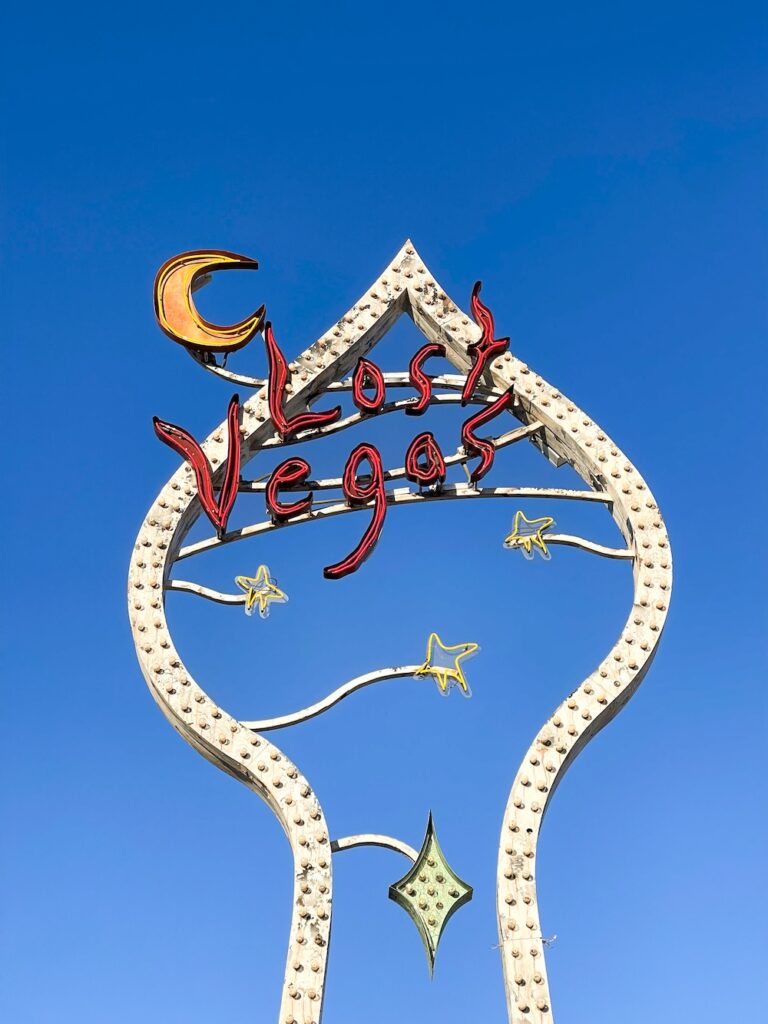
The Neon Museum is one of the most unique attractions in Las Vegas because it preserves the city’s personality and history in such a visual way. Walking among these retired signs feels like stepping through decades of Las Vegas history, from glamorous casino openings to long forgotten roadside motels.
Even if you are not usually a museum person, the combination of art, architecture, photography, and storytelling makes this a memorable stop. Whether you visit during the day for photos or at night to see the signs glow, the Neon Museum captures the spirit of classic Las Vegas in a way few places still can.
Shop My Travel Essentials!
Copyright Notice
All images and content are copyright-protected. Please do not use any images without prior permission. If you would like to share this story, please only use one image, use proper credit, and link directly back to this post and linking with my post title. Thank you!
Land Acknowledgement
Salty Canary wants to acknowledge that we live, operate, gather, and benefit every day on the traditional stolen lands of several Indigenous peoples and nations including the Tongva (Gabrieleno), Kizh (Gabrieleno), Chumash, Popeloutchom (Amah Mutsun), Ohlone, Awaswas, and Fernandeño Tataviam peoples who have stewarded the lands and waterways throughout their many generations in what is now the state of California. I wanted to personally acknowledge these Indigenous people and nations and both their commitment and current contributions to the land with a donation to the American Indian College Fund because acknowledgment without action does not begin to address the systemic issues facing Indigenous people. If you feel as though you benefit from the land you’re living on or traveling to and you have the means, I kindly ask that you donate to a Native-led organization such as the Native American Rights Fund or the American Indian College Fund.