
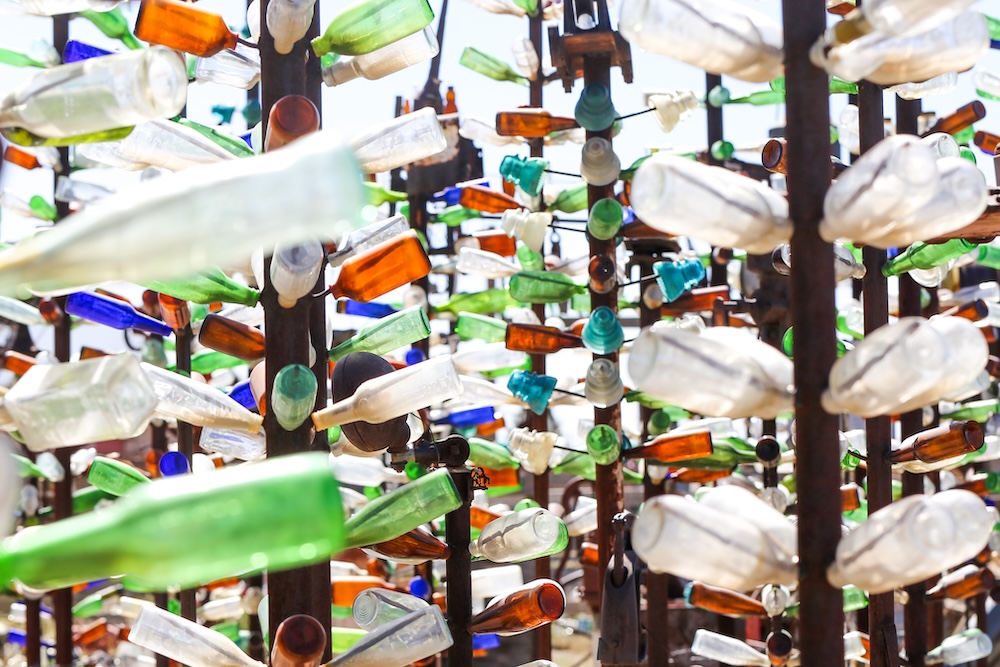
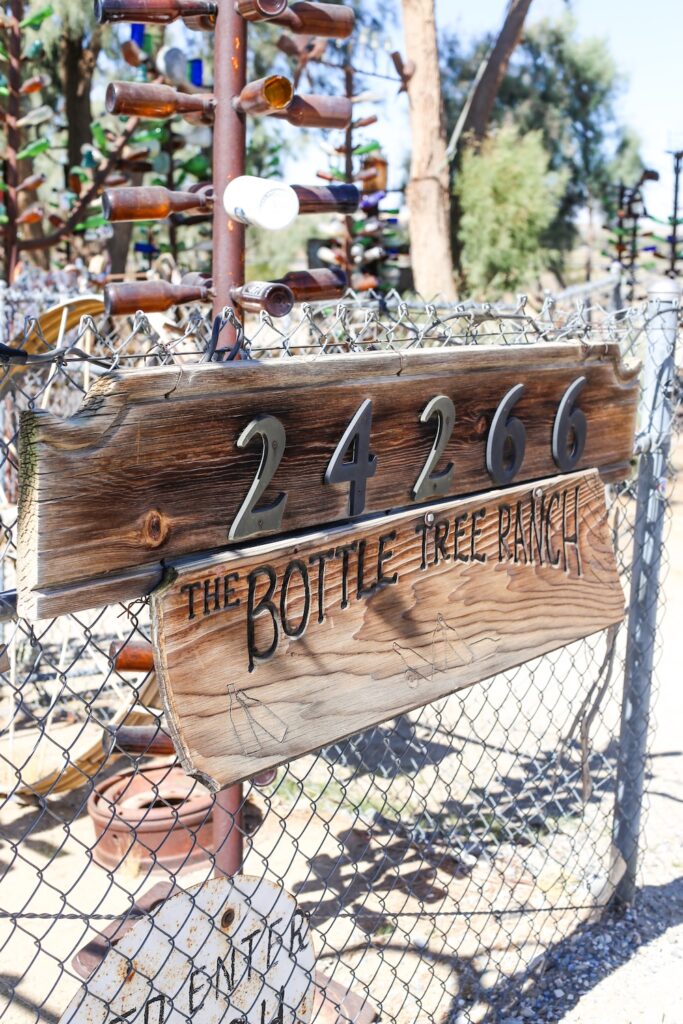
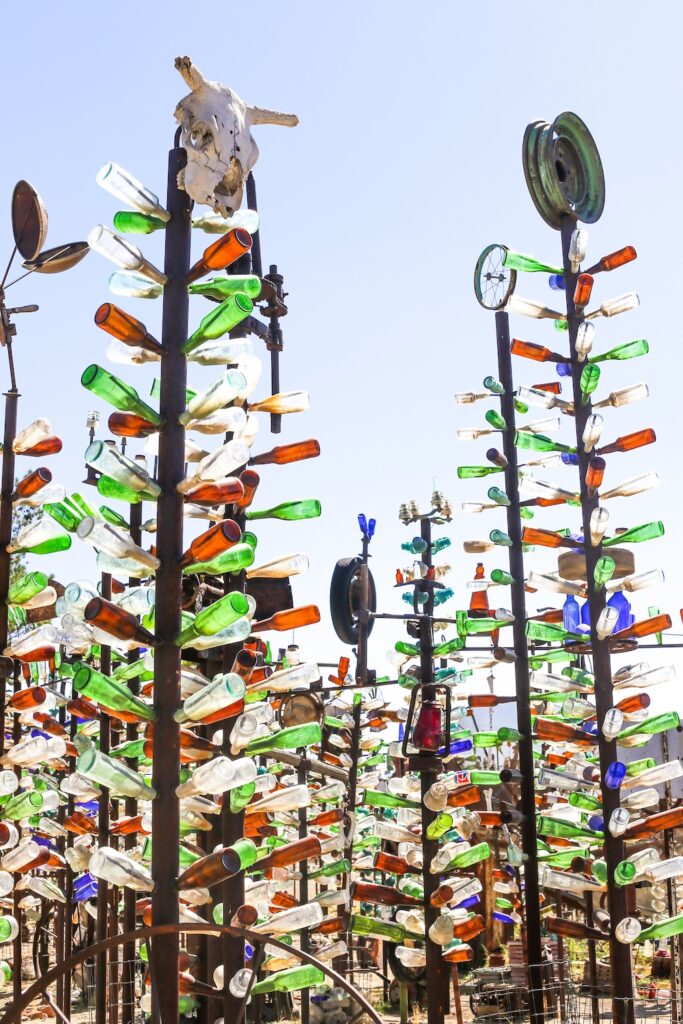
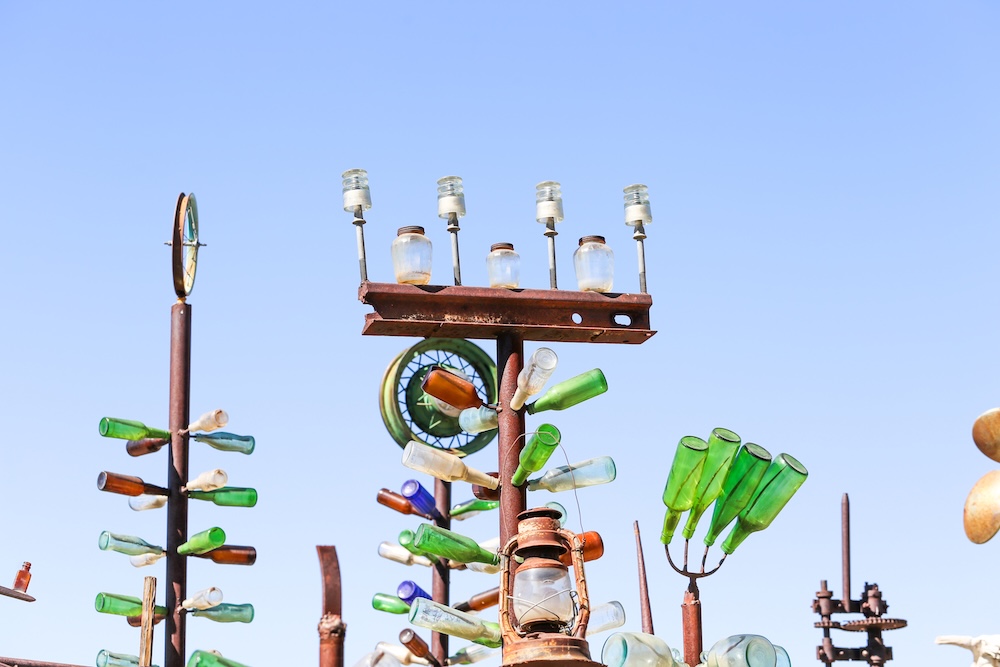
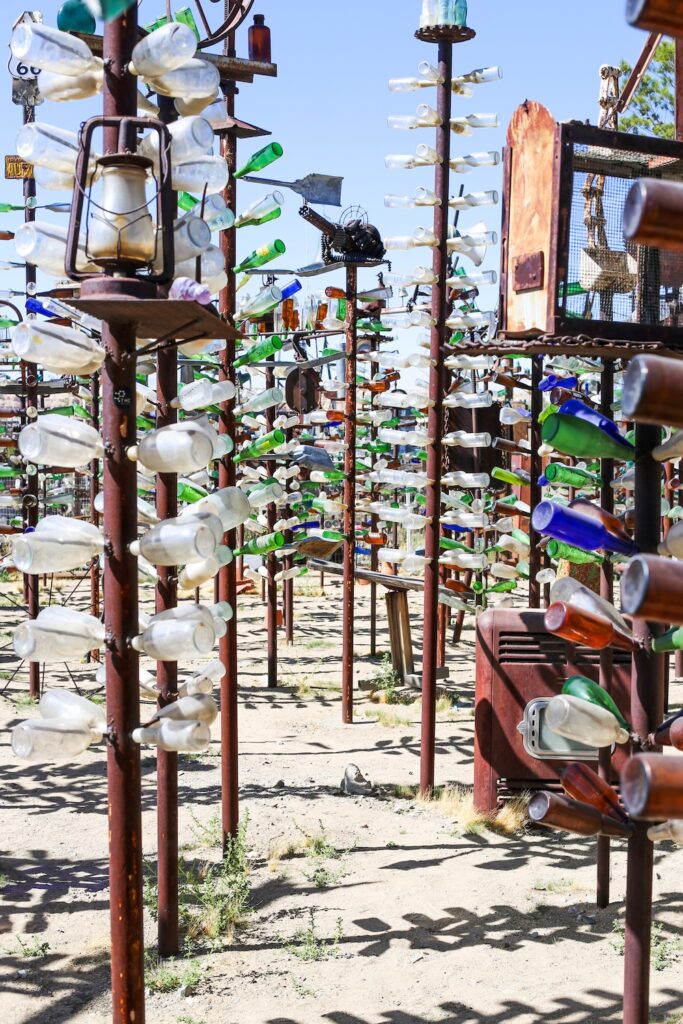
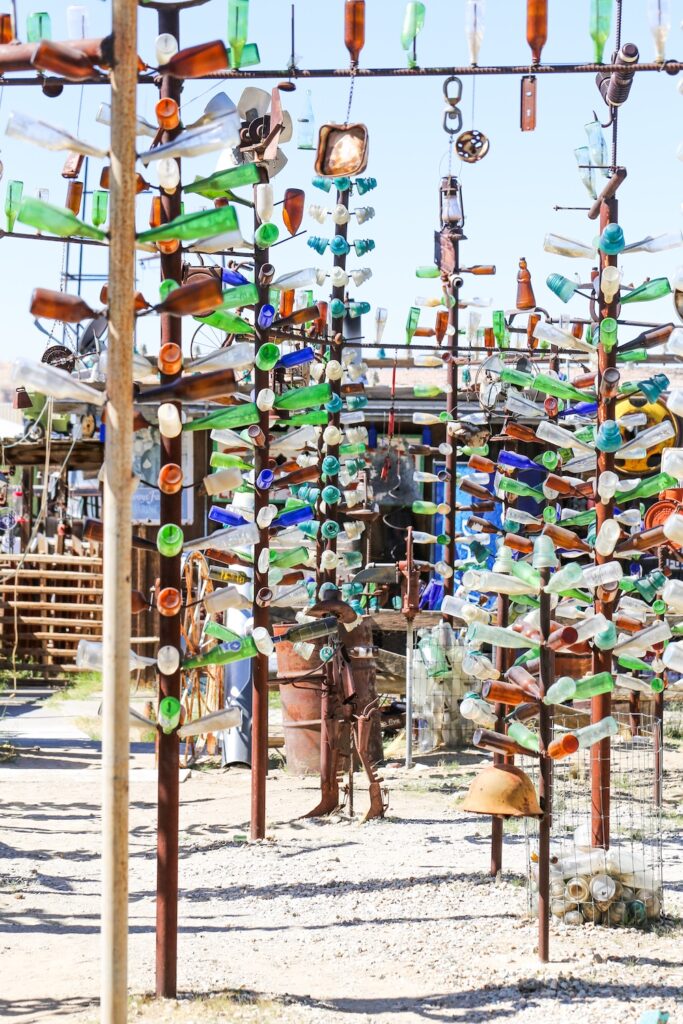
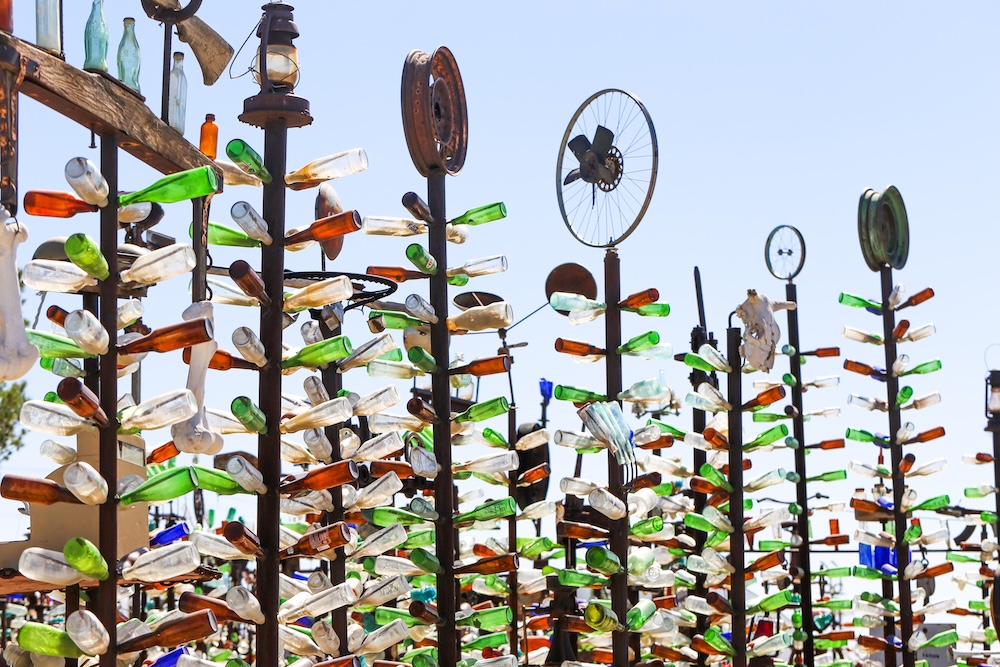
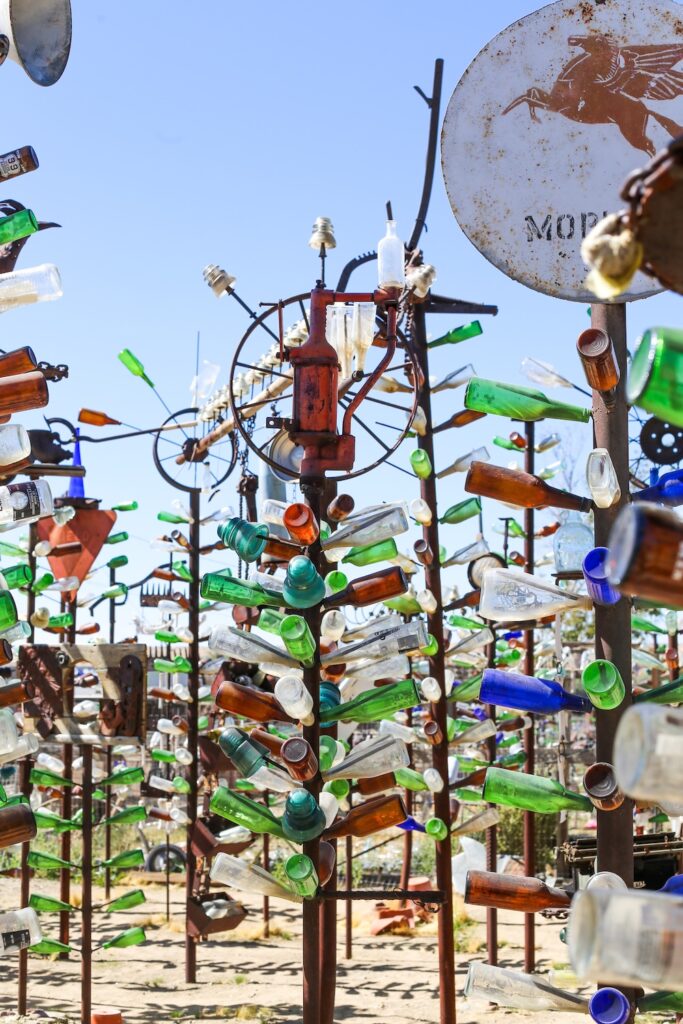
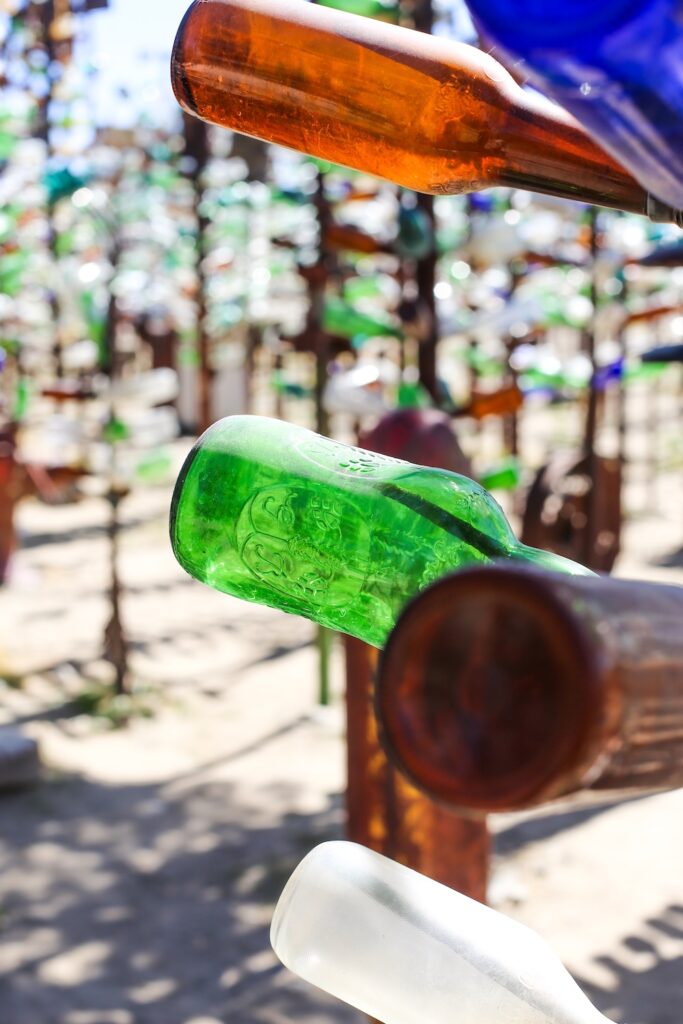
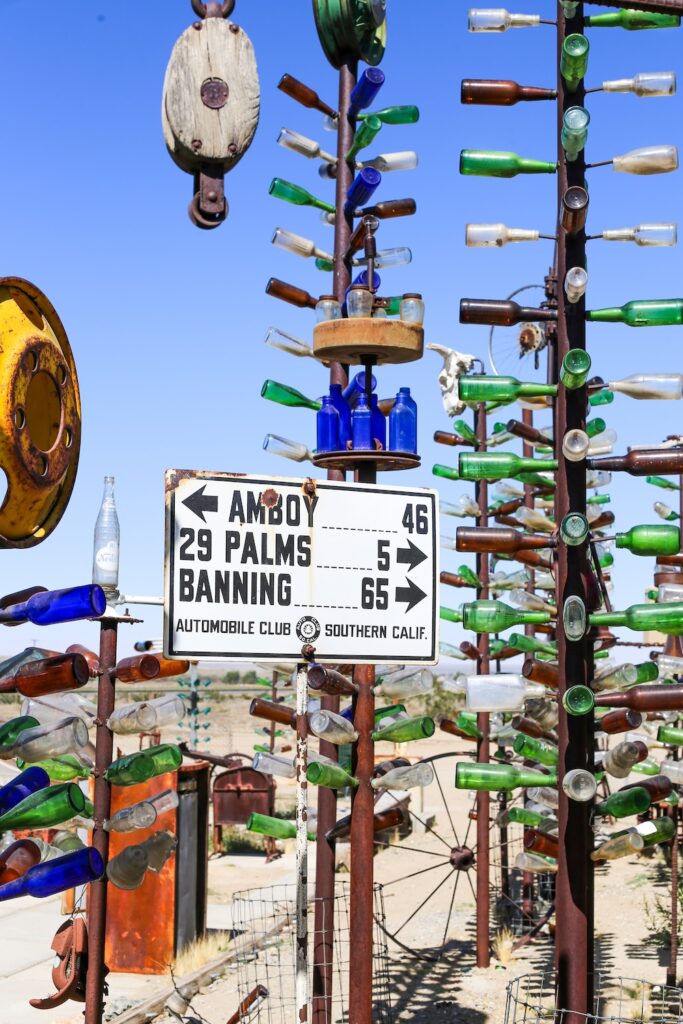
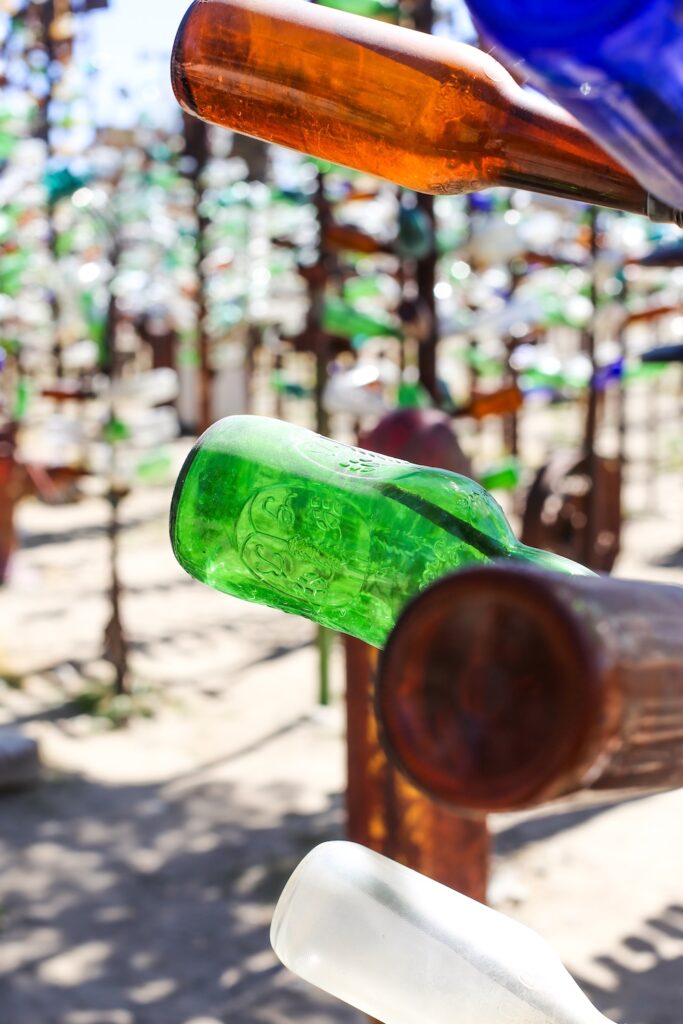
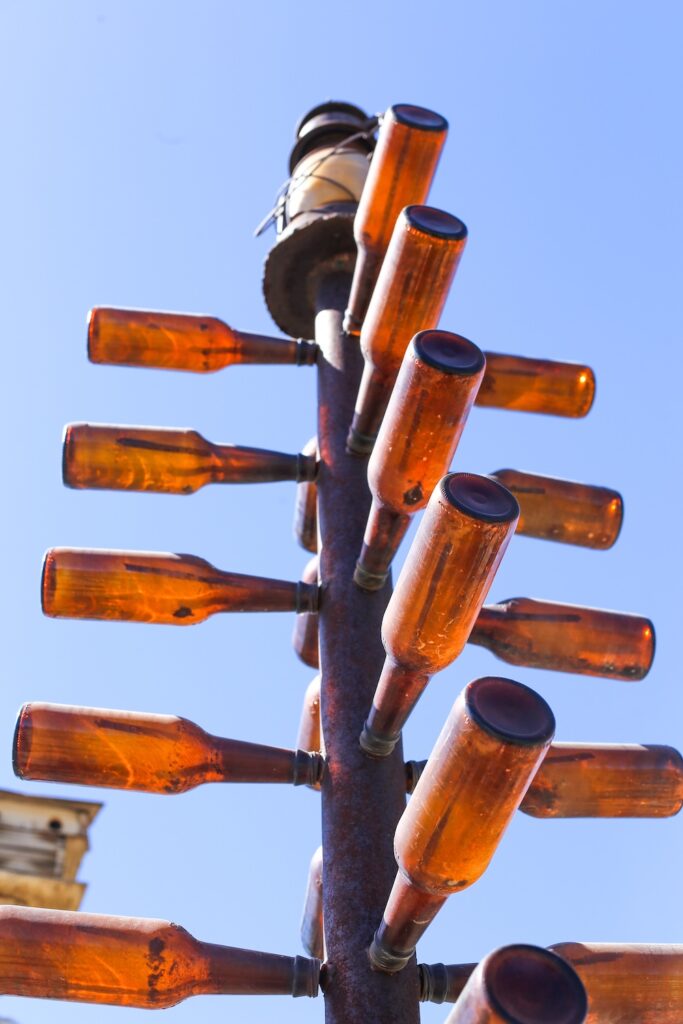
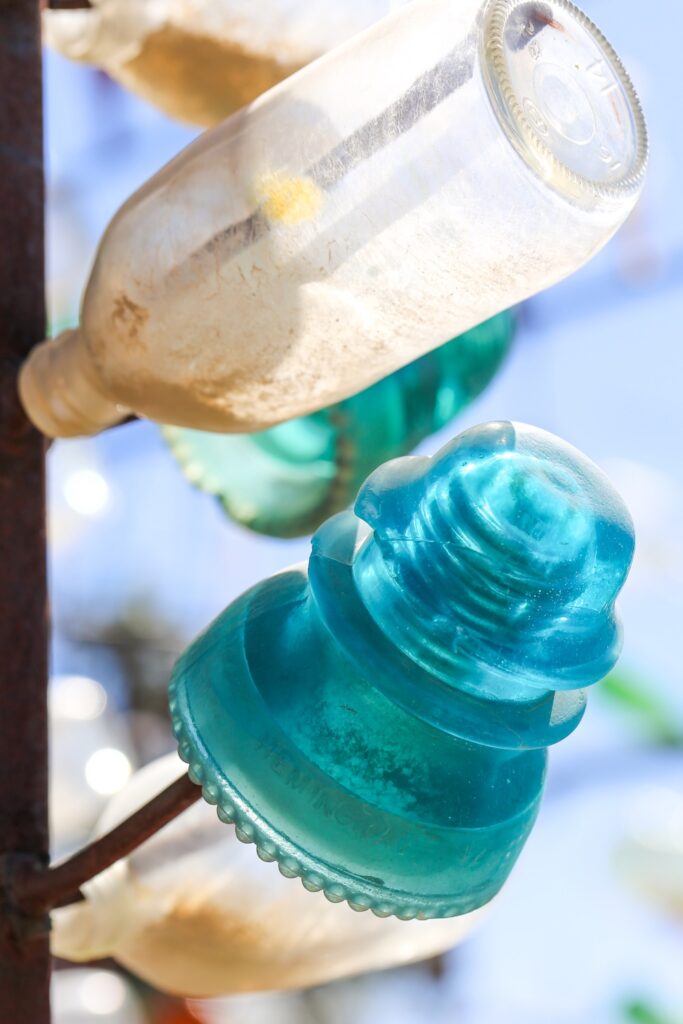
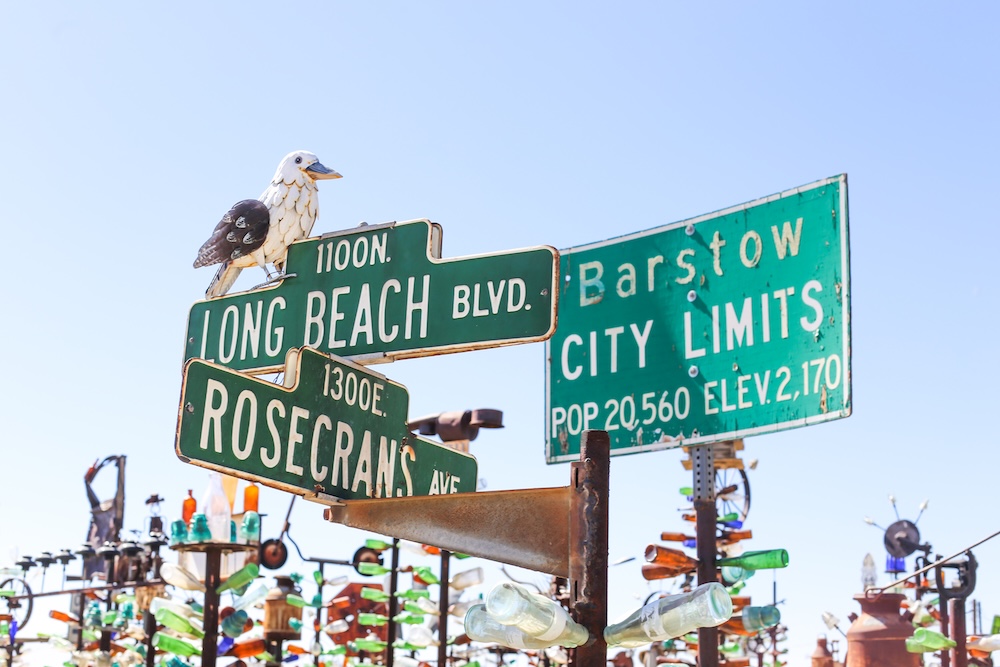
If you are road tripping along historic Route 66 or driving between Los Angeles and Las Vegas, one of the most unforgettable stops in the California desert is Elmer’s Bottle Tree Ranch. This colorful folk art installation in Oro Grande, California feels equal parts roadside attraction, outdoor art gallery, and Route 66 time capsule. Rows of steel “trees” covered in shimmering glass bottles stretch across the desert property, clinking in the wind, and glowing in the sunlight.
The History of Elmer’s Bottle Tree Ranch
The ranch was created by Elmer Long, a Route 66 artist and collector who grew up exploring the Mojave Desert with his father. During their desert adventures, they collected old bottles, signs, tools, and other forgotten objects scattered throughout the dry landscape. Years later, after inheriting many of those bottles, Elmer began welding together metal bottle trees as an art project.
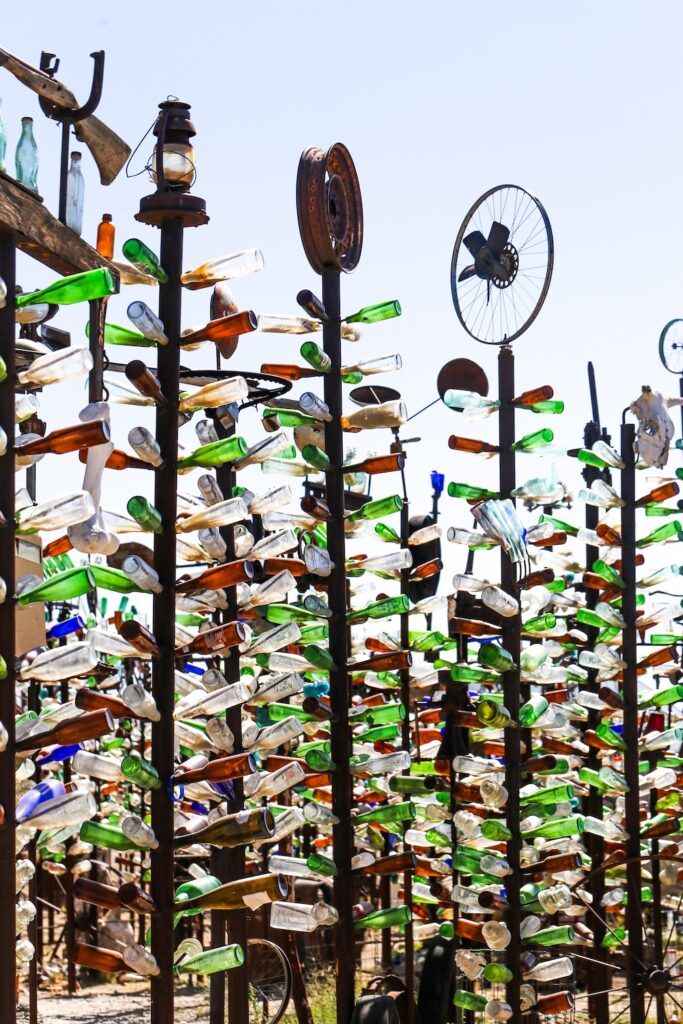
What started as a single tree eventually grew into a sprawling bottle forest with hundreds of installations. The ranch officially began around 2000 and continued expanding for years as Elmer added more found objects, antique signs, and creative sculptures.
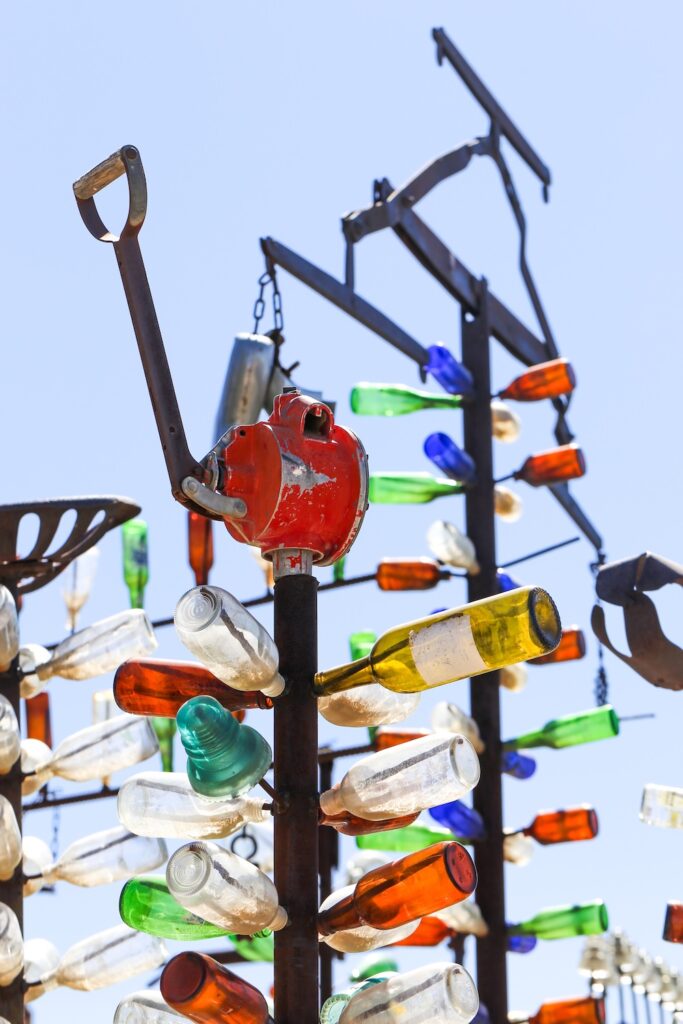
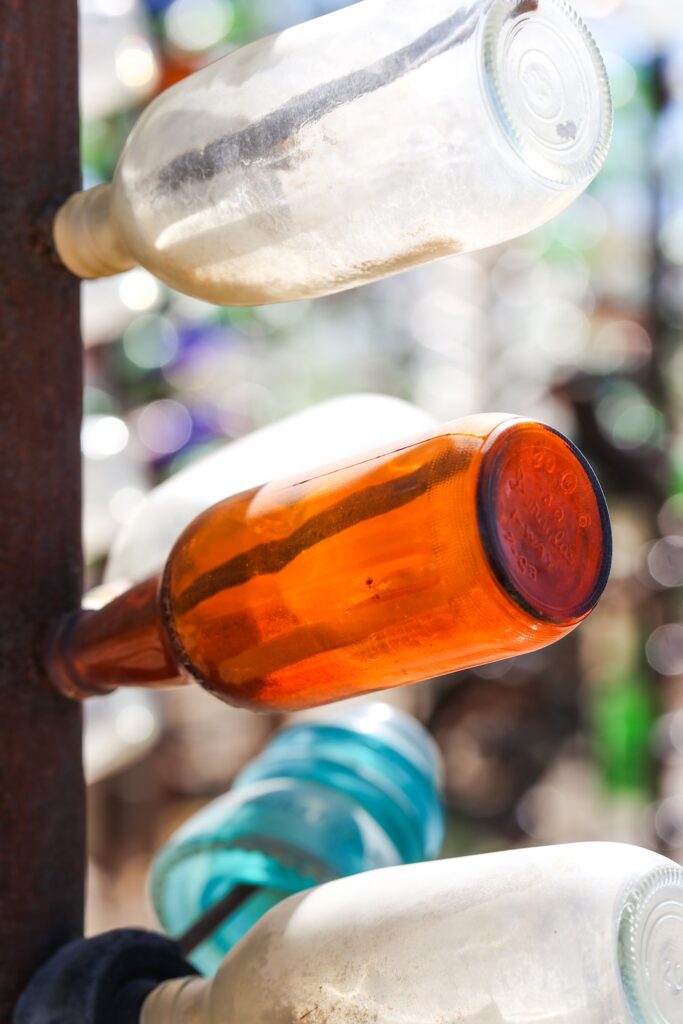
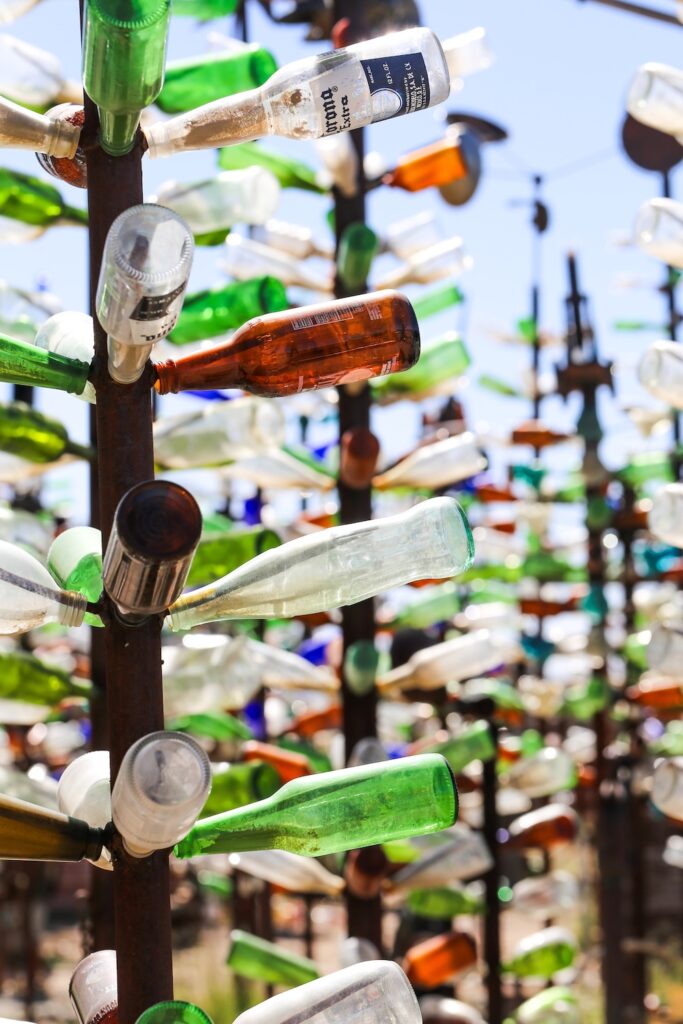
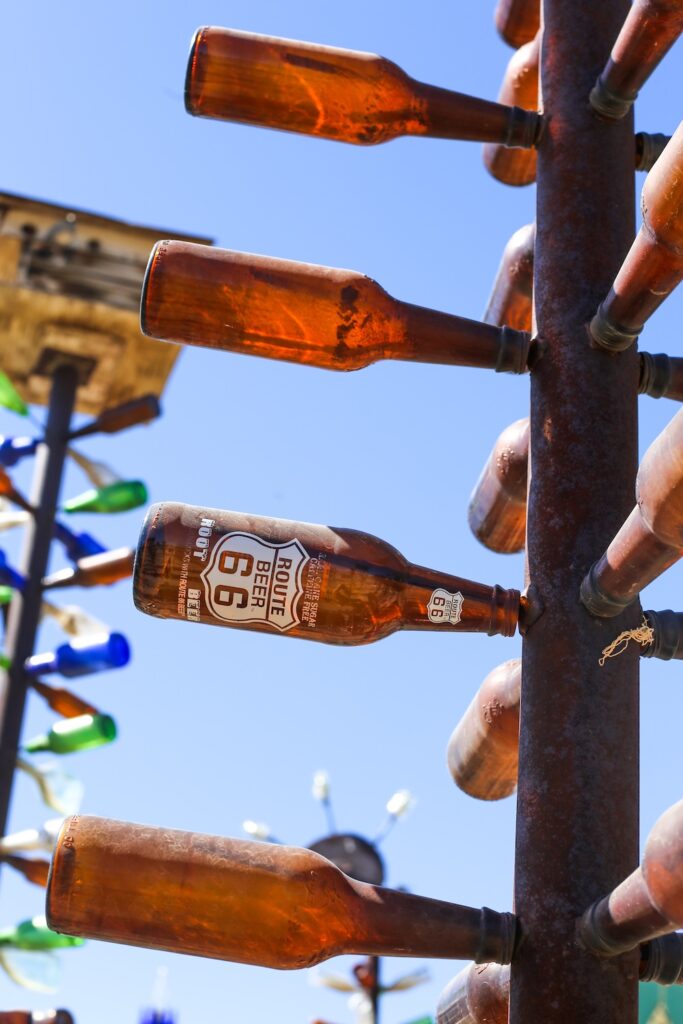
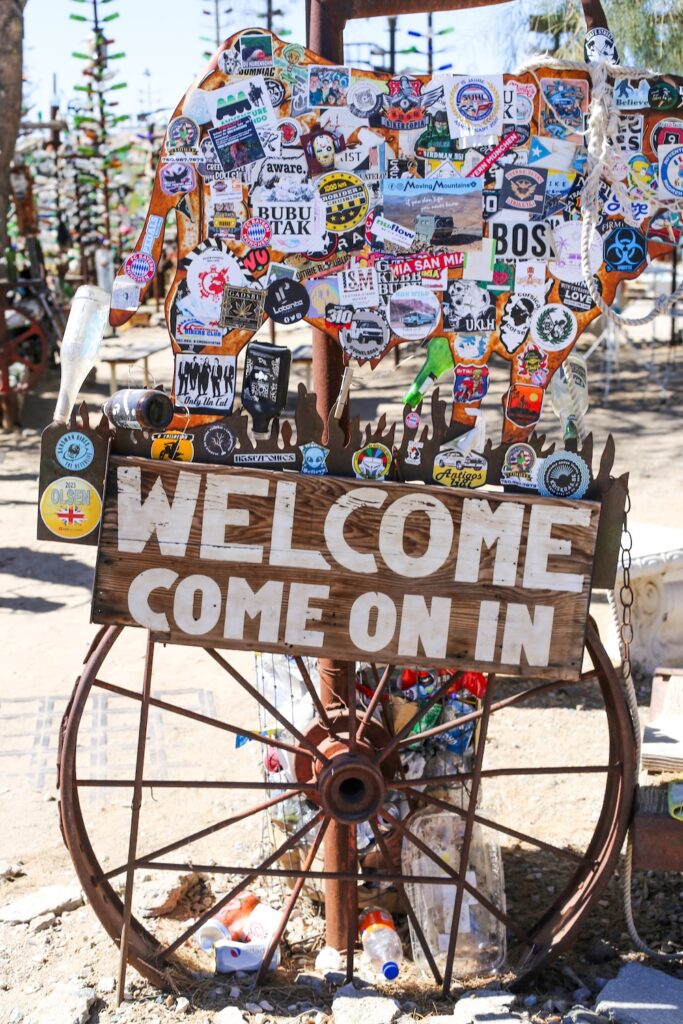
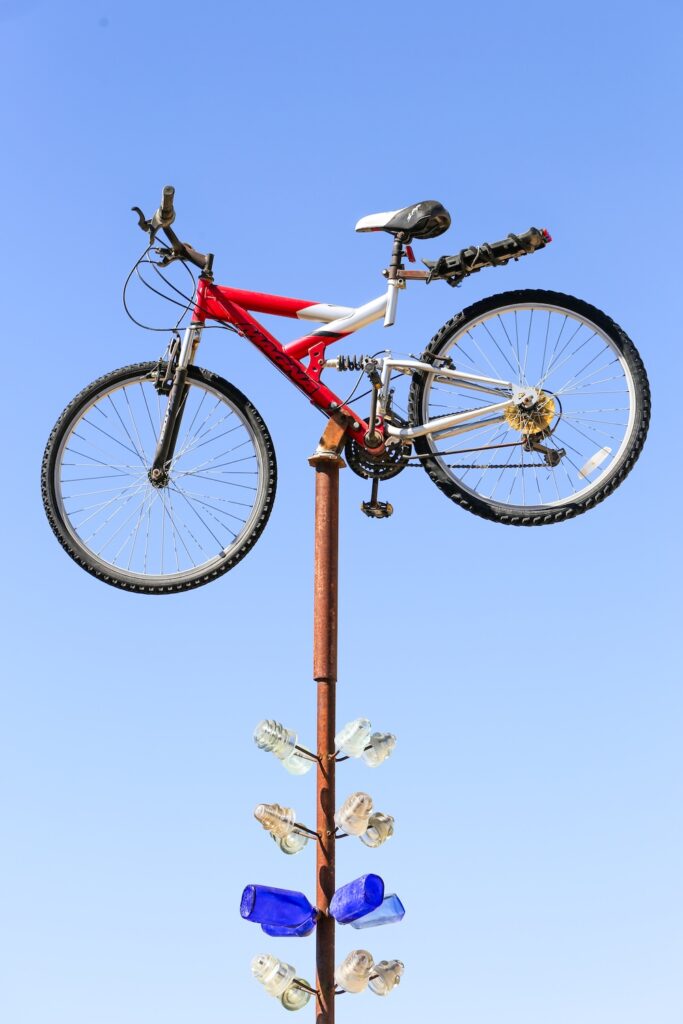
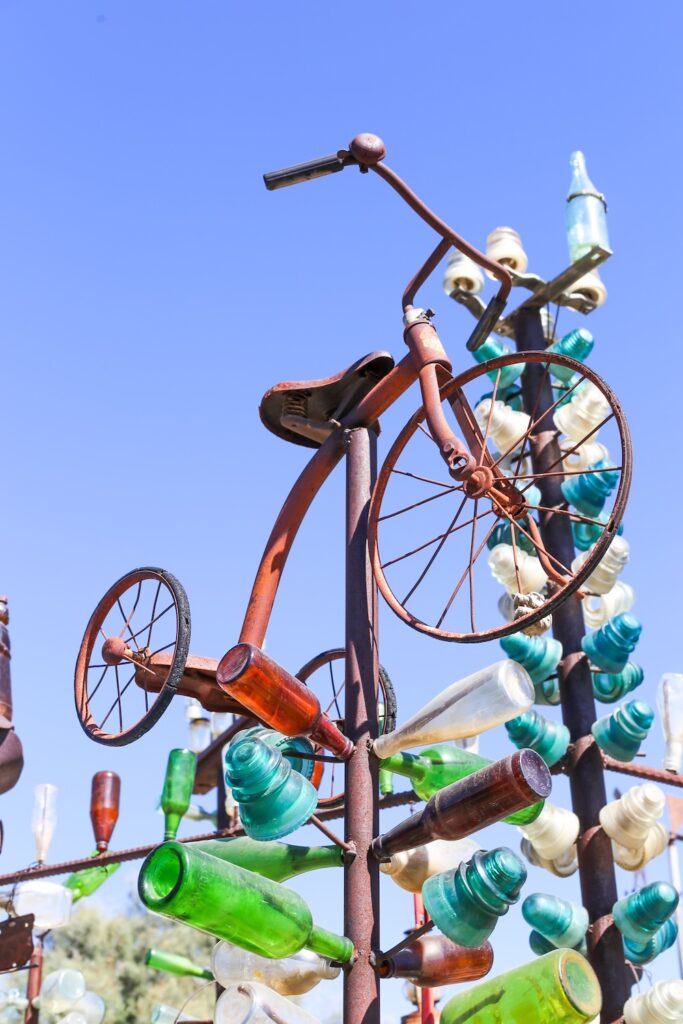
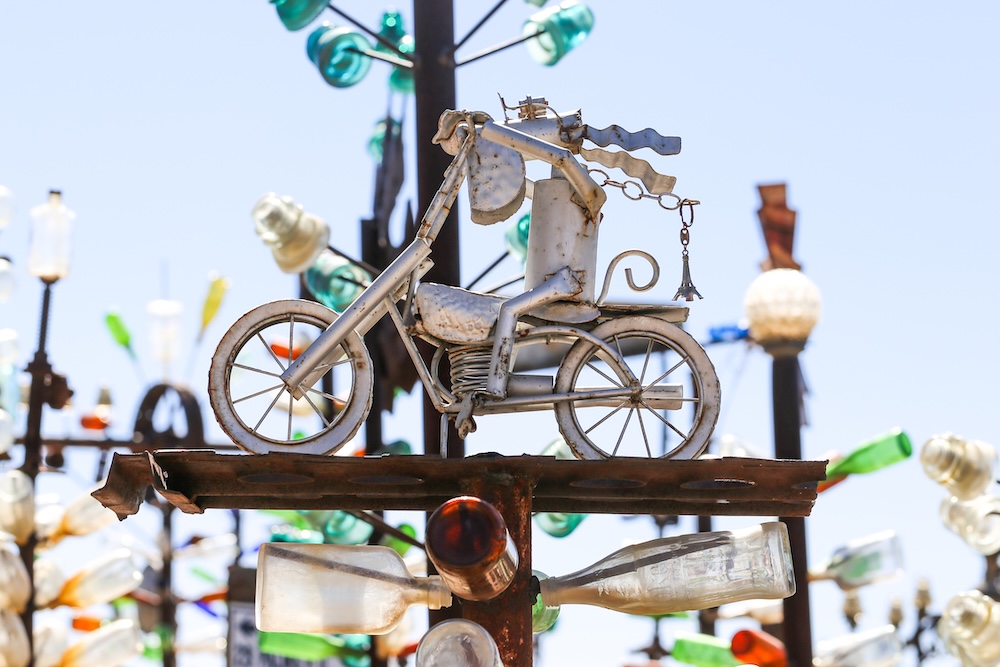
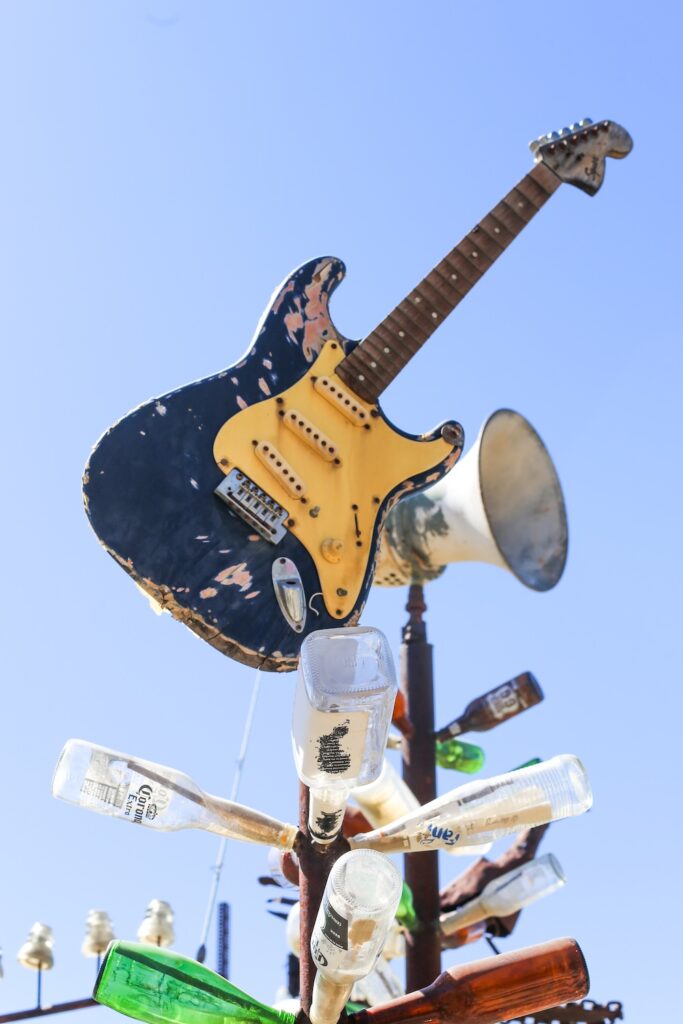
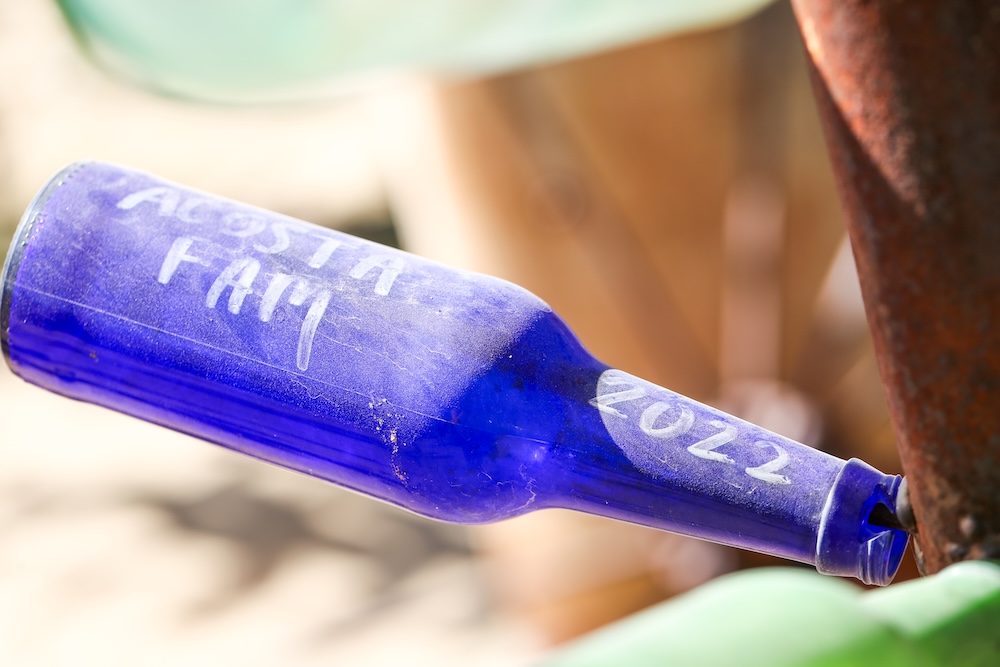
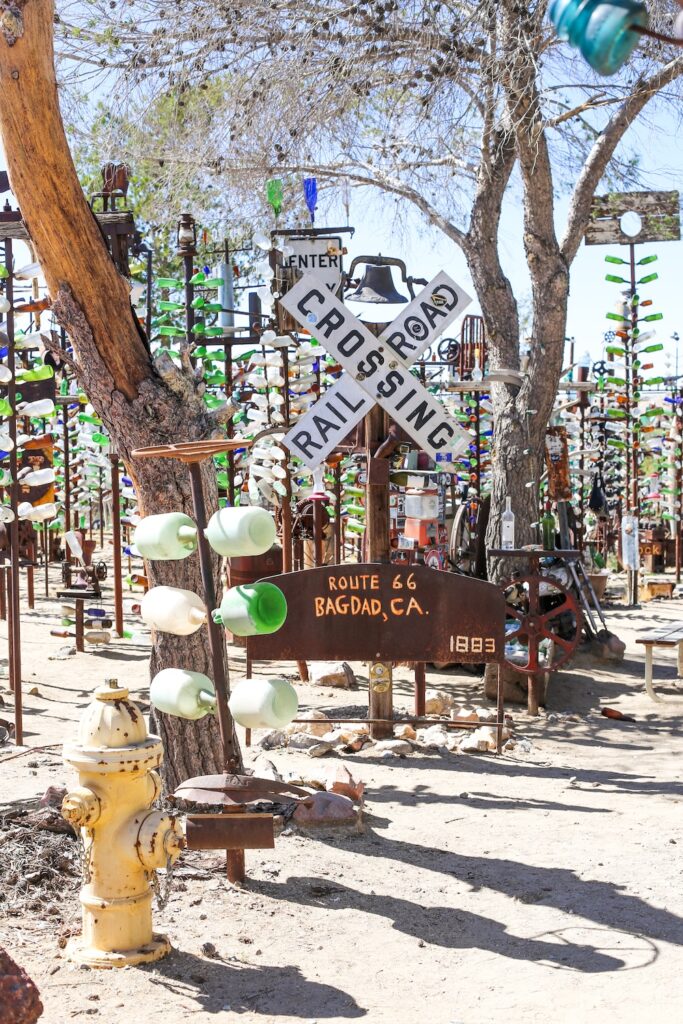
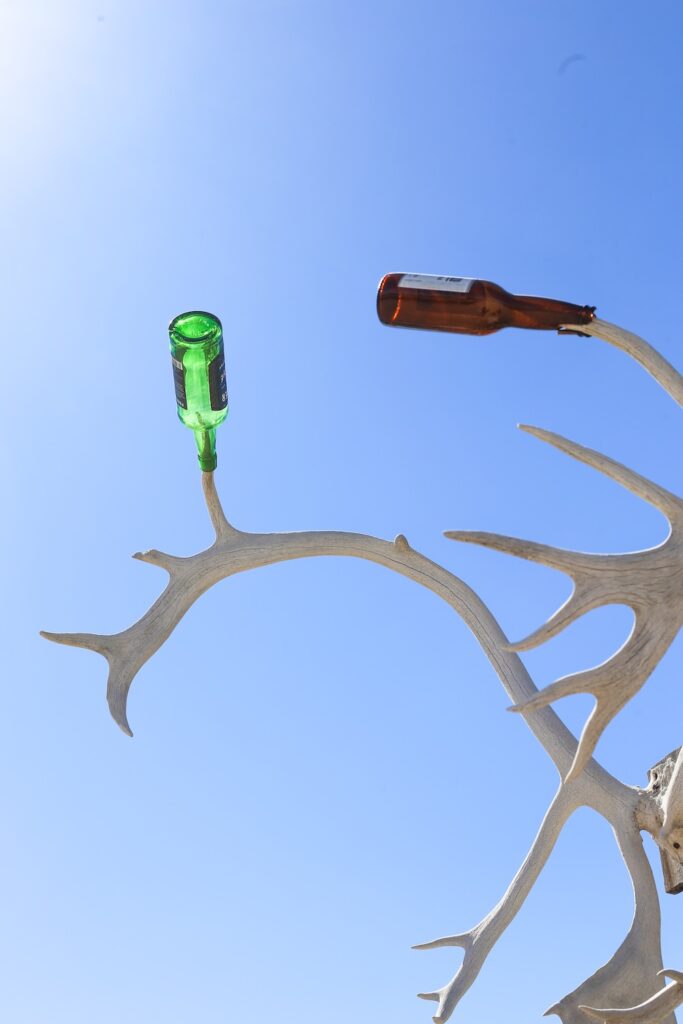
One of the most charming things about the ranch is that almost every tree topper tells a story. You will spot old typewriters, bicycles, gas pumps, road signs, surfboards, tools, and other pieces of Americana mounted high above the bottles. You’ll also see names on bottles that tourists bring to add to the Bottle Trees which kind of reminds me of Cadillac Ranch!
The Upkeep Behind the Bottle Trees
Visiting the ranch, it is easy to admire the creativity and beauty of the artwork, but maintaining it is an enormous task. Desert heat, strong winds, dust storms, and time all take a toll on the bottle trees. Broken glass, fallen structures, and weather damage require constant repairs.
After Elmer passed away in 2019, the ranch temporarily closed before reopening under the care of his son Elliott, who continues maintaining the property today. Recent interviews with Elliott Long have highlighted just how much work goes into preserving the ranch. Despite the challenges, the family has kept the attraction free so travelers from around the world can continue to visit and experience it.
That effort becomes obvious once you walk through the property. There are winding paths between the bottle trees, carefully arranged displays, and countless little details that make every corner worth exploring.
Iconic Folk Art Sites
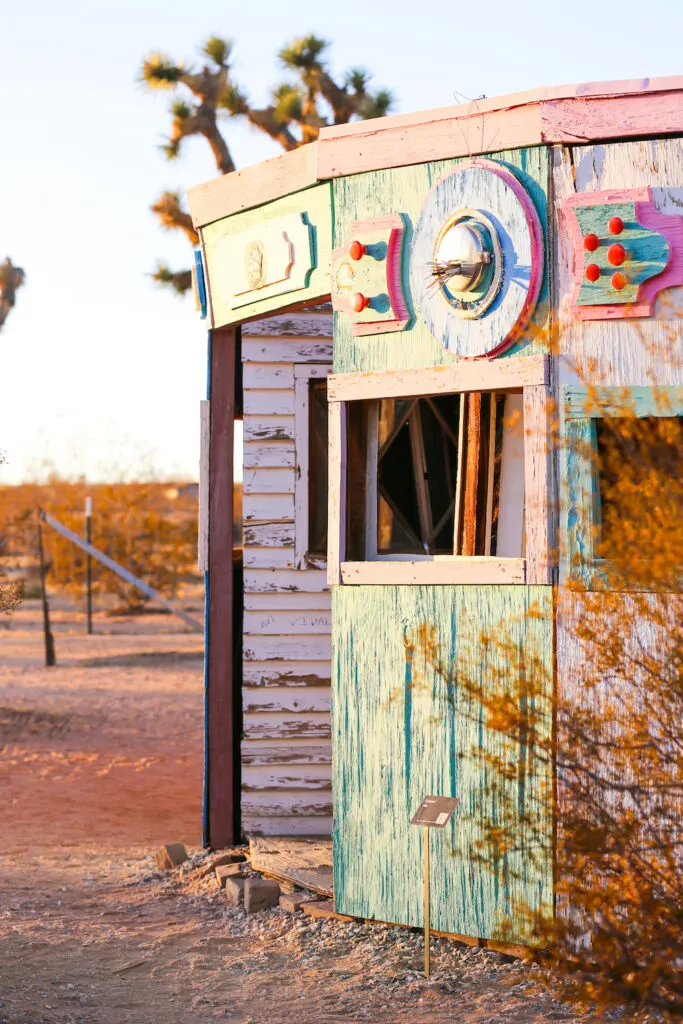
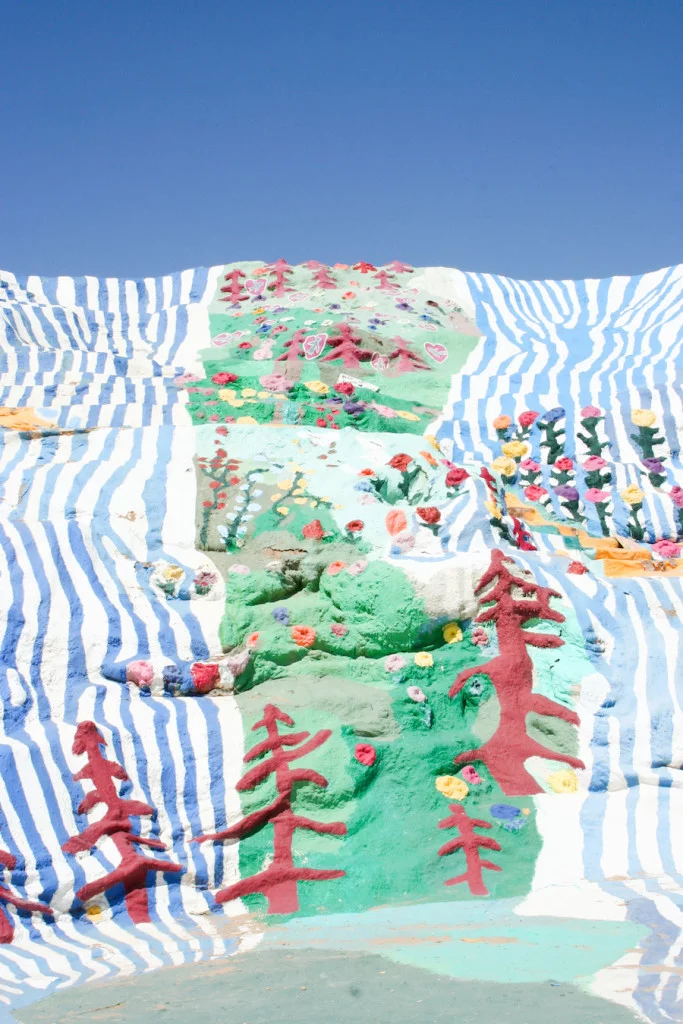
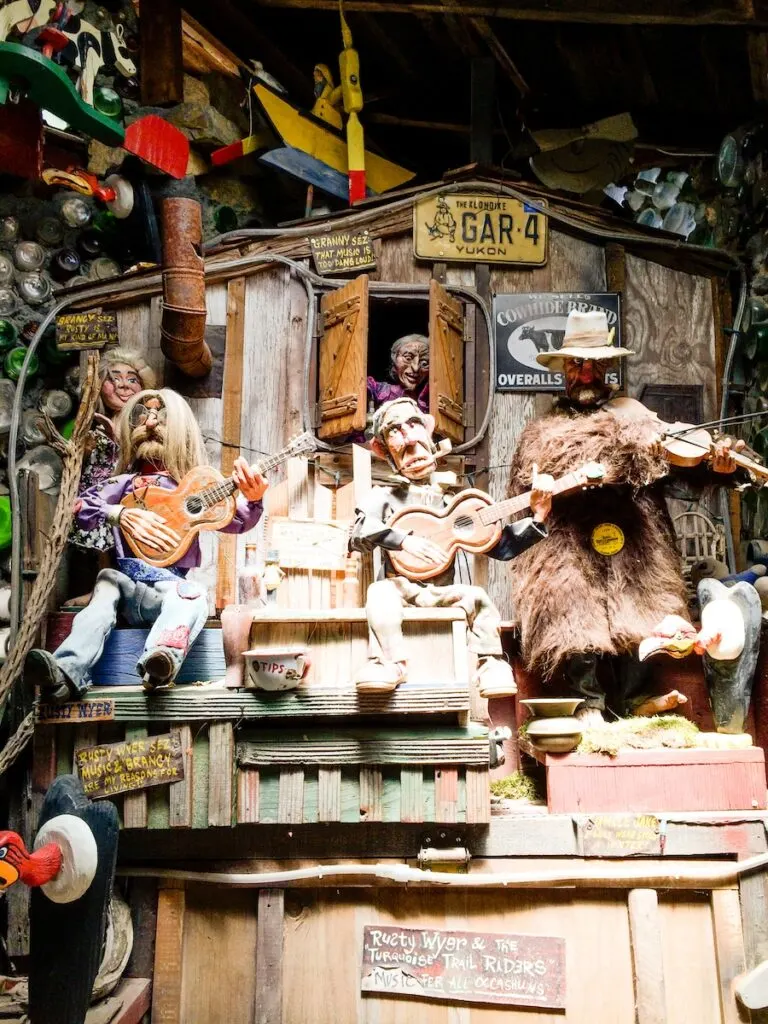
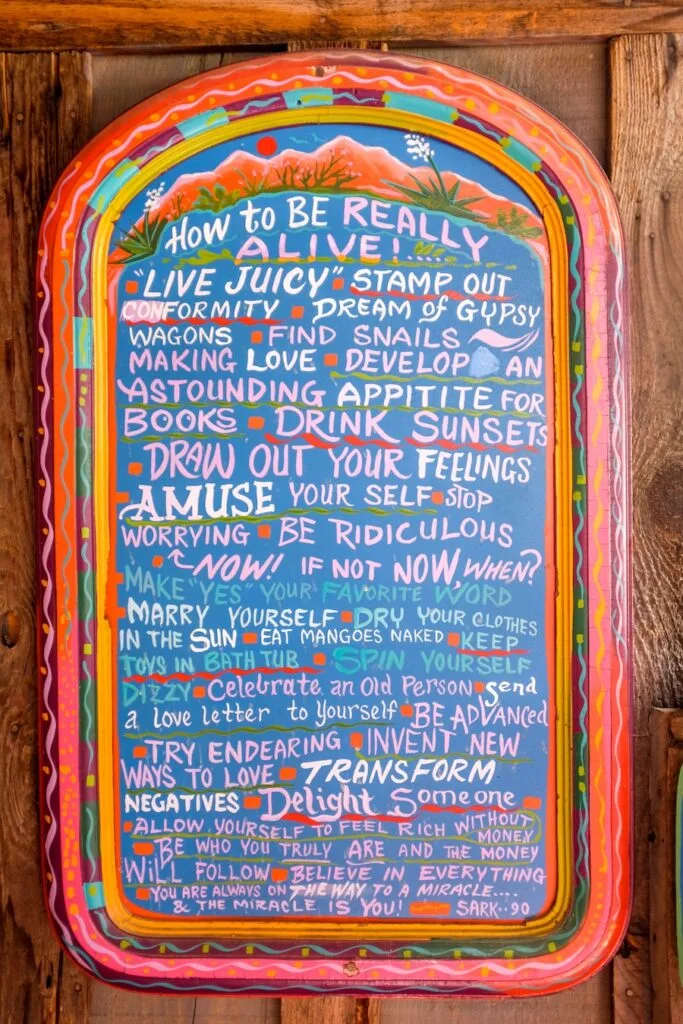
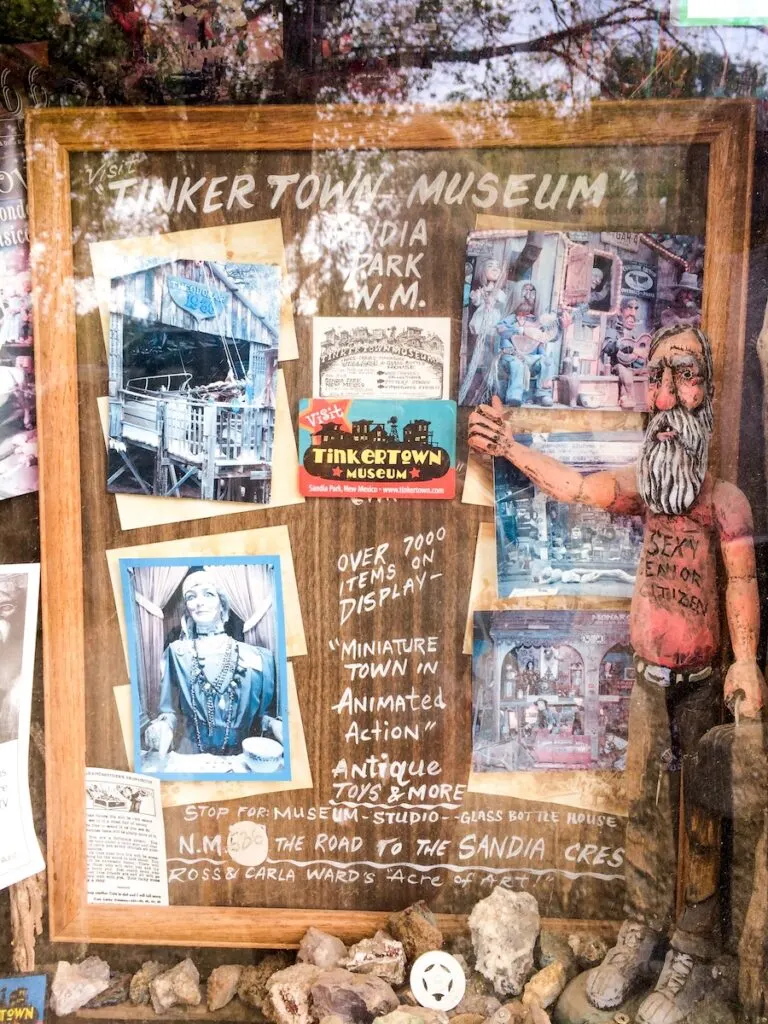
Elmer’s Bottle Tree Ranch shares a creative spirit with other iconic folk art environments across the American Southwest, including Noah Purifoy Outdoor Desert Art Museum, Salvation Mountain, Tinkertown Museum, and Watts Towers.
Each of these places was created by an individual artist with a unique vision who transformed discarded or everyday materials into large scale works of art. Like Bottle Tree Ranch, they celebrate creativity, self expression, and the beauty of found objects while turning remote or ordinary locations into destinations that attract travelers from around the world.
There is also a strong sense of personal storytelling at all of these sites. Visitors are not just viewing art, they are stepping into the imagination and life’s work of the people who built them piece by piece over many years.
Read More: Exploring Noah Purifoy’s Outdoor Desert Art Museum


Read More: Visiting Salvation Mountain and the Salton Sea



Read More: Route 66, Day 9: Tinkertown Museum in New Mexico



What It Is Like to Visit
The ranch is located directly along old Route 66 in Oro Grande, California, making it a perfect stop during a Route 66 Southern California road trip or if you’re driving to Las Vegas from Los Angeles and want to make some little quirky pitstops.
Parking
Parking is free and located right off National Trails Highway. The parking lot area is dirt and gravel, so larger vehicles, motorcycles, and RVs should drive slowly and carefully. There is usually plenty of room unless you arrive during a busy weekend afternoon.
Admission
Visiting is completely free!
Best Time to Visit
The High Desert can get extremely hot during summer afternoons. Spring, fall, and winter are usually the most comfortable seasons for exploring. If you are visiting in warmer months, try to arrive earlier in the morning or closer to sunset when temperatures are lower and then the lighting is especially beautiful for photos.
The bottles glow beautifully in golden hour light, and the sound of the wind moving through the glass adds to the experience!
What Shoes to Wear
Closed toe shoes are highly recommended. The property is uneven in places with dirt paths, gravel, and desert terrain. I wore my usual woven mules and I was fine, but I definitely watched where I stepped and was careful not to get any rocks/glass in my shoes. Comfortable walking shoes will make exploring much easier.
You should also bring:
- Water, especially during warm weather
- Sunscreen
- Sunglasses
- A hat
- A camera or camera-phone
How to Donate
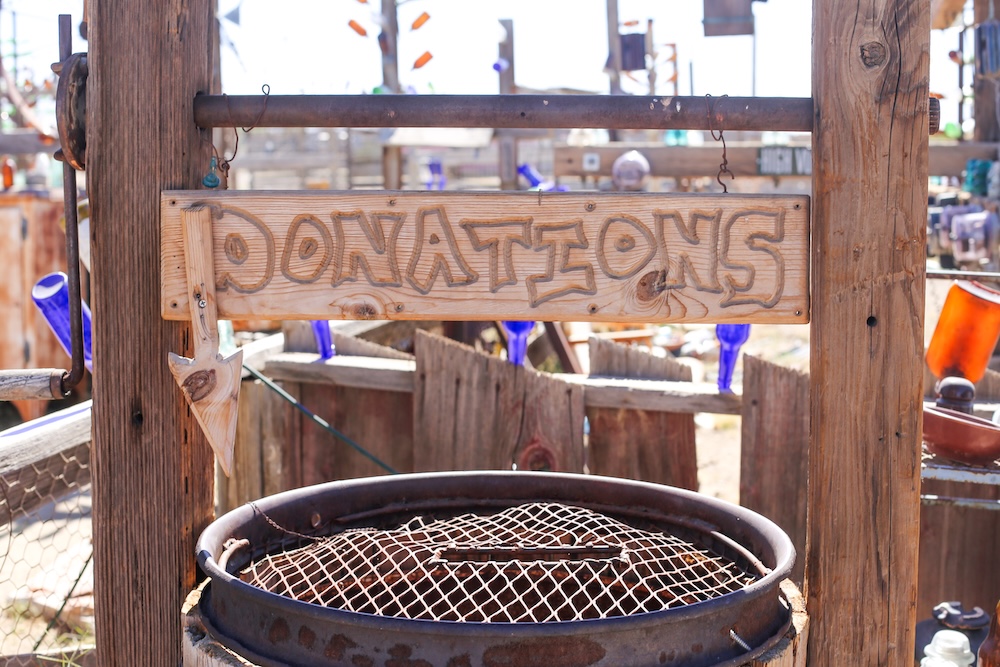
Since admission is free, many visitors choose to leave a donation to help with upkeep and maintenance. There is a donation area or wishing well on site where guests can contribute.
Supporting the ranch helps preserve one of California’s most unique Route 66 roadside attractions for future travelers! You can also donate directly online here.
What Else to Do Nearby
The area around Oro Grande and Victorville has several classic Route 66 stops worth adding to your road trip itinerary.
Grab a Meal Along Route 66
Emma Jean’s Holland Burger Cafe is nearby, closer to Victorville and is a Route 66 must-stop!
For a casual meal nearby, many travelers stop at Cross Eyed Cow Pizza, a popular Route 66 restaurant known for pizza and comfort food.
If you are heading farther toward Helendale, LV Cafe is a good breakfast or lunch stop before continuing your drive through the desert.
Explore More Route 66 History
Victorville is nearby and offers additional Route 66 nostalgia, vintage motels, roadside signs, and desert scenery. This stretch of the Mother Road still feels wonderfully old school compared to the interstate.
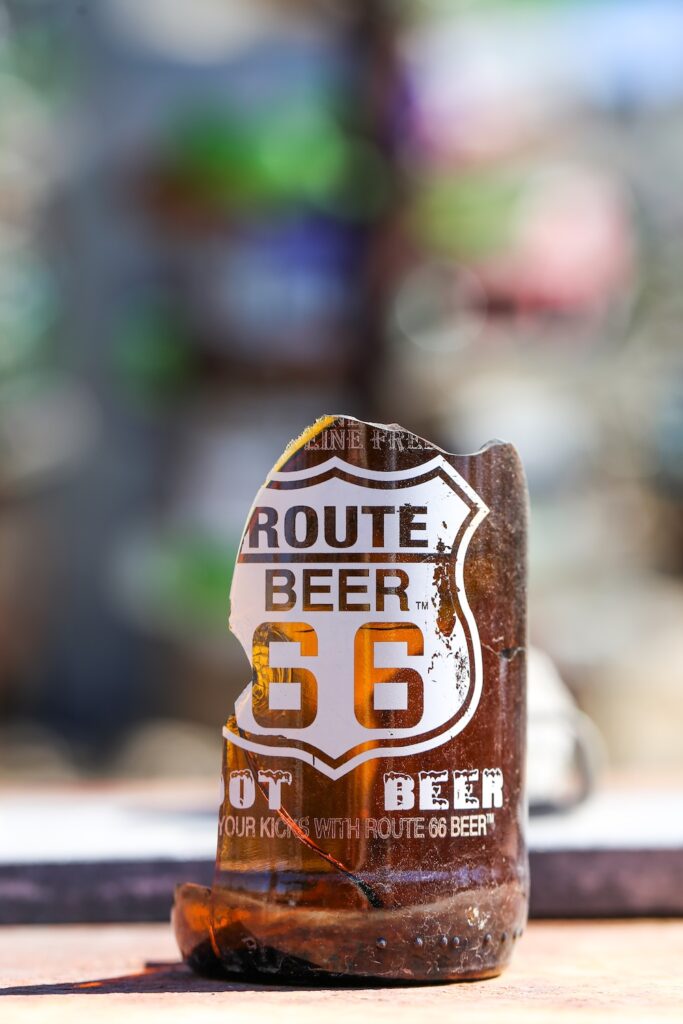
You can also pair Bottle Tree Ranch with other quirky California Route 66 desert attractions such as:
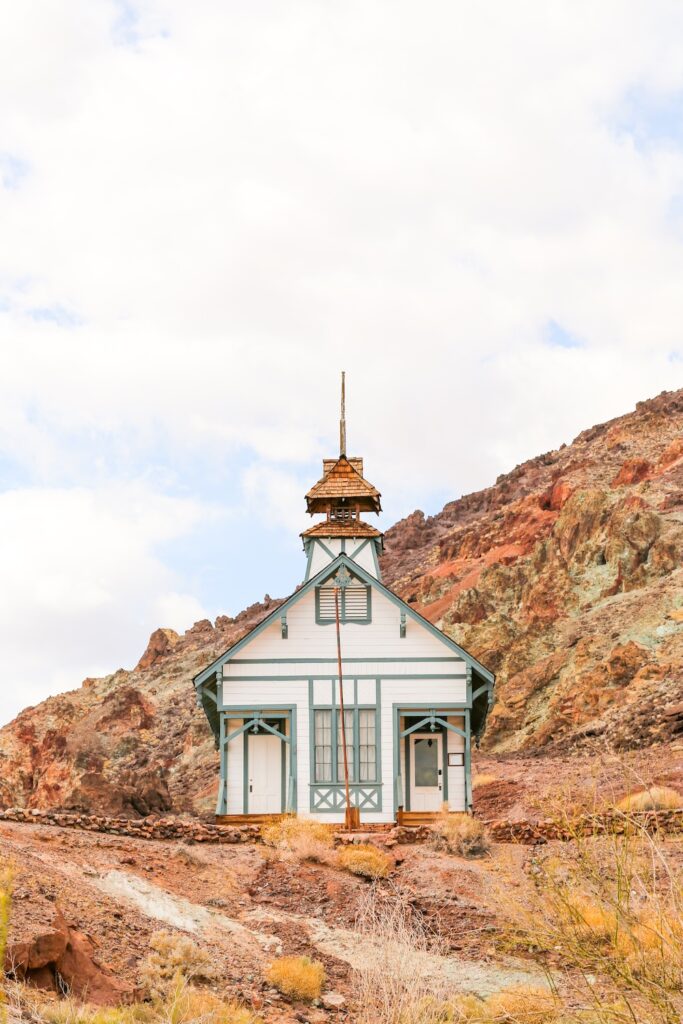
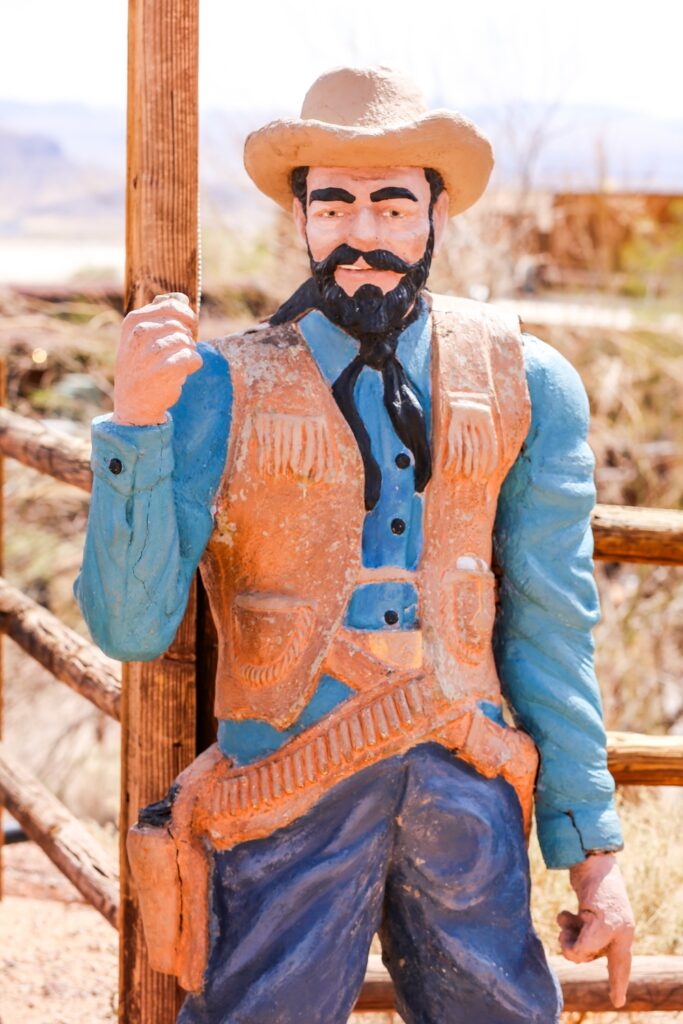
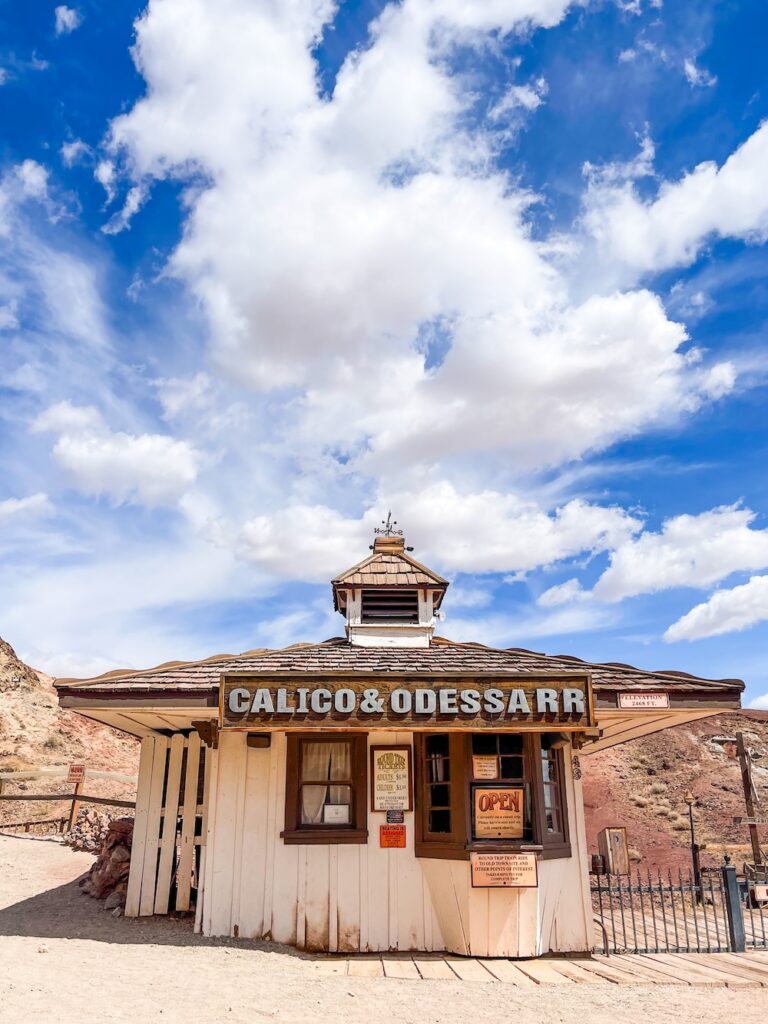
- Calico Ghost Town
- The Route 66 Museum in Victorville
- Roy’s Motel and Café in Amboy
Read More: Ultimate Guide to Visiting Calico Ghost Town
Read More: The Best Stops Between Los Angeles and Las Vegas Road Trip

Final Thoughts
Elmer’s Bottle Tree Ranch is the kind of roadside attraction that reminds you why Route 66 remains so beloved. It is creative, weird, nostalgic, and completely unforgettable. Between the colorful glass bottles, desert atmosphere, and layers of found-object art, it feels like stepping into someone’s imagination.
Whether you are driving from Los Angeles to Las Vegas or doing a full Route 66 road trip, this is one stop that deserves more than just a quick photo from the road. Take your time, wander through the bottle trees, listen to the wind chimes of glass, and appreciate the care that continues to keep this unique desert landmark alive.
Shop My Travel Essentials!

Copyright Notice
All images and content are copyright-protected. Please do not use any images without prior permission. If you would like to share this story, please only use one image, use proper credit, and link directly back to this post and linking with my post title. Thank you!
Land Acknowledgement
Salty Canary wants to acknowledge that we live, operate, gather, and benefit every day on the traditional stolen lands of several Indigenous peoples and nations including the Tongva (Gabrieleno), Kizh (Gabrieleno), Chumash, Popeloutchom (Amah Mutsun), Ohlone, Awaswas, and Fernandeño Tataviam peoples who have stewarded the lands and waterways throughout their many generations in what is now the state of California. I wanted to personally acknowledge these Indigenous people and nations and both their commitment and current contributions to the land with a donation to the American Indian College Fund because acknowledgment without action does not begin to address the systemic issues facing Indigenous people. If you feel as though you benefit from the land you’re living on or traveling to and you have the means, I kindly ask that you donate to a Native-led organization such as the Native American Rights Fund or the American Indian College Fund.